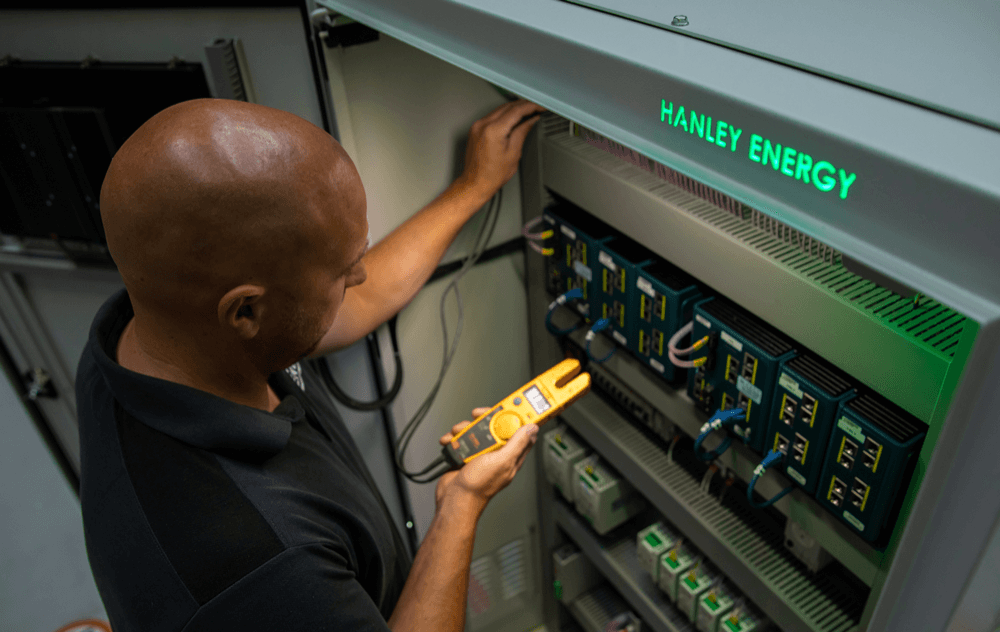
Jabil has acquired Hanley Energy Group, a specialist in mission-critical power and energy management systems. The all-cash transaction closed on January 2, 2026, with an upfront value of approximately $725 million and contingent consideration of up to $58 million tied to future revenue milestones.
The deal adds deep expertise in power systems that span from the utility grid to the data center rack, complementing Jabil’s existing rack-level infrastructure and thermal management portfolio. Hanley Energy Group designs, supplies, installs, and commissions turnkey power solutions for hyperscale and colocation operators, addressing reliability, efficiency, and lifecycle management as AI workloads push power density higher.
Founded in 2009, Hanley Energy Group operates from 13 locations worldwide, with headquarters in Stamullen, Ireland, and Ashburn, Virginia. Its team of about 850 engineers and specialists will integrate into Jabil’s Intelligent Infrastructure business unit, extending Jabil’s ability to deliver custom power and cooling solutions across the full data center lifecycle.
- Acquisition closed January 2, 2026, for ~$725 million plus up to $58 million in contingent consideration
- All-cash transaction; TM Capital advised Hanley Energy Group, UBS advised Jabil
- Expands Jabil’s capabilities in rack-level power distribution, energy optimization, and lifecycle services
- Targets growing power and thermal demands driven by AI and high-performance computing data centers
“We’re excited to welcome Hanley Energy Group and their extensive expertise in power systems and energy optimization to the Jabil team,” said Matt Crowley, Executive Vice President of Global Business Units, Intelligent Infrastructure at Jabil.
🌐 Analysis
The acquisition reflects a broader shift among infrastructure suppliers to address power delivery as a primary constraint in AI data centers, alongside compute and networking. Jabil’s move mirrors similar investments by data center equipment vendors and integrators as hyperscalers accelerate deployments of high-density AI racks requiring tightly integrated power, cooling, and manufacturing at scale.