• Home
  • About
  • Events Calendar
  • Blueprint Guidelines
  • Privacy Policy
  • Manage Email Delivery
  • NextGenInfra.io
No Result
View All Result
Converge Digest
Friday, June 12, 2026
  • Home
  • About
  • Events Calendar
  • Blueprint Guidelines
  • Privacy Policy
  • Manage Email Delivery
  • NextGenInfra.io
No Result
View All Result
Converge Digest
No Result
View All Result

Home » Kyocera Unveils Multilayer Ceramic Core Substrate for Advanced ASIC Packaging 

Kyocera Unveils Multilayer Ceramic Core Substrate for Advanced ASIC Packaging 

April 27, 2026
in Semiconductors
A A

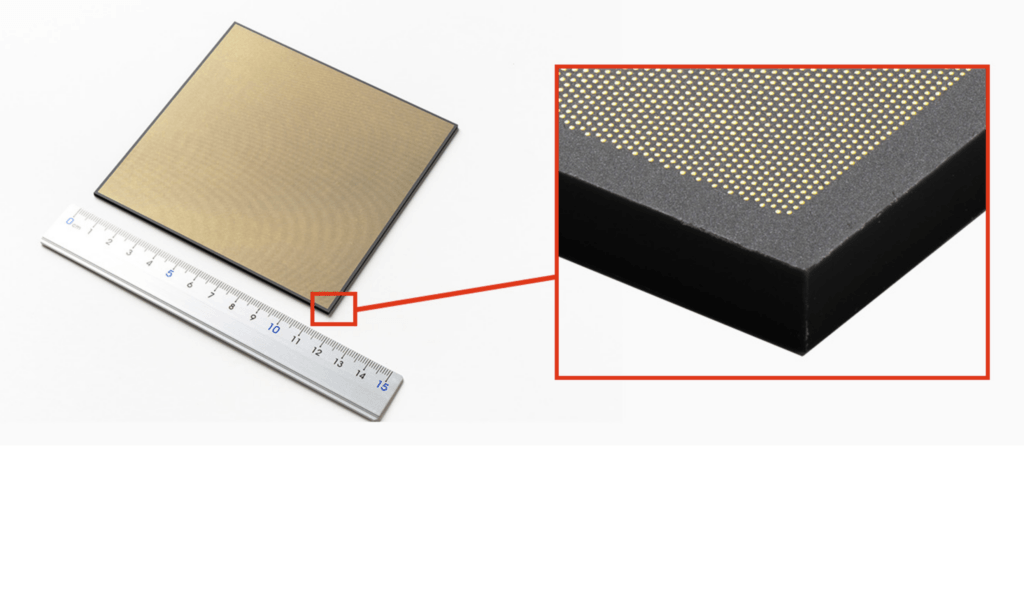
Kyocera Corporation introduced a new multilayer ceramic core substrate targeting advanced semiconductor packaging for AI processors and switch ASICs, addressing scaling challenges in next-generation data center architectures. The company will showcase the technology at the ECTC 2026, scheduled for May 26–29 in Orlando, Florida.

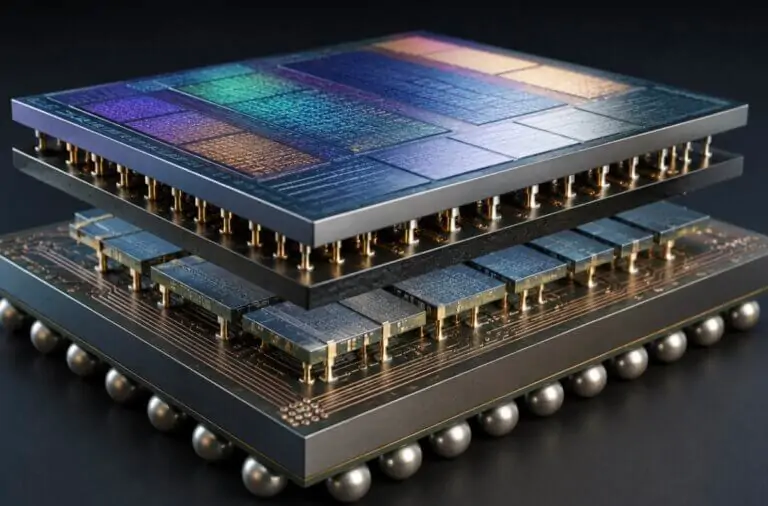
The substrate leverages Kyocera’s Fine Ceramic materials to deliver higher rigidity and improved dimensional stability compared to conventional organic core substrates. This approach directly targets package warpage—one of the primary constraints in large, high-performance semiconductor packages—while enabling thinner substrates and improved electrical performance. The company positions the technology for use in xPU-class devices, including CPUs and GPUs, as well as high-bandwidth switch ASICs used in AI clusters.

Kyocera said the multilayer ceramic structure enables finer wiring density through advanced via formation techniques. Unlike drilled vias in organic substrates, ceramic vias are formed during the pre-sintering phase, allowing smaller diameters and tighter pitch. The company also provides simulation capabilities during the design phase, including thermal, electrical, and warpage modeling, to support co-optimization of packaging and device performance for 2.5D integration architectures.

  • Targets advanced packaging for xPUs (CPUs, GPUs) and switch ASICs used in AI data centers
  • Multilayer ceramic core reduces warpage compared to organic substrates, improving reliability
  • Enables high-density, three-dimensional wiring for greater circuit miniaturization
  • Supports 2.5D packaging architectures with improved dimensional stability
  • Offers simulation tools (thermal, electrical, warpage) during design phase
  • Designed for large, high-performance packages required by AI and HPC workloads

“Kyocera remains committed to developing new packaging materials and technologies that meet evolving customer needs in the semiconductor industry.”

🌐 Analysis: Kyocera’s move reflects a broader industry push to overcome substrate-level limitations as AI accelerators scale in size, power, and interconnect density. Warpage and routing density have emerged as critical bottlenecks in 2.5D and chiplet-based designs, particularly for high-bandwidth memory (HBM) integration and large reticle-sized packages.

Ceramic substrates offer clear mechanical and dimensional advantages, but they face trade-offs in cost, manufacturability, and ecosystem maturity compared to organic substrates and silicon interposers. Competitors across the advanced packaging ecosystem—including companies working on glass substrates, silicon interposers, and advanced organic laminates—are pursuing parallel approaches. The adoption trajectory will depend on whether ceramic substrates can scale economically while meeting the stringent yield and integration requirements of hyperscale AI deployments.

ShareTweetShareSummarizeSummarize
Previous Post

Meta Deploys Tens of Millions of AWS Graviton5 Cores

Next Post

Video: AI Networking at Scale: GPU Cluster Interconnect Solutions

Jim Carroll

Jim Carroll

Editor and Publisher, Converge! Network Digest, Optical Networks Daily - Covering the full stack of network convergence from Silicon Valley

Related Posts

AI Infrastructure

KKR Launches Helix Digital Infrastructure with $10B for AI Data Centers

June 11, 2026
AI Infrastructure

Oracle’s AI Infrastructure Business Drives 93% IaaS Growth

June 11, 2026
Clouds and Carriers

Nokia Brings MCP-Based Agentic AI to Multi-Vendor Operations

June 11, 2026
AI Infrastructure

Huawei Cloud Unveils Agentic AI Infrastructure Stack

June 11, 2026
All

Google’s Nuvem and Sol Subsea Cable Systems Land in Bermuda

June 11, 2026
AI Infrastructure

AmpTank Advances 200 MW AI Data Center Project in Finland

June 11, 2026
Next Post

Video: AI Networking at Scale: GPU Cluster Interconnect Solutions

Categories

  • 5G / 6G / Wi-Fi
  • AI Infrastructure
  • All
  • Automotive Networking
  • Blueprints
  • Clouds and Carriers
  • Data Centers
  • Enterprise
  • Explainer
  • Feature
  • Financials
  • Last Mile / Middle Mile
  • Legal / Regulatory
  • Optical
  • Quantum
  • Research
  • Security
  • Semiconductors
  • Space
  • Start-ups
  • Subsea
  • Sustainability
  • Video
  • Webinars

Archives

Tags

5G All AT&T Australia AWS Blueprint columns BroadbandWireless Broadcom China Ciena Cisco Data Centers Dell'Oro Ericsson FCC Financial Financials Huawei Infinera Intel Japan Juniper Last Mile Last Mille LTE Mergers and Acquisitions Mobile NFV Nokia Optical Packet Systems PacketVoice People Regulatory Satellite SDN Service Providers Silicon Silicon Valley StandardsWatch Storage TTP UK Verizon Wi-Fi
Converge Digest

A private dossier for networking and telecoms

Follow Us

  • Home
  • About
  • Events Calendar
  • Blueprint Guidelines
  • Privacy Policy
  • Manage Email Delivery
  • NextGenInfra.io

© 2026 Converge Digest - A private dossier for networking and telecoms.

No Result
View All Result
  • Home
  • About
  • Events Calendar
  • Blueprint Guidelines
  • Privacy Policy
  • Manage Email Delivery
  • NextGenInfra.io

© 2026 Converge Digest - A private dossier for networking and telecoms.

This website uses cookies. By continuing to use this website you are giving consent to cookies being used. Visit our Privacy and Cookie Policy.
Go to mobile version