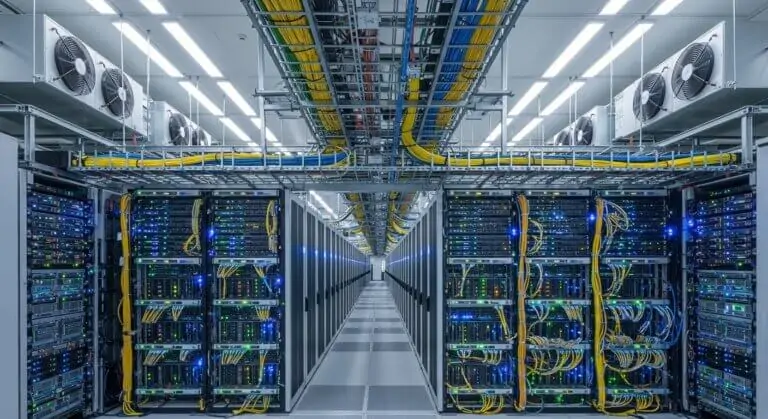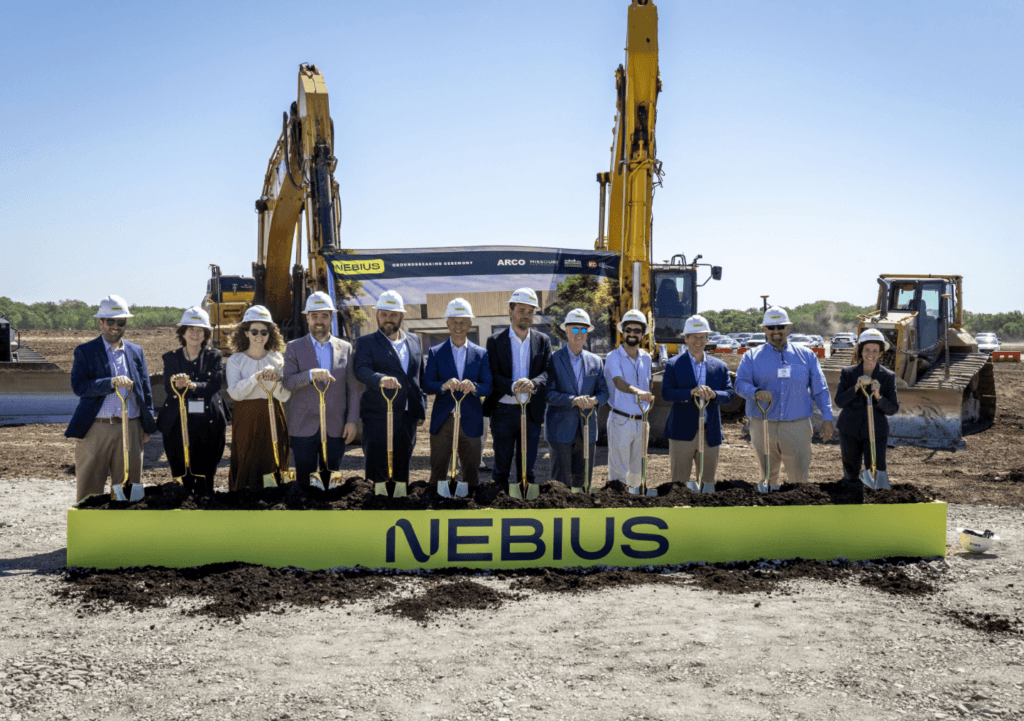
Nebius launched construction of a new gigawatt-scale AI factory campus in Independence, Missouri, marking the company’s first large-scale AI infrastructure project in the United States. The Amsterdam-based AI cloud provider said the multi-building development will span approximately 400 acres in eastern Independence and serve as a flagship hub for AI compute infrastructure supporting model training, inference, and enterprise AI workloads. The project reflects the accelerating demand for hyperscale AI infrastructure as cloud providers and AI-native companies race to secure large-scale GPU capacity and power availability.
Nebius said the first construction phase is now underway. The company expects the development to create approximately 1,200 construction jobs, primarily sourced from local union labor, along with roughly 130 permanent operational positions once the campus is fully operational. The project is also projected to generate approximately $650 million in tax revenue for local school districts and regional taxing authorities over the next two decades. Nebius stated that the facility incorporates design measures intended to minimize local environmental impact, including reduced water consumption, mitigation of light and noise pollution, and protections for utility ratepayers.
The company emphasized community engagement and workforce development as part of the project rollout. Nebius has already partnered with Metropolitan Community College on AI literacy and workforce initiatives and funded the elimination of school meal debt at Independence and Ft. Osage School Districts. NVIDIA also participated in the groundbreaking event, highlighting the broader AI infrastructure expansion underway across the U.S. as developers build new AI factories optimized for accelerated computing and large-scale GPU clusters.
- Gigawatt-scale AI factory campus planned on approximately 400 acres in Independence, Missouri
- Nebius describes the site as its flagship U.S. AI infrastructure project
- Construction phase expected to create approximately 1,200 jobs
- Campus expected to support approximately 130 permanent high-tech positions
- Projected to generate approximately $650 million in regional tax revenues over 20 years
- Facility designed to support large-scale AI training and inference workloads
- Nebius implementing measures to reduce water usage and local environmental impact
- Workforce initiatives include AI literacy programs and community college partnerships
- NVIDIA participated in the groundbreaking ceremony
- Nebius is headquartered in Amsterdam and trades on NASDAQ under ticker NBIS
“Projects like this are built for the long term, and we are committed to developing this facility in a way that directly benefits Independence,” said Nebius Board Chairman John Boynton. “We want to create lasting opportunities, act as a good partner with the community, and set a standard for developing AI and digital infrastructure responsibly.”
| Profile: Nebius | |
|---|---|
| Company Name | Nebius Group N.V. |
| Ticker Symbol | NASDAQ: NBIS |
| Headquarters | Amsterdam, Netherlands |
| Primary Business | AI cloud infrastructure and full-stack AI compute platform for model training, inference, deployment, and AI-native applications |
| Core Focus | GPU cloud infrastructure, AI factories, hyperscale AI compute, developer platforms, and enterprise AI services |
| Origins | Emerging from the restructuring of Yandex’s international and AI-related assets following the separation of Russian and international businesses |
| Corporate Background | Nebius inherited substantial AI engineering, infrastructure, and cloud expertise developed within Yandex, including large-scale data center and machine learning capabilities |
| Chairman | John Boynton |
| Business Model | Provides GPU compute infrastructure, AI cloud services, model training environments, managed AI stacks, and production inference capabilities |
| Target Customers | AI startups, foundation model developers, enterprise AI teams, hyperscale compute users, and AI-native software companies |
| Infrastructure Strategy | Build and operate large-scale AI factories optimized for accelerated computing and high-density GPU clusters |
| Technology Stack | NVIDIA GPU infrastructure, AI orchestration software, distributed cloud systems, and high-performance networking |
| NVIDIA Relationship | Nebius works closely with NVIDIA on AI infrastructure deployments and GPU-based AI factory development |
| Missouri AI Factory Project | Gigawatt-scale AI factory campus in Independence, Missouri spanning approximately 400 acres |
| Project Significance | Nebius describes the Independence campus as its flagship AI factory and first gigawatt-scale digital infrastructure project in the United States |
| Construction Jobs | Approximately 1,200 construction jobs, primarily local union labor |
| Permanent Jobs | Approximately 130 permanent high-tech operational positions |
| Estimated Local Economic Impact | Projected to generate approximately $650 million in tax revenues for local schools and taxing jurisdictions over 20 years |
| Education Commitments | AI literacy initiatives, workforce development partnerships, school district support, and local community investment programs |
| Community Initiatives | Donation to eliminate school meal debt in Independence and Ft. Osage School Districts; partnership with Metropolitan Community College |
| Sustainability Measures | Design efforts include reduced water use, mitigation of light and noise pollution, and protections for local utility ratepayers |
| Industry Positioning | Positioning itself as an AI-native cloud infrastructure provider competing in the rapidly expanding AI compute and GPU cloud market |
| Competitive Landscape | Competes with hyperscalers, GPU cloud providers, AI infrastructure startups, and specialized AI compute operators |
| Expansion Strategy | Aggressive buildout of global AI compute infrastructure and regional AI factory campuses to support accelerating enterprise AI demand |
| Website | www.nebius.com |
🌐 Analysis: Nebius joins a growing wave of AI infrastructure providers moving aggressively into large-scale U.S. AI factory development as demand for accelerated compute capacity continues to outpace supply. The project also reflects a broader trend toward locating AI infrastructure in regions that can provide scalable power, lower land costs, favorable tax structures, and access to long-haul fiber connectivity outside traditional coastal data center markets.