Nokia introduced new agentic AI capabilities across its fixed broadband portfolio, embedding autonomous AI agents into its Altiplano, Corteca, and Broadband Easy platforms to automate network operations, customer support, and fiber deployment workflows. The company said the new capabilities target the growing “cognitive broadband” market by enabling telecom operators to move toward self-optimizing access networks powered by AI-driven analytics and automation.
Nokia said the platform draws on operational data and expertise from more than 600 million deployed broadband lines. The company positioned the launch around practical operational outcomes, including higher first-contact resolution rates for support teams, faster incident qualification, reduced field service revisits, and accelerated fiber deployment processes. Nokia estimates operators can achieve network incident qualification within five minutes, raise first-contact helpdesk resolution rates above 50%, and reduce return visits to construction sites and connected homes by 50%.
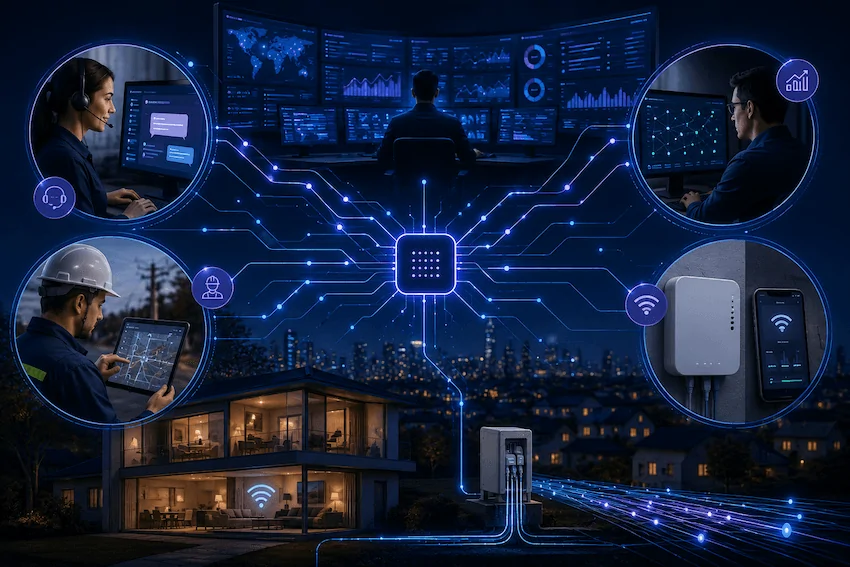
The new AI framework uses an open architecture designed to give operators control over data sovereignty, model selection, and external integrations. Nokia said operators can integrate their preferred large language models (LLMs), connect external data sources, and retain vendor independence while deploying AI workflows across broadband operations. The platform also introduces conversational AI assistants for field technicians and support staff, AI-powered installation guidance using text, voice, and image recognition, automated diagnostics, and troubleshooting agents capable of advanced root-cause analysis across access and home networks.
- Nokia embeds AI agents across Altiplano, Corteca, and Broadband Easy platforms
- Platform targets customer care, network engineering, operations, and field service workflows
- AI assistants provide conversational access to operational and product knowledge
- Computer vision validates FTTH installation quality and supports digital twin creation
- Automated diagnostics identify degradations before outages occur
- Troubleshooting agents automate root-cause analysis for home and access networks
- Nokia says operators can reduce field revisits by 50%
- Incident qualification can occur within five minutes, according to Nokia
- Operators retain flexibility to select their own LLMs and external data integrations
- Nokia cites operational expertise from more than 600 million deployed broadband lines
“AI makes your end-users less likely to churn, your engineering and helpdesk teams more productive, and your field teams connect more homes more quickly,” said Sandy Motley, President of Fixed Networks at Nokia. “Nokia’s Agentic AI puts 600+ million lines worth of broadband experience at the fingertips of every field technician, helpdesk agent, and network engineer, and solves problems before the customer is even aware.”
🌐 Analysis: Nokia’s announcement reflects the accelerating shift toward AI-native network operations as operators look for ways to reduce operating expenses while managing increasingly complex fiber and Wi-Fi environments. Unlike earlier automation platforms focused primarily on analytics dashboards and scripted workflows, agentic AI systems introduce autonomous reasoning loops capable of taking actions and coordinating across operational domains. Nokia’s emphasis on open APIs, model flexibility, and data sovereignty also aligns with growing operator concerns about dependence on closed AI ecosystems.
See our sponsorship prospectus