NVIDIA introduced NVIDIA Fleet Intelligence, a new managed service designed to provide real-time operational visibility, health monitoring, and integrity validation for large-scale GPU fleets used in AI infrastructure. The service is now generally available at no cost for NVIDIA data center GPU customers operating Hopper, Blackwell, and Vera Rubin-based systems. NVIDIA positions the platform as a deployment-agnostic telemetry and monitoring layer capable of working across heterogeneous infrastructure environments, independent of orchestration stack or scheduler choice.
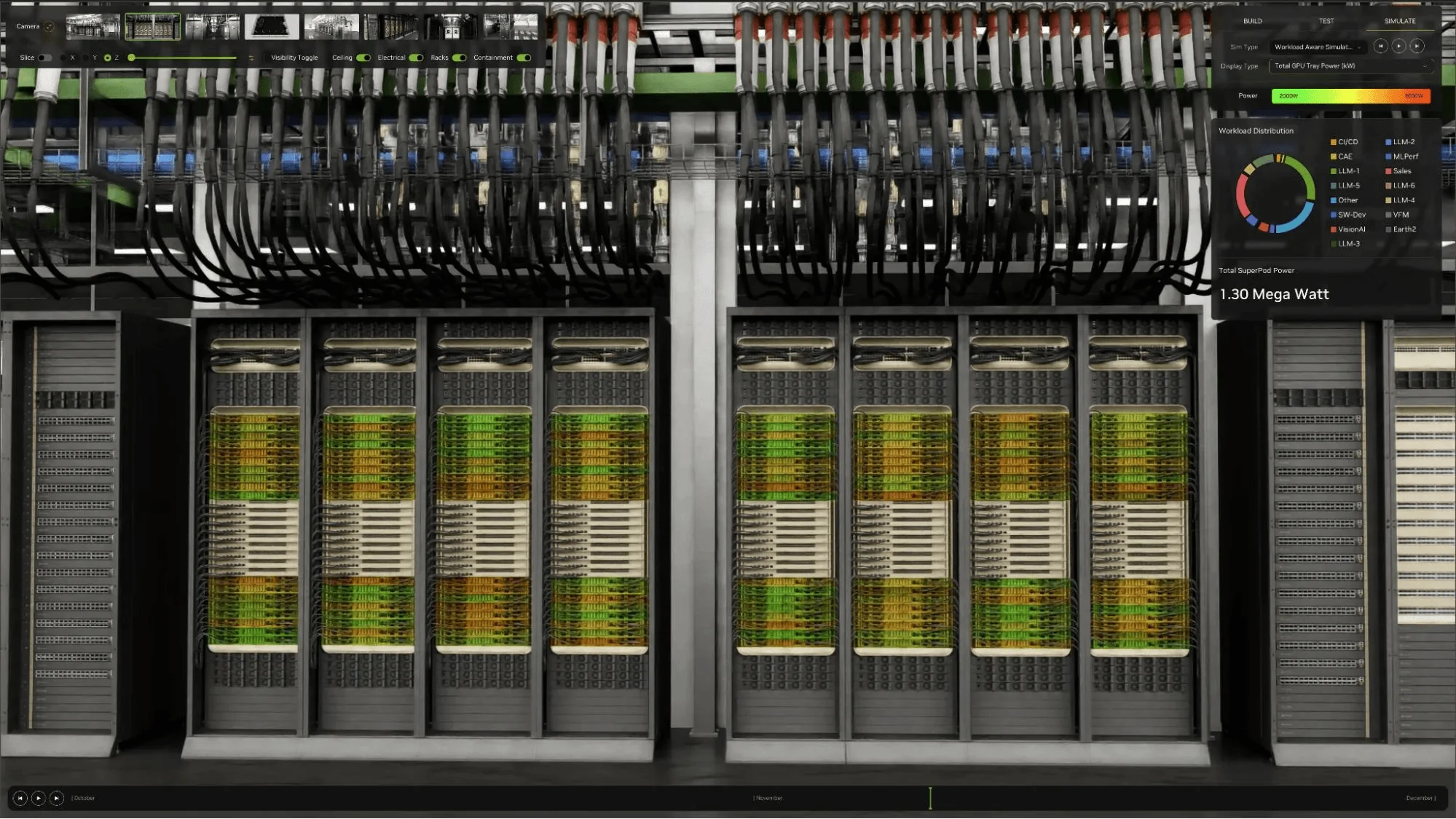
The platform uses a lightweight, host-based agent that streams GPU telemetry into a cloud-hosted Fleet Intelligence service running on NVIDIA NGC. The agent integrates technologies including GPUd, NVIDIA Data Center GPU Manager (DCGM), and the NVIDIA Attestation SDK. NVIDIA also released the Fleet Intelligence agent as open source through GitHub, enabling operators to audit the telemetry pipeline and collected data. Fleet Intelligence aggregates telemetry across GPU utilization, memory bandwidth, power draw, NVLink status, thermal conditions, ECC faults, and hardware reliability indicators to help operators identify underutilized resources, detect failures early, and reduce downtime in large AI clusters.
A major focus of the release centers on integrity and attestation capabilities derived from NVIDIA Confidential Computing technologies. Fleet Intelligence cryptographically validates GPU firmware and runtime integrity using NVIDIA root-of-trust certificates and the NVIDIA Remote Attestation Service (NRAS). The platform can verify that GPUs are running approved firmware and untampered configurations using Reference Integrity Manifests tied to vBIOS builds. NVIDIA said the service incorporates operational learnings from its own DGX Cloud deployments involving hundreds of thousands of GPUs. Early access customers included Lambda and IREN, both of which contributed operational feedback during development.
• Fleet Intelligence supports Hopper, Blackwell, and Vera Rubin GPUs
• GPU attestation currently supports Vera Rubin and Blackwell architectures only
• Telemetry includes GPU, CPU, NVLink, PCIe, networking, power, and thermal metrics
• Supports email, Slack, and custom alert integrations
• Health checks leverage NVIDIA GPUd and DCGM technologies
• Agent operates in read-only mode and does not modify host configurations
• Service includes historical reporting, inventory dashboards, and anomaly visualization
• NVIDIA released the Fleet Intelligence agent as open source for auditability
• Offered at no cost to NVIDIA data center GPU operators and cloud tenants
According to Chuan Li, Chief Scientific Officer at Lambda, “NVIDIA Fleet Intelligence gave Lambda’s research team end-to-end visibility across our NVIDIA Blackwell/Hopper GPU fleet with minimal setup. Its alerts catch both active failures and early warning signs. Its reports turn fleet-wide health into actionable insights.”
🌐 Analysis: NVIDIA is increasingly expanding beyond GPU silicon into operational software and infrastructure management tooling for AI factories. Fleet Intelligence complements NVIDIA’s broader AI infrastructure stack that already includes DGX systems, NVLink fabrics, Spectrum-X networking, Mission Control orchestration, and confidential computing technologies. The addition of fleet-wide telemetry and predictive operational analytics reflects growing hyperscaler and enterprise demand for higher GPU utilization rates as AI clusters scale toward tens of thousands of accelerators.
🌐 Analysis: The launch also signals intensifying competition around AI infrastructure observability and GPU operations. Cloud operators and infrastructure vendors including AMD, Intel, and several startup ecosystems are building competing telemetry, reliability, and orchestration frameworks for large AI clusters. NVIDIA’s ability to integrate hardware telemetry, firmware attestation, and operational analytics directly into its platform stack strengthens its position as a vertically integrated AI infrastructure supplier.