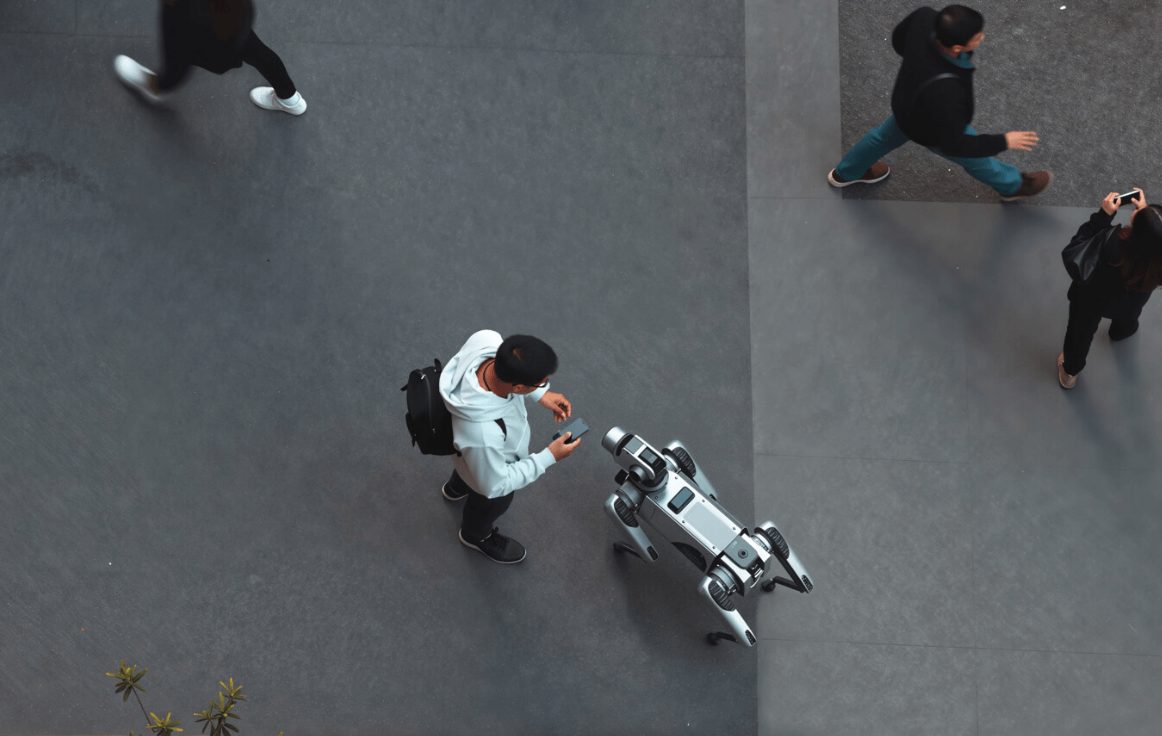
SoftBank Corp. and Ericsson demonstrated a proof-of-concept at MWC 2026 showing how AI-RAN architecture can support low-latency, highly reliable communications for Physical AI applications such as robotics and autonomous systems. The trial integrated SoftBank’s real-time processing technology running on a Mobile Edge Compute (MEC) platform with Ericsson’s 5G network capabilities, enabling robots to dynamically offload AI workloads to edge infrastructure when onboard compute resources prove insufficient.
The PoC validated a mechanism that dynamically switches AI processing between the robot and the MEC platform based on operational status and workload complexity. Lightweight inference tasks remain on-device, while more advanced decision-making workloads move to the edge. Ericsson’s differentiated connectivity features, including network slicing and priority handling, adapt network performance in real time to meet latency, throughput, and reliability requirements for both control signals and AI data flows.
The companies said the approach addresses a key limitation in conventional networks, where AI processing and RAN control operate independently. By coordinating robot control, network behavior, and distributed compute resources in an integrated framework, the AI-RAN foundation establishes a path toward scalable Physical AI deployments across manufacturing, logistics, and infrastructure maintenance environments.
• Dynamic AI workload offload between robot and MEC platform based on processing demand
• Integration of SoftBank real-time MEC processing with Ericsson 5G RAN features
• Use of network slicing and priority handling for differentiated connectivity
• Validation of low-latency, highly reliable communications for robotics
• Target use cases include industrial automation, logistics, and autonomous systems
Ryuji Wakikawa, Vice President and Head of the Advanced Technology Research Institute at SoftBank Corp., said: “By further enhancing the mechanism built this time for dynamically offloading AI processing and the low-latency, highly reliable network, SoftBank aims to realize Physical AI capable of more flexible and advanced decision-making.”
🌐 Analysis: The demonstration aligns with the broader industry shift toward AI-native RAN architectures, where compute, connectivity, and orchestration converge to support distributed AI workloads. As operators and vendors accelerate AI-RAN initiatives, including dynamic slicing and edge compute integration, this PoC highlights how telecom networks may evolve into real-time infrastructure platforms for robotics and other Physical AI applications beyond traditional mobile broadband.