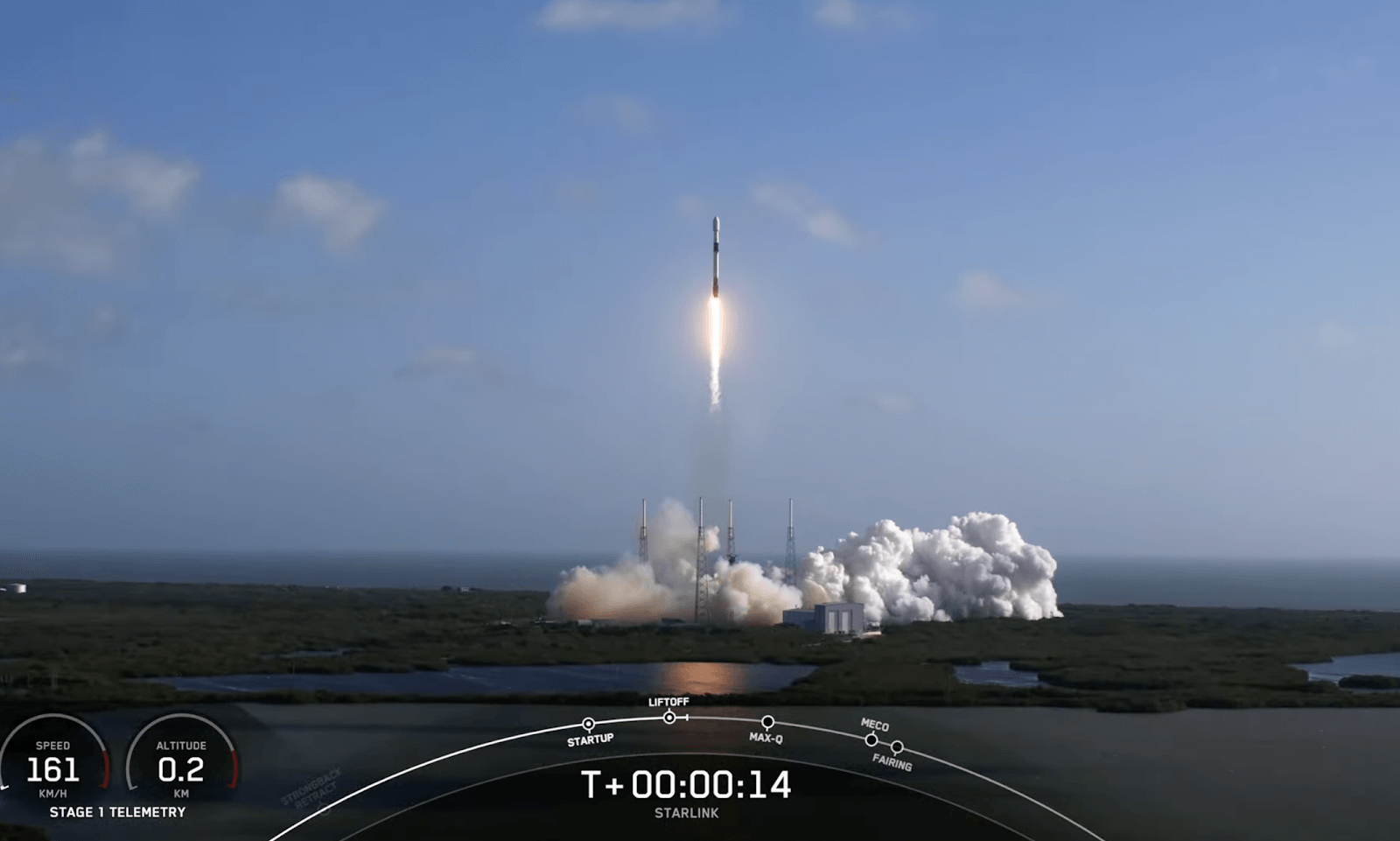
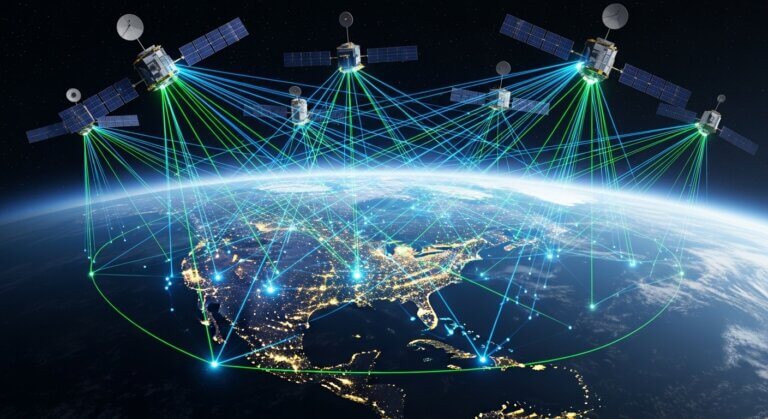
SpaceX launched 56 Starlink satellites to low-Earth orbit from Space Launch Complex 40 (SLC-40) at Cape Canaveral Space Force Station in Florida.
The booster used for this mission had flown 8 previous times: CRS-24, Eutelsat HOTBIRD 13F, OneWeb 1, SES-18 and SES-19, and three Starlink missions.
The mission marks SpaceX’s 43rd launch of the year. The company has completed 242 Falcon 9 missions to date.
Starlink currently has 1.5 million subscribers globally.
Share this article
Help others discover this reporting.
Editorial responsibility
Jim Carroll
Editor & Publisher
Every article published by Converge Digest is researched, curated, fact-checked and editorially reviewed by Jim Carroll, Editor & Publisher. AI-assisted drafting may be used to accelerate production, but all content is reviewed, refined and approved prior to publication.
You just read about 5G / 6G / Wi-Fi. A name from the archive that helped shape it:
Embrane built Software-defined Layer 3-7 network services. What became of it?
Embrane brought Software-defined Layer 3-7 network services to Networking. That work was distinctive enough to lead to its acquisition by Cisco Systems. The standalone name now passes into the archive — but the team and technology continue inside Cisco Systems today. One of 430 names here whose work outlived the company.
You just read about 5G / 6G / Wi-Fi. A technology from the archive that helped get us here:
Analog C-band TVRO served 1979–2000. What ultimately replaced it?
Analog C-band TVRO two-to-three-meter backyard dishes pulled analog FM television feeds straight off C-band satellites (later scrambled with VideoCipher). Its job passed to Digital DBS (DirecTV — but the problem it solved, and the ideas it proved, live on in what replaced it. The standard rests here in the archive. One of 198 technologies here that opened a door and then held it for the next.