• Home
  • About
  • Events Calendar
  • Blueprint Guidelines
  • Privacy Policy
  • Manage Email Delivery
  • NextGenInfra.io
No Result
View All Result
Converge Digest
Monday, June 8, 2026
  • Home
  • About
  • Events Calendar
  • Blueprint Guidelines
  • Privacy Policy
  • Manage Email Delivery
  • NextGenInfra.io
No Result
View All Result
Converge Digest
No Result
View All Result

Home » Starlink advances its global Direct-to-Cell ambitions

Starlink advances its global Direct-to-Cell ambitions

April 8, 2024
in Space
A A

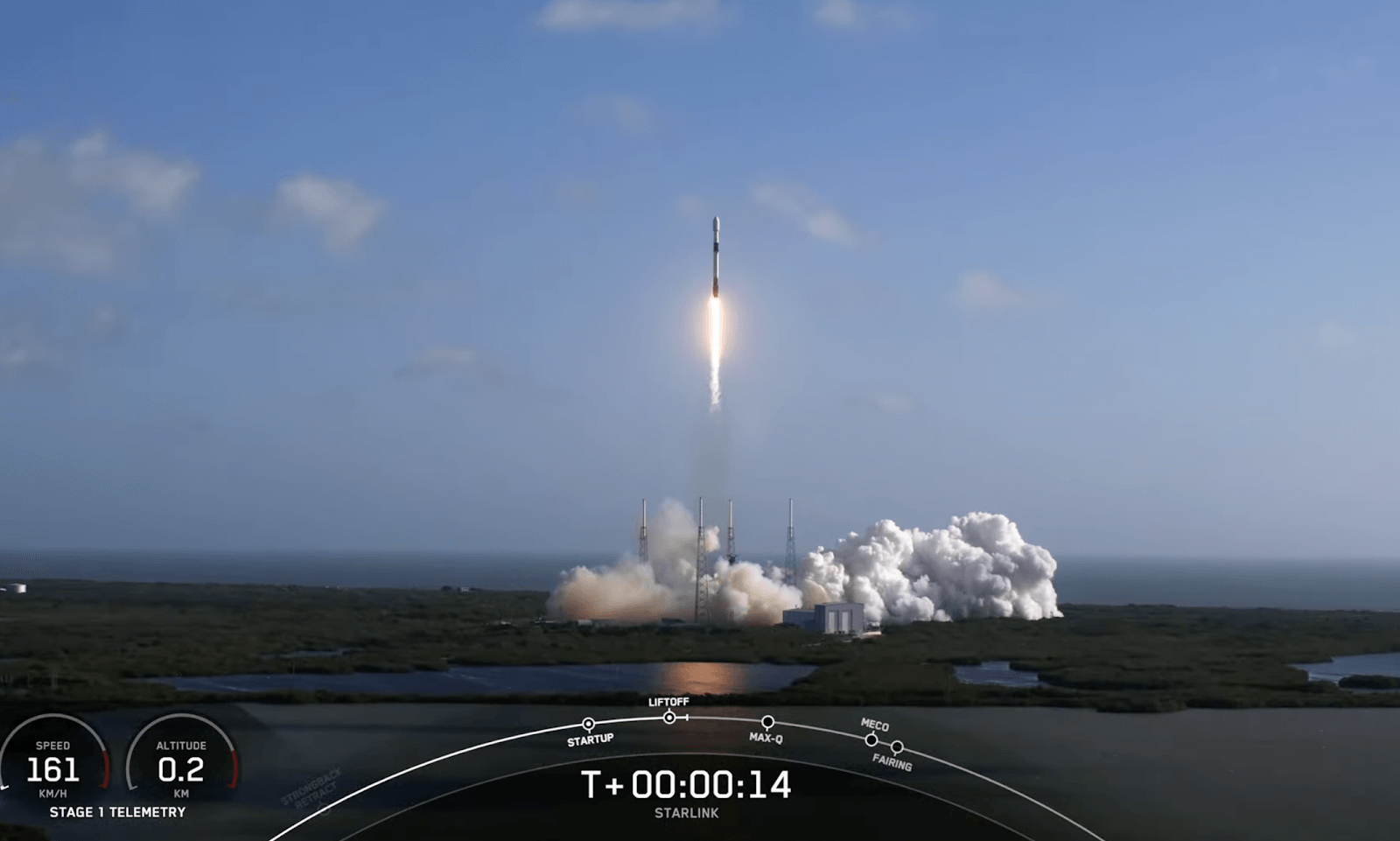
On Saturday, April 6, 2024, SpaceX’s Falcon 9 rocket successfully carried out its 35th launch for the Starlink 8-1 mission from Vandenberg Space Force Base in California. This launch saw the deployment of 21 Starlink satellites, including 6 Direct-to-Cell satellites, marking a pivotal step in the company’s ambition to launch global Direct-to-Cell and Internet-of-Things service.

Key Highlights:

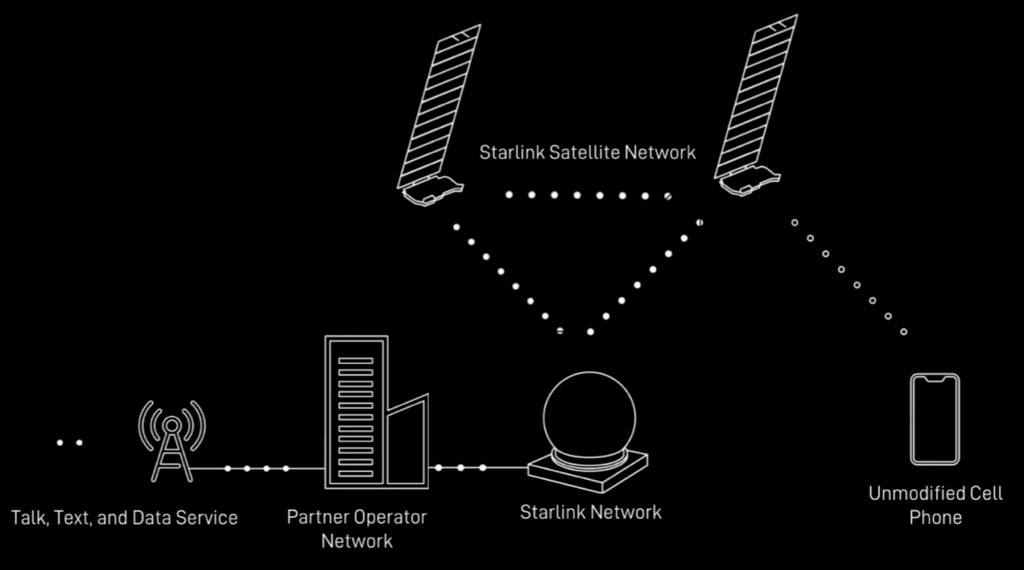
Direct-to-Cell Advancements : With the addition of 6 Direct-to-Cell satellites in this launch, the total number in orbit has reached 12. These satellites are part of Starlink’s ambitious plan to scale its Direct to Cell network rapidly. The initiative aims to launch hundreds of satellites to provide text service by 2024 and expand to voice, data, and Internet of Things (IoT) services by 2025.

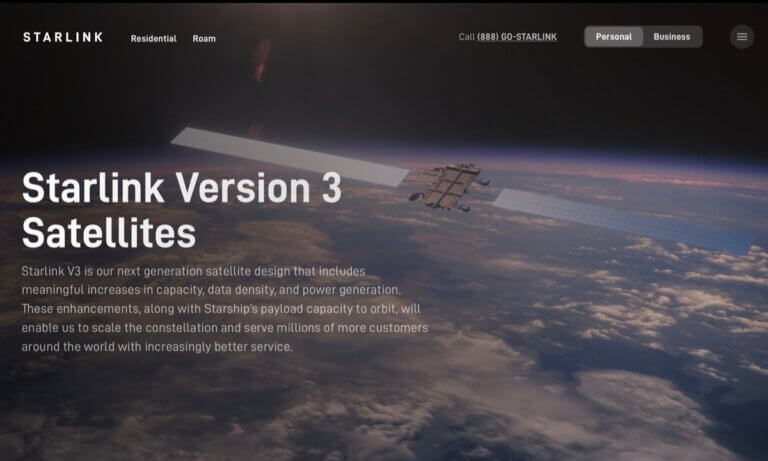
Technical Innovations: Starlink’s Direct to Cell satellites are equipped with custom silicon, large advanced phased array antennas, and sophisticated software algorithms. These innovations allow the satellites to communicate with standard cell phones on Earth, overcoming significant technical and regulatory challenges.

Global Partnerships and Regulatory Milestones: Starlink has formed partnerships with several global operators, including T-Mobile, Rogers, and Optus, providing critical LTE spectrum for satellite communication. These collaborations, coupled with rapid regulatory approvals, aim to deliver seamless and lifesaving communication services worldwide.

Future Plans: Leveraging SpaceX’s vertical integration and the upcoming Starship launches, Starlink plans to further improve its Direct to Cell service. The company’s advanced LTE modems enable the satellites to function as cell towers in space, ensuring reliable and seamless communication.

Launch Success: The Falcon 9 rocket’s 35th mission from Space Launch Complex 4E included the sixth flight of its booster, which has previously supported various missions, including Crew-7 and CRS-29. The successful landing on the drone ship “Of Course I Still Love You” in the Pacific Ocean underscores SpaceX’s commitment to reusability.

  • On January 8, the Starlink successfully sent and received the first text messages using T -Mobile network spectrum through one of its new Direct to Cell satellites launched six days prior.
  • In August 2022, Starlink announced its first partnership with T-Mobile, and have since announced deals with Rogers in Canada, Optus in Australia, One New Zealand, KDDI in Japan, Salt in Switzerland, and Entel in Chile & Peru. The operators provide critical LTE spectrum in the 1.6-2.7 GHz range that we use to transmit our satellite signals. This allows Starlink to integrate like a standard roaming partner with operators. Starlink says operators in its network have access to reciprocal global access that allows their users to access the service when they travel to one of partner countries.

Tags: Direct-to-CellSpaceXStarlink
ShareTweetShareSummarizeSummarize
Previous Post

TSMC to receive up to $6.6B under the CHIPS and Science Act

Next Post

#OFC24: All-Optical Circuit Switching for Scalable Data Centers

Jim Carroll

Jim Carroll

Editor and Publisher, Converge! Network Digest, Optical Networks Daily - Covering the full stack of network convergence from Silicon Valley

Related Posts

Space

Starcloud Taps SpaceX Starlink Laser Links for Orbital Data Centers

May 26, 2026
Legal / Regulatory

FCC Clears EchoStar Spectrum Sales to AT&T and SpaceX

May 12, 2026
5G / 6G / Wi-Fi

US Mobile Bundles Starlink Residential Broadband with MVNO Service

April 8, 2026
All

Intel Confirms Role in Terafab Initiative

April 7, 2026
Space

Microsoft Partners with Starlink to Expand Satellite Connectivity

February 24, 2026
5G / 6G / Wi-Fi

MasOrange and Starlink Launch Spain’s First Direct-to-Cell Pilot

February 3, 2026
Next Post

#OFC24: All-Optical Circuit Switching for Scalable Data Centers

Categories

  • 5G / 6G / Wi-Fi
  • AI Infrastructure
  • All
  • Automotive Networking
  • Blueprints
  • Clouds and Carriers
  • Data Centers
  • Enterprise
  • Explainer
  • Feature
  • Financials
  • Last Mile / Middle Mile
  • Legal / Regulatory
  • Optical
  • Quantum
  • Research
  • Security
  • Semiconductors
  • Space
  • Start-ups
  • Subsea
  • Sustainability
  • Video
  • Webinars

Archives

Tags

5G All AT&T Australia AWS Blueprint columns BroadbandWireless Broadcom China Ciena Cisco Data Centers Dell'Oro Ericsson FCC Financial Financials Huawei Infinera Intel Japan Juniper Last Mile Last Mille LTE Mergers and Acquisitions Mobile NFV Nokia Optical Packet Systems PacketVoice People Regulatory Satellite SDN Service Providers Silicon Silicon Valley StandardsWatch Storage TTP UK Verizon Wi-Fi
Converge Digest

A private dossier for networking and telecoms

Follow Us

  • Home
  • About
  • Events Calendar
  • Blueprint Guidelines
  • Privacy Policy
  • Manage Email Delivery
  • NextGenInfra.io

© 2026 Converge Digest - A private dossier for networking and telecoms.

No Result
View All Result
  • Home
  • About
  • Events Calendar
  • Blueprint Guidelines
  • Privacy Policy
  • Manage Email Delivery
  • NextGenInfra.io

© 2026 Converge Digest - A private dossier for networking and telecoms.

This website uses cookies. By continuing to use this website you are giving consent to cookies being used. Visit our Privacy and Cookie Policy.
Go to mobile version