Lightelligence, operating as Shanghai Xizhi Technology, began trading on the Hong Kong Stock Exchange on April 28, 2026 under ticker 1879.HK, marking the first public listing of a pure-play photonic computing company. The stock opened at approximately HK$880 versus an IPO price of HK$183.20, delivering a first-day gain of roughly 380% and closing near HK$886. The debut values the company at about HK$81.5 billion (~US$10.4 billion), reflecting strong investor appetite for next-generation AI infrastructure technologies.
The IPO raised approximately HK$2.5 billion (~US$323 million) with demand significantly exceeding supply. The retail tranche saw oversubscription levels reported as high as 5,785x, while institutional demand exceeded 50x. Cornerstone investors included major global and strategic names such as Alibaba, GIC, Temasek, Baillie Gifford, Lenovo, ZTE, and others, accounting for roughly two-thirds of the offering. The listing falls under Hong Kong’s Chapter 18C regime, designed for pre-commercial specialist technology firms, underscoring the market’s willingness to fund deep-tech platforms ahead of profitability.
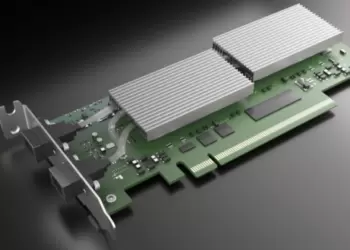
Lightelligence focuses on optoelectronic hybrid computing to address scaling constraints in AI systems, particularly power consumption and data movement bottlenecks. Its portfolio spans optical interconnect and compute technologies, including PACE2 photonic computing accelerators, Hummingbird optical processors, and Photowave interconnect solutions compatible with PCIe 5.0/6.0 and CXL. The company’s architecture integrates photonics for matrix operations and data transport while maintaining compatibility with CMOS manufacturing and advanced packaging ecosystems, positioning it as a complement to GPU-centric architectures.
- Ticker: 1879.HK (HKEX Main Board, Chapter 18C)
- IPO proceeds: ~HK$2.5B (~US$323M), priced at HK$183.20/share
- First-day performance: Open ~HK$880; close
HK$886 (+384%) - Market cap: ~HK$81.5B (~US$10.4B)
- Oversubscription: Retail ~5,785x; institutional ~54x
- Core focus: Photonic AI compute and optical interconnects
- Key products: PACE/PACE2, Hummingbird, Photowave
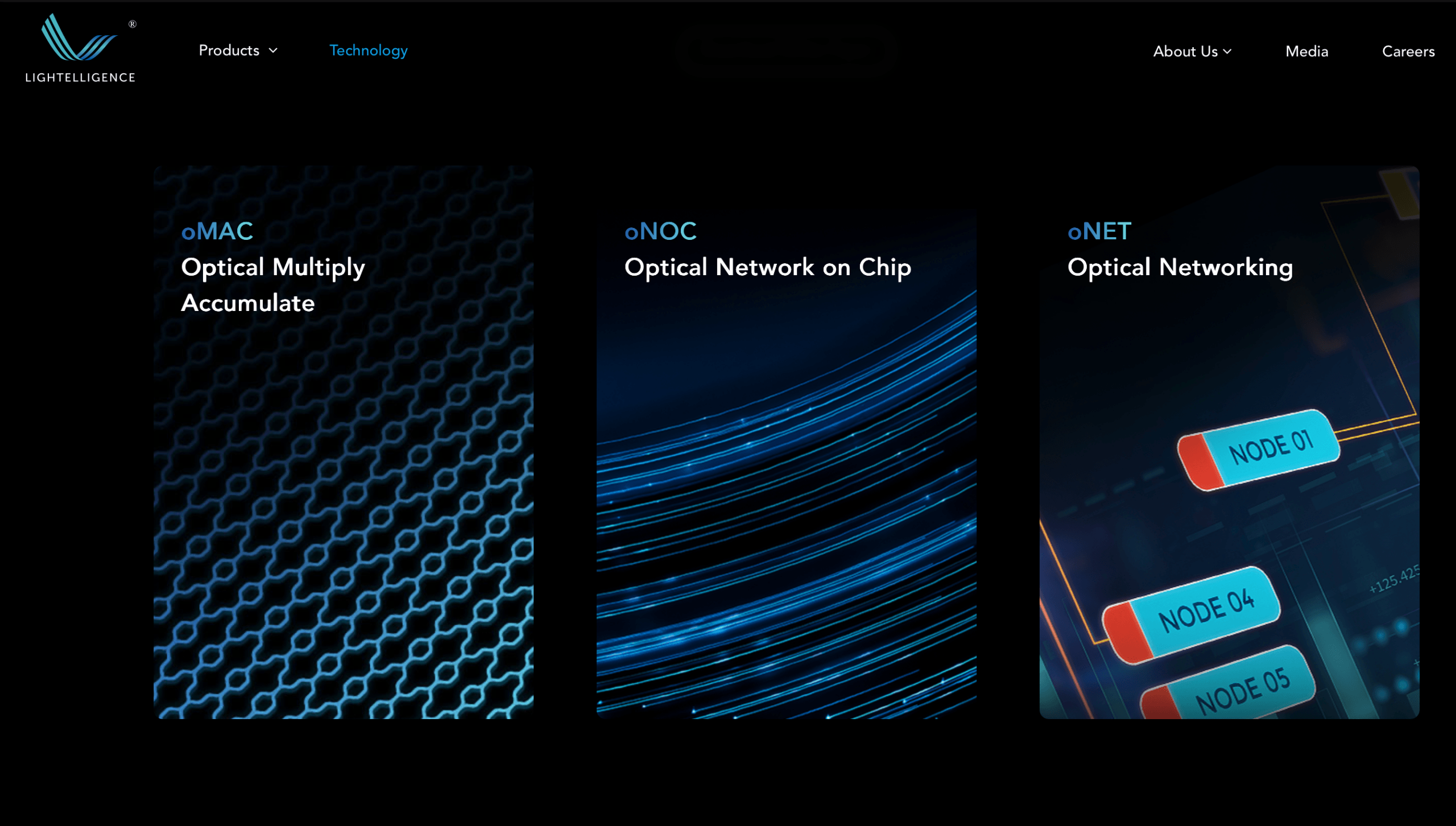
- Technology stack: oMAC, oNOC, oNET (optical compute + networking)
- Use cases: Hyperscale AI clusters, supercomputing, disaggregated memory architectures
“By leveraging photons instead of electrons, we can fundamentally change the efficiency curve of AI infrastructure,” the company stated.
| Profile: Lightelligence | |
|---|---|
| Company Name | Lightelligence (Shanghai Xizhi Technology Co., Ltd. / 曦智科技) |
| Ticker | 1879.HK |
| Founded | 2017 (MIT spin-off) |
| Headquarters | Shanghai, China & Boston, USA |
| CEO / Chairman | Yichen Shen |
| Employees | ~250+ |
| Core Technology | Optoelectronic hybrid computing (photonics + CMOS) |
| Key Innovations | oMAC, oNOC, oNET |
| Flagship Products | PACE/PACE2, Hummingbird, Photowave |
| Markets | AI infrastructure, hyperscale data centers, HPC |
| 2025 Revenue | ~CN¥106M (~US$15M) |
| 2025 Net Loss | ~CN¥1.34B (~US$190M) |
| Funding | ~US$210M Series C; >US$1B valuation pre-IPO |
| Key Investors | Tencent, Sequoia, Baidu Ventures, China Mobile, Hillhouse |
🌐 Analysis: Lightelligence’s IPO provides a clear signal that capital markets now view photonic computing as a credible extension of AI infrastructure rather than a speculative research domain. The company’s positioning—augmenting GPUs rather than replacing them—aligns with broader industry moves toward co-packaged optics and memory disaggregation. At the same time, incumbents such as Broadcom and Marvell continue advancing high-speed electrical and optical interconnects, suggesting a hybrid future where photonics gradually penetrates both networking and compute layers.
🌐 Analysis: The scale of the IPO debut highlights investor sensitivity to the “power wall” in AI data centers, a theme also driving innovation in CPO, liquid cooling, and alternative compute architectures. Execution risk remains high given Lightelligence’s pre-profit status and reliance on emerging workloads, but its strong backing and early deployments position it as a key company to watch as optical technologies move deeper into the compute stack.
🌐 We’re tracking the latest developments in networking silicon. Follow our ongoing coverage at: https://convergedigest.com/category/semiconductors/