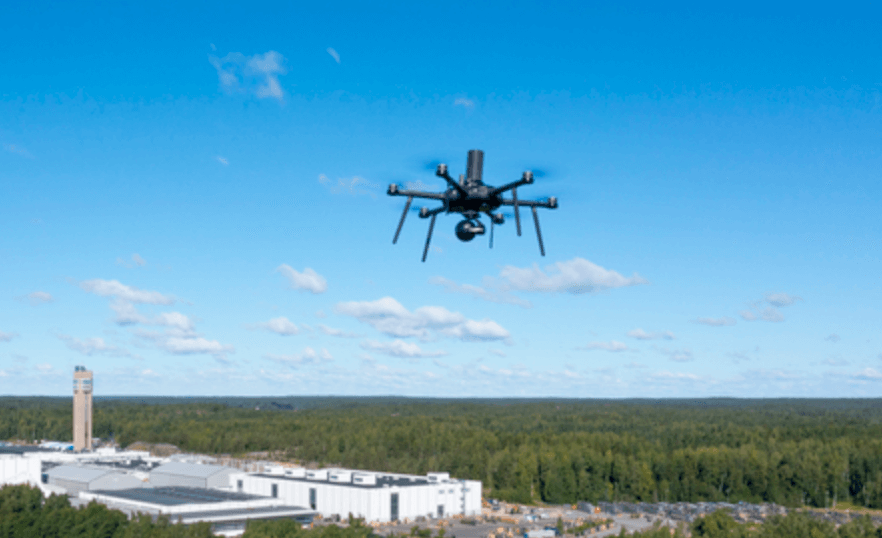
Nokia selected Amprius’ SiCore lithium-ion cells to power its next-generation drone systems, advancing the vendor’s 5G-connected “drone-in-a-box” platform with higher endurance and expanded payload capability. After extensive qualification, the batteries met Nokia’s requirements for burst power during takeoff, stable delivery during long missions, and reliable operation of safety-critical subsystems such as obstacle avoidance and automated return-to-home. The integration supports Nokia’s push into large-scale, beyond-visual-line-of-sight (BVLOS) missions for public safety and industrial monitoring.
The lightweight, high-energy-density SiCore cells allow Nokia drones to carry more advanced sensors—including LiDAR, thermal imaging, and 5G modules—without reducing mission range. Combined with Nokia Drone Networks’ Extra Long Range (XLR) capabilities, the batteries extend the operational reach of automated fleets and reinforce the platform’s open-architecture design for secure, multi-payload deployments.
Amprius said the selection underscores rising demand for silicon-anode batteries in aviation-grade applications as UAV platforms adopt more autonomy and operate in demanding thermal environments. The company continues to expand its footprint across UAVs, eVTOLs, and emerging mobility systems, backed by multi-GWh manufacturing agreements to scale production.
• Nokia selected Amprius’ SiCore batteries for its next-generation drone platform.
• SiCore supports burst power for takeoff and sustained energy for long-duration flights.
• High energy density enables advanced payloads: LiDAR, thermal imaging, 5G modules.
• Integration strengthens Nokia Drone Networks’ BVLOS and Extra Long Range mission profile.
• Amprius reports growing adoption of silicon-anode cells across UAV and eVTOL ecosystems.