GSMA unveiled Open Telco AI in Barcelona, introducing an industry-wide effort to build and benchmark AI models tailored for telecom networks. The initiative, announced at MWC26, brings together operators, vendors, AI developers and academic institutions to address performance gaps in general-purpose AI models when applied to telecom tasks. A new collaboration portal at GSMA.com/open-telco-ai provides access to open models, datasets, compute resources and benchmarking tools designed specifically for network operations and standards-driven environments.
Despite rapid progress in frontier AI, general-purpose models often struggle to interpret network telemetry, parse telecom standards documentation and automate operations with the precision required in regulated carrier environments. GSMA cited industry data showing that only 16% of telecom generative AI deployments target network operations, highlighting the need for domain-specific capabilities. Open Telco AI introduces a Telco Capability Index to track model performance across telecom-specific tasks and establish measurable benchmarks for telco-grade AI.
Founding supporters include AT&T and AMD. AT&T is releasing a family of open telco models trained on publicly available datasets and designed to run across hardware and cloud environments. AMD is contributing GPU compute capacity and toolchains for model training, fine-tuning and inference, working with its cloud partner TensorWave. The initiative also includes industry competitions such as the AI Telco Troubleshooting Challenge, which drew more than 1,000 registrations and will announce winners during MWC26.
The Open Telco AI portal supports co-creation across several domains:
- Telco Models: Open-weight models optimized for network troubleshooting, standards interpretation and automation. Contributions include models from AT&T, the RFGPT radio-frequency language model from Khalifa University and a Large Telco Model (LTM) from AdaptKey AI built on NVIDIA Nemotron.
- Open Data: Knowledge graphs, embeddings and curated datasets of telecom text, logs and standards material from GSMA, Huawei Technologies France, Khalifa University, Mantis NLP, NetoAI, Pleias, Purdue University, The University of Texas at Dallas, University of Leeds and Yale University, along with synthetic data pipelines from NVIDIA.
- Compute: GPU-based training and inference resources from AMD and TensorWave, supported by open toolchains.
- Benchmarks: A public leaderboard measuring performance across seven telecom-specific benchmarks, with tools for local evaluation and submission.
- Community: Developer challenges and collaboration programs, including the AI Telco Troubleshooting Challenge and an Agentic Challenge focused on autonomous network workflows.
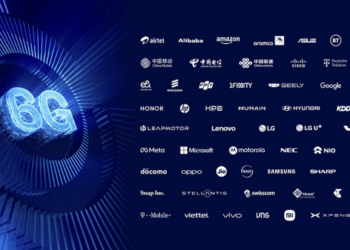
Contributing partners span a broad cross-section of the telecom ecosystem, including operators such as AT&T, KDDI, KPN, LGU+, Orange, Ooredoo, SK Telecom, SoftBank, Swisscom and Turkcell, alongside technology vendors and research institutions. Additional participant partners include China Telecom, China Unicom, China Mobile, Deutsche Telekom, e&, Google Cloud, IBM, Liberty Global, Telefónica and Vodafone.
Louis Powell, Director of AI Initiatives at GSMA, said: “Today’s AI models still fall short of the complexity, precision and reliability the telecom industry demands. Put simply, AI does not yet speak telco and operators are often deploying technology that cannot meet the required levels of accuracy, safety or efficiency. Establishing clear benchmarks and collaborating across the industry on datasets, models and agentic systems is essential. Open Telco AI provides a shared foundation designed to close this gap, an approach that other regulated sectors such as finance and healthcare can follow.”
🌐 Analysis: Open Telco AI formalizes a shift toward domain-specific foundation models in telecom, aligning with broader industry moves toward AI-native RAN, autonomous core networks and agentic orchestration platforms. With operators and silicon providers such as AMD contributing open models and compute, the initiative positions the GSMA as a coordinating layer for benchmarking and interoperability at a time when vendors including NVIDIA, Google Cloud and major RAN suppliers are accelerating telecom-focused AI stacks.
🌐 We’re tracking the latest developments in AI infrastructure and telecom AI. Follow our ongoing coverage at: https://convergedigest.com/category/ai-infrastructure/