NVIDIA announced that 35 new AI supercomputers are currently under development across Europe, marking what the company describes as the continent’s largest one-year expansion of AI and high-performance computing infrastructure. The systems span national supercomputing centers, EuroHPC AI Factories, academic institutions, and research organizations across 23 countries. According to NVIDIA, the deployment will provide advanced AI computing resources to more than 3 million researchers working in fields including climate science, healthcare, clean energy, quantum computing, and fundamental scientific research.
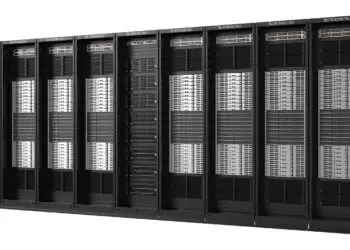
The new systems are built primarily on NVIDIA Blackwell and Hopper architectures and collectively contribute to more than 800 AI exaflops of deployed or announced AI computing capacity across Europe since 2025. NVIDIA said its technology underpins more than 90% of Europe’s AI Factory initiatives. The deployments combine NVIDIA GB300 NVL72 and GB200 NVL4 systems with NVIDIA Quantum InfiniBand networking, CUDA-X software libraries, NIM microservices, and NVIDIA AI Enterprise software to support AI model training, simulation, inference, and agentic AI workloads.
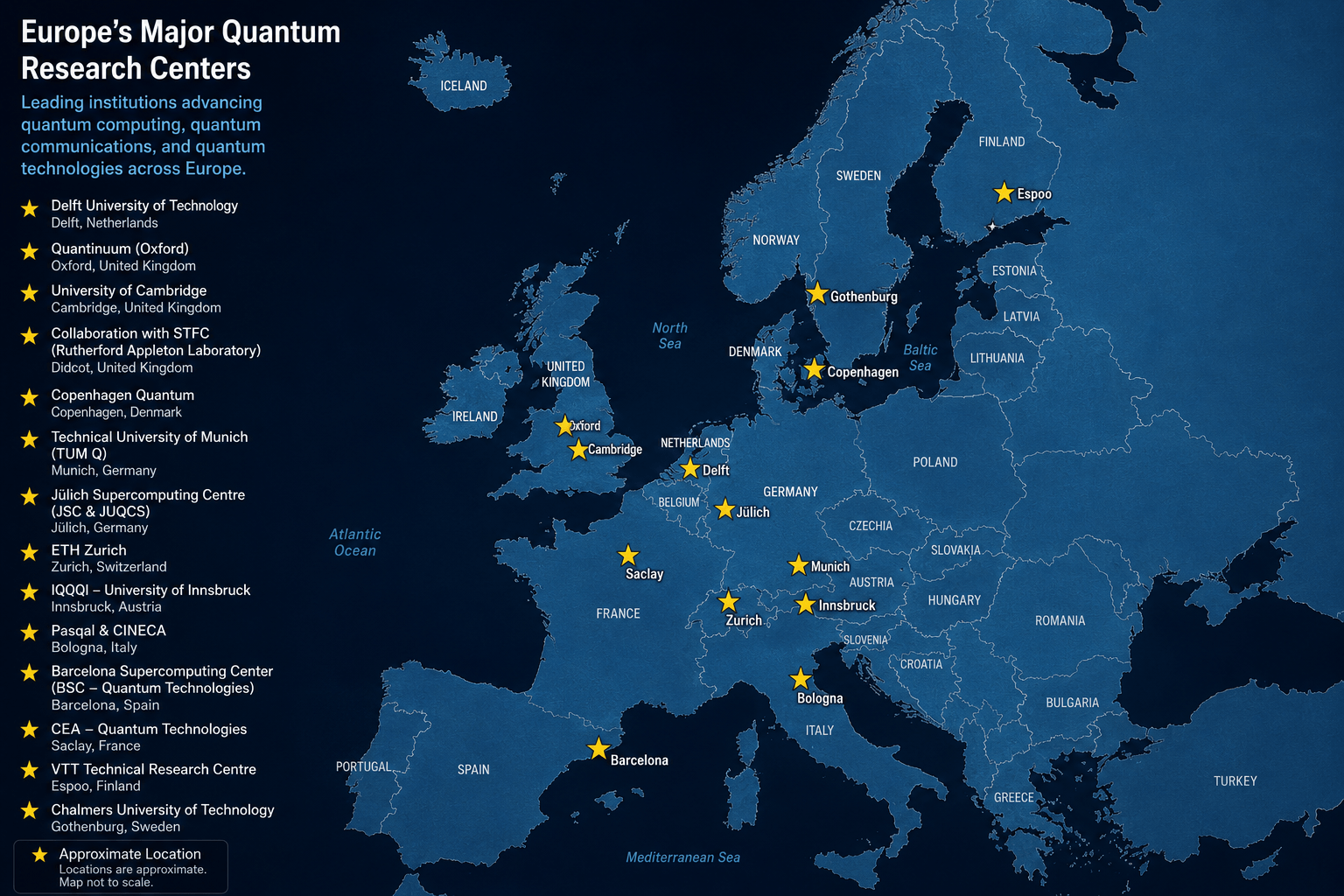
The announcement, made during ISC High Performance 2026 in Hamburg, also highlighted Europe’s growing investment in hybrid quantum-classical computing. Several leading research institutions, including CINECA, the Barcelona Supercomputing Center, Fraunhofer FOKUS, and the Jülich Supercomputing Centre, are integrating NVIDIA’s CUDA-Q platform to connect quantum processors with classical supercomputers. NVIDIA also cited new AI-driven initiatives in climate modeling, biomedical research, hydrogen energy systems, fusion research, and carbon capture technologies.
• Barcelona Supercomputing Center’s EuroHPC AI Factory will expand MareNostrum 5 with NVIDIA GB300 NVL72 and GB200 NVL4 systems connected via Quantum-X800 InfiniBand, targeting approximately 20 AI exaflops for training and 33 AI exaflops for inference.
• BavariaAI’s Blue Swan project will deploy 1,000 GPUs across the Friedrich-Alexander University and Leibniz Supercomputing Centre facilities, delivering up to 11 AI exaflops for training and 22 AI exaflops for inference.
• Italy’s IT4LIA AI Factory will deploy more than 8,000 GPUs using NVIDIA GB200 NVL4 systems, delivering 82 AI exaflops for training and 164 AI exaflops for inference.
• Germany’s HammerHAI AI Factory will deploy more than 850 GPUs and deliver approximately 8 AI exaflops for training and 15 AI exaflops for inference.
• Sweden’s Mimer AI Factory at Linköping University will deploy 400 NVIDIA GPUs and provide approximately 4 AI exaflops for training and 7 AI exaflops for inference.
“AI is the new instrument of science, and Europe is building the infrastructure to put it in the hands of millions of researchers,” said Jensen Huang, founder and CEO of NVIDIA. “With NVIDIA accelerated computing, researchers can simulate more complex systems, train scientific AI models and build agentic AI workflows that turn Europe’s data and expertise into breakthroughs for the world.”
🌐 Analysis
This announcement underscores how Europe’s AI strategy is increasingly centered on sovereign AI infrastructure. Rather than relying exclusively on commercial cloud providers, the EuroHPC program is funding national AI Factories designed to provide shared access to advanced AI resources for universities, startups, industrial companies, and public-sector organizations. The scale is notable: the announced systems collectively represent hundreds of AI exaflops of compute capacity and place Europe among the world’s largest coordinated public AI infrastructure initiatives.
The announcement also highlights NVIDIA’s growing role as the foundational platform for sovereign AI deployments. Nearly every major European AI Factory announced to date relies on NVIDIA GPUs, networking, software, and AI frameworks. The inclusion of Quantum-X800 InfiniBand, CUDA-X, NIM microservices, and CUDA-Q demonstrates how NVIDIA increasingly sells a full-stack computing platform rather than discrete accelerators.
A second trend is the convergence of AI and quantum computing. Institutions including CINECA, Barcelona Supercomputing Center, Fraunhofer FOKUS, and Jülich Supercomputing Centre are using CUDA-Q to integrate quantum processors into existing supercomputing environments. Europe has emerged as one of the most active regions for hybrid quantum-classical HPC deployments, with EuroHPC increasingly funding both AI factories and quantum infrastructure initiatives.