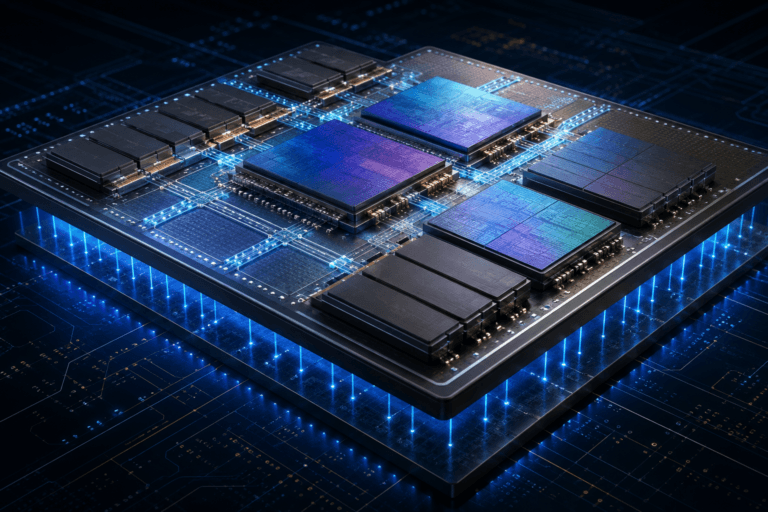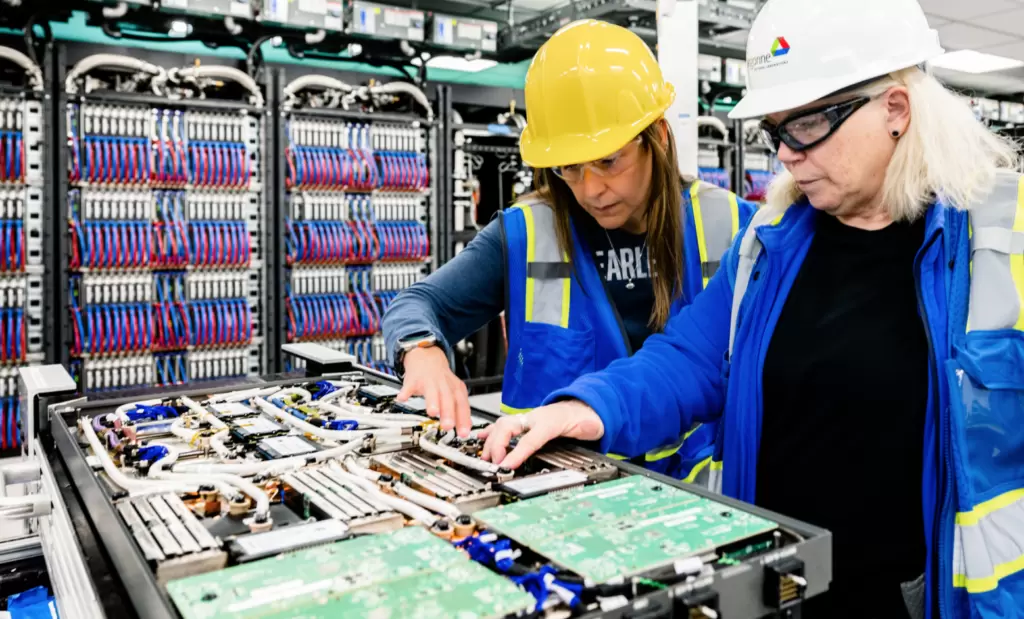
The Aurora supercomputer at Argonne National Laboratory, which is a collaboration of Intel, Hewlett Packard Enterprise (HPE) and the Department of Energy (DOE), reached a milestone with the installation of all 10,624 compute blades, boasting 63,744 Intel Data Center GPU Max Series and 21,248 Intel Xeon CPU Max Series processors.
The system incorporates more than 1,024 storage nodes (using DAOS, Intel’s distributed asynchronous object storage), providing 220 terabytes (TB) of capacity at 31TBs of total bandwidth, and leverages the HPE Slingshot high-performance fabric. Later this year, Aurora is expected to be the world’s first supercomputer to achieve a theoretical peak performance of more than 2 exaflops (an exaflop is 1018 or a billion billion operations per second) when it enters the TOP500 list.
Aurora’s sleek rectangular blades contain processors, memory, networking and cooling technologies. Each blade consists of two Intel Xeon Max Series CPUs and six Intel Max Series GPUs. The Xeon Max Series product family is already demonstrating great early performance on Sunspot, the test bed and development system with the same architecture as Aurora. Developers are utilizing oneAPI and AI tools to accelerate HPC and AI workloads and enhance code portability across multiple architectures.
“Aurora is the first deployment of Intel’s Max Series GPU, the biggest Xeon Max CPU-based system, and the largest GPU cluster in the world. We’re proud to be part of this historic system and excited for the groundbreaking AI, science and engineering Aurora will enable,”states Jeff McVeigh, Intel corporate vice president and general manager of the Super Compute Group.
“While we work toward acceptance testing, we’re going to be using Aurora to train some large-scale open source generative AI models for science,” said Rick Stevens, Argonne National Laboratory associate laboratory director. “Aurora, with over 60,000 Intel Max GPUs, a very fast I/O system, and an all-solid-state mass storage system, is the perfect environment to train these models.”