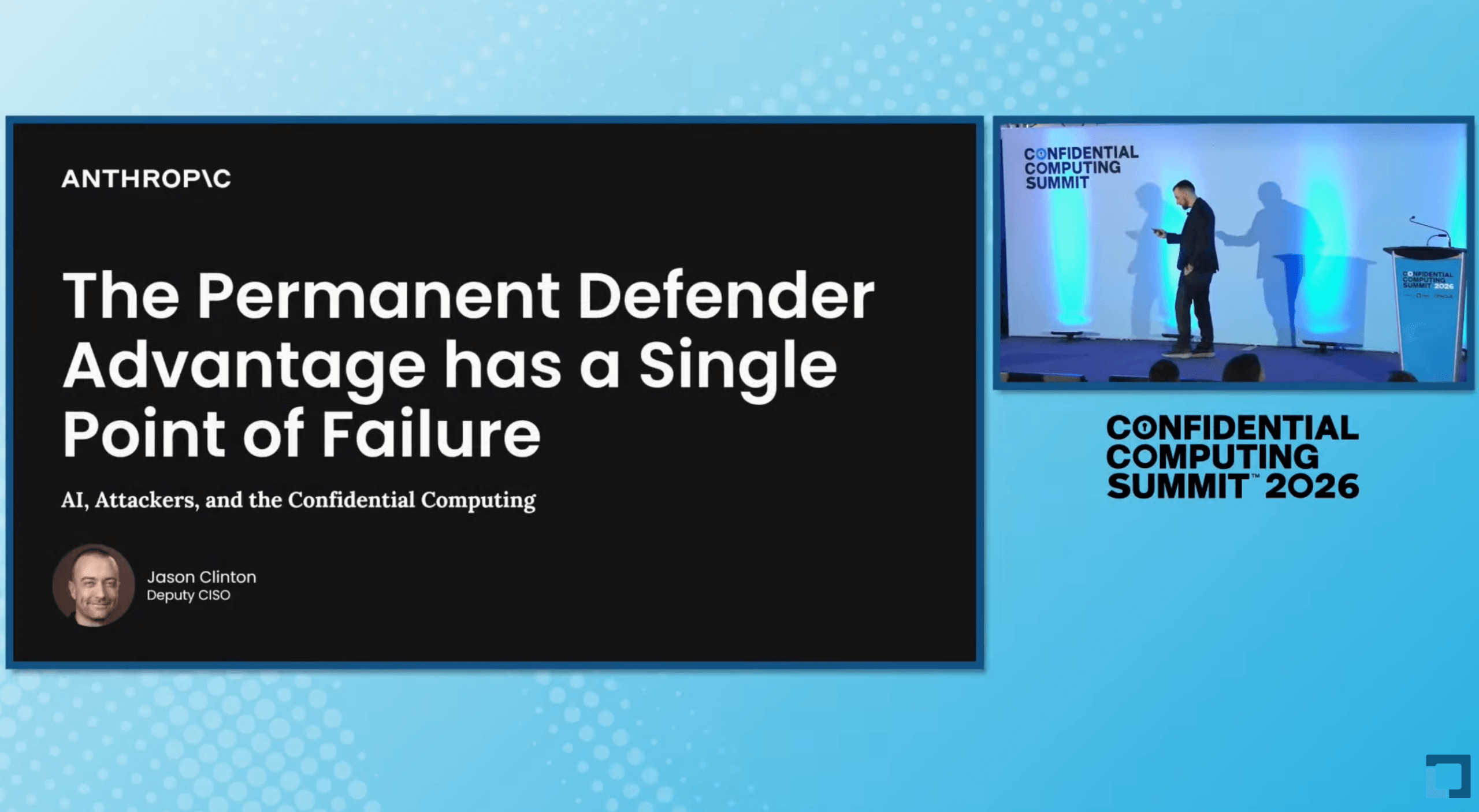
SAN FRANCISCO — Anthropic Deputy CISO Jason Clinton warned that advanced AI-powered cybersecurity capabilities could reach open-weight models within the next 7 to 10 months, creating a narrow window for organizations to harden systems before sophisticated offensive cyber capabilities become widely accessible.
Speaking at the Confidential Computing Summit 2026, Clinton argued that AI models continue to improve at a predictable pace driven by scaling laws and increased training compute. He pointed to recent incidents involving AI-assisted cyber operations, including attacks attributed to PRC-affiliated actors that allegedly used AI models to support intrusion campaigns targeting institutions in Southeast Asia. Clinton said AI-assisted attack techniques have become an established element of the threat landscape, forcing defenders to evaluate which models and AI platforms adversaries are using during cyber investigations.
Clinton also highlighted Anthropic’s recent “Mythos” model disclosure, describing its cybersecurity capabilities as an unintended consequence of efforts to improve general coding performance through reinforcement learning. According to Clinton, the model demonstrated advanced vulnerability discovery and offensive cybersecurity skills despite not being designed specifically as a cyber-focused system. He cautioned that future generations of frontier AI models will likely continue to improve in cybersecurity capabilities and that every major AI model will eventually reach similar levels of proficiency.
A central theme of Clinton’s keynote was his prediction that AI could ultimately create a “permanent defender advantage.” He argued that software vendors will increasingly deploy advanced AI systems throughout their software development lifecycle, including coding, testing, vulnerability scanning, staging, and deployment environments. As model costs decline and capabilities improve, Clinton said organizations will use AI to identify and remediate vulnerabilities before products reach customers, reducing the likelihood that attackers discover critical flaws immediately after software release.
Anthropic estimates that open-weight models currently trail frontier proprietary models by roughly 7 to 10 months in advanced cybersecurity capabilities. Clinton characterized this gap as a critical opportunity for defenders to strengthen infrastructure before offensive AI tools become broadly available. He urged organizations to accelerate adoption of zero-trust architectures, AI-assisted security operations centers, and vulnerability remediation programs to prepare for the next wave of AI-enabled threats.
Clinton also emphasized the growing importance of confidential computing as AI deployment expands globally. He argued that frontier model developers need trusted execution environments and hardware-based security assurances to safely deploy advanced models across diverse data center environments while protecting model weights and intellectual property. According to Clinton, confidential computing has evolved from a privacy technology into a foundational component of AI security, model governance, and future national security strategies.
• Anthropic predicts advanced cyber-capable open-weight AI models could emerge within 7–10 months.
• AI-assisted cyberattacks are now a standard tactic among sophisticated threat actors.
• Anthropic’s “Mythos” model developed advanced cybersecurity capabilities as a byproduct of coding-focused reinforcement learning.
• Clinton predicts AI will increasingly automate vulnerability discovery and remediation throughout software development pipelines.
• Organizations should prioritize zero-trust networking, AI-powered SOC operations, and accelerated vulnerability management.
• Confidential computing is becoming a key requirement for protecting frontier AI model weights and enabling trusted deployments.
“Everything that we are saying and everything that we are doing in public is an attempt to prepare everyone for what’s coming.”
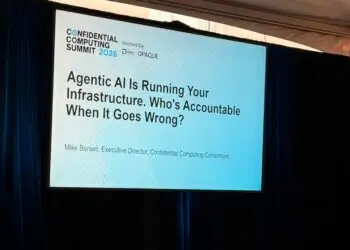
Confidential Computing Summit 2026 Converge Digest coverage on trusted AI, encrypted workloads, data sovereignty, and secure agent infrastructure | |
| Event Focus | Confidential computing, secure AI infrastructure, verifiable workloads, trusted execution environments, privacy-preserving cloud services, and data ownership. |
| Hosted By | Linux Foundation ecosystem, with participation from cloud, AI, security, enterprise infrastructure, and open source leaders. |
| Core Themes | Trusted AI, secure agents, private cloud infrastructure, data sovereignty, encrypted workloads, and verifiable execution. |
| Why It Matters | The summit highlighted how confidential computing is moving from a specialized security architecture into a core building block for AI trust, sovereign data processing, secure agents, and enterprise adoption of frontier models. |
Converge Digest Coverage Read the full series from the Confidential Computing Summit 2026 | |
| Inside the Confidential Computing Summit: Trusted AI Main event report on trusted AI, confidential infrastructure, and the summit’s core technical themes. | |
| Apple Extends Private Cloud Compute Beyond Apple Data Centers Coverage of Ivan Krstić’s keynote on Apple’s Private Cloud Compute architecture and trust model. | |
| Anthropic: The Defender Advantage Jason Clinton’s keynote on AI security, defensive leverage, and the changing threat model for software and infrastructure. | |
| Brittany Kaiser Calls for Data Ownership and “Right to Compute” Alpha Compute CEO Brittany Kaiser connects confidential computing with data ownership, digital sovereignty, and domestic AI infrastructure. | |
| OPAQUE Launches Open Framework for Verifiable AI Agents and Secure MCP OPAQUE’s framework targets verifiable AI agents, secure MCP workflows, and confidential AI execution. | |
| Linux Foundation Proposes DNS-Based Identity Framework for AI Agents Linux Foundation proposal explores DNS-based identity infrastructure for AI agents and secure agent-to-agent interactions. | |
🌐 Converge Digest is tracking confidential computing for AI infrastructure. Follow our ongoing coverage of trusted execution environments, secure agents, sovereign AI, and privacy-preserving cloud architectures at ConvergeDigest.com. | |