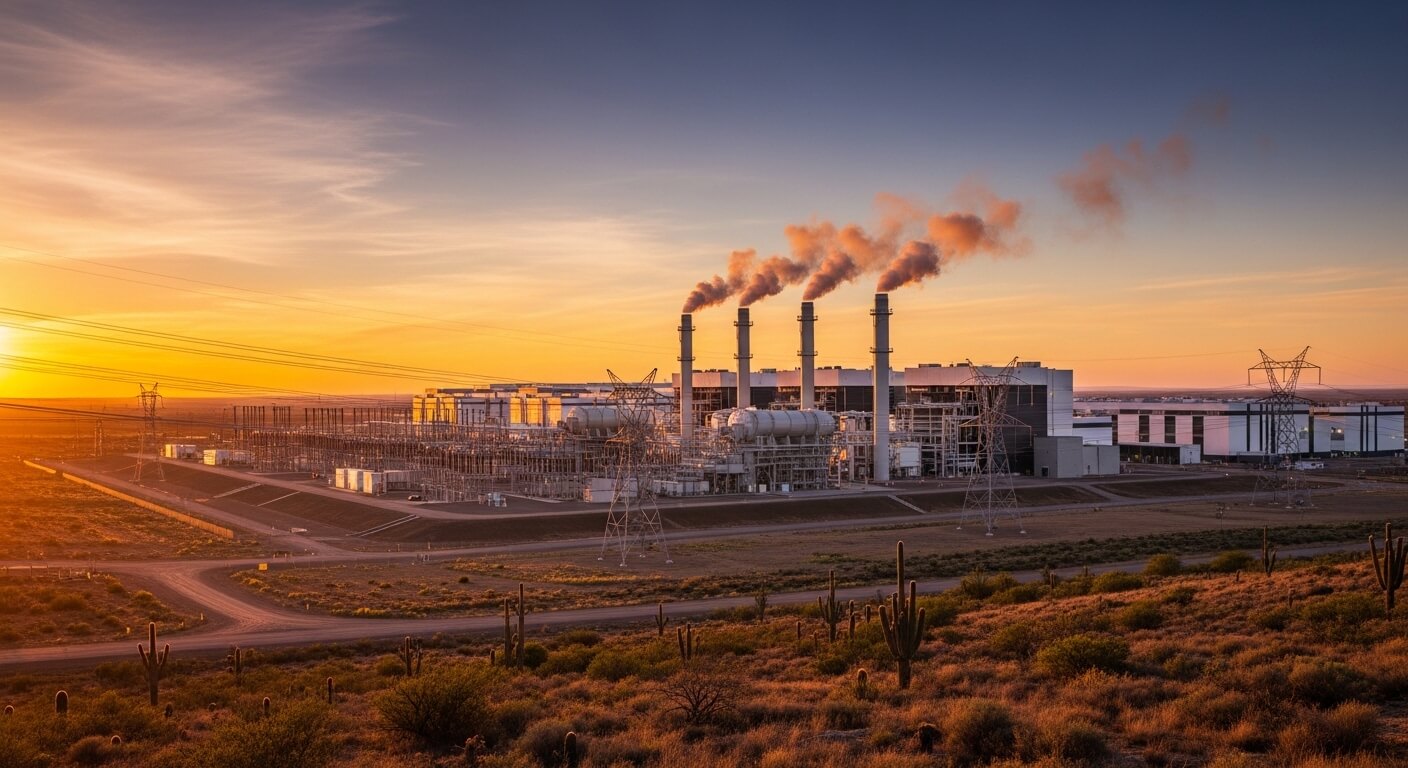
Chevron signed a 20-year power purchase agreement with Microsoft to develop a co-located power facility in West Texas that will provide dedicated electricity for a Microsoft-operated data center campus. The project, known as Project Kilby, is being developed by Energy Forge One, a wholly owned Chevron subsidiary, in collaboration with Engine No. 1.
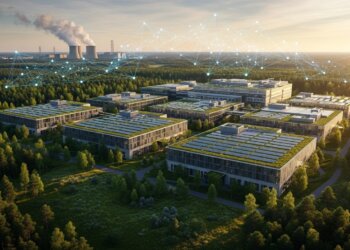
Project Kilby is expected to deliver approximately 2.67 GW of generating capacity through a phased, modular deployment. The majority of the generation capacity will come from gas-fired turbines supplied by GE Vernova, with additional generation provided by Solar Turbines, a subsidiary of Caterpillar. Chevron said the co-location strategy will provide dispatchable power directly to Microsoft while reducing potential impacts on the regional electric grid. The company expects to reach a final investment decision by the end of 2026, with first power delivery targeted for 2028.
The agreement reflects the growing demand for dedicated power infrastructure to support hyperscale AI and cloud computing deployments. Chevron estimates the project could generate more than $10 billion in state and local tax revenue, support nearly 2,000 jobs, and contribute to broader economic development in West Texas. The facility plans to use non-potable brackish groundwater rather than freshwater and will incorporate Selective Catalytic Reduction (SCR) systems and other emissions-control technologies.
• Project Kilby is designed to deliver approximately 2.67 GW of dedicated power capacity
• Microsoft signed a 20-year power purchase agreement for the facility
• Chevron and Engine No. 1 are jointly developing the project
• Large GE Vernova turbines will provide most of the generating capacity
• Solar Turbines equipment will provide additional generation capacity
• Final investment decision is targeted by the end of 2026
• Initial power delivery is expected in 2028
• Chevron estimates more than $10 billion in state and local tax revenue
• The project is expected to support nearly 2,000 jobs
• The facility will utilize brackish groundwater rather than freshwater resources
“AI is reshaping the global economy, and abundant, affordable, reliable energy is essential to fueling that transformation,” said Jeff Gustavson, President of New Energies at Chevron. “Chevron is uniquely positioned to deliver power to customers with certainty, speed and at a competitive cost, leveraging Permian natural gas and our proven execution capabilities.”
🌐 Analysis
The Chevron agreement illustrates how the AI boom is reshaping data center energy strategies. Over the past decade, Microsoft positioned itself as a leader in renewable energy procurement, signing some of the industry’s largest solar and wind power agreements and committing to become carbon negative by 2030. However, the unprecedented power requirements of large-scale AI infrastructure have introduced a new priority: securing reliable, dispatchable energy at gigawatt scale.
Rather than relying exclusively on renewable generation, Microsoft now appears to be pursuing a diversified energy portfolio that includes renewables, advanced nuclear technologies, and natural gas-fired generation. Recent initiatives include support for restarting the Three Mile Island nuclear facility through an agreement with Constellation Energy, continued investments in renewable energy projects worldwide, and now a dedicated 2.67 GW natural gas-powered facility developed with Chevron. The common theme is not a shift away from sustainability goals, but an effort to secure sufficient power capacity to support rapidly expanding AI and cloud workloads.
The broader industry is moving in a similar direction. Meta, Google, Amazon, Oracle, and other hyperscalers are pursuing a mix of renewable, nuclear, and conventional generation sources as AI clusters grow from hundreds of megawatts toward multi-gigawatt campuses.
| Microsoft’s Evolving Data Center Energy Strategy (2016-2026) | ||
| Year | Initiative | Strategic Significance |
| 2026 | Chevron Project Kilby | 20-year agreement supporting a dedicated 2.67 GW natural gas-powered facility in West Texas. One of Microsoft’s largest announced direct power commitments for AI infrastructure and a clear example of hyperscalers securing dedicated generation capacity to support future AI growth. |
| 2024 | Three Mile Island Restart (Crane Clean Energy Center) | Microsoft signed a 20-year power purchase agreement with Constellation Energy to support the restart of Unit 1 at Three Mile Island, renamed the Crane Clean Energy Center. The deal marked one of the most significant nuclear-energy commitments ever made by a hyperscaler and underscored Microsoft’s search for long-term, carbon-free power to support AI and cloud infrastructure growth. Converge Digest: https://convergedigest.com/microsoft-backs-three-mile-island-restart-with-20-year-power-deal/ |
| 2024-2026 | Global Renewable Expansion | Continued signing of large-scale solar and wind agreements across North America, Europe, Latin America, and Asia to support Azure cloud and AI infrastructure growth. Microsoft remains one of the world’s largest corporate purchasers of renewable energy. |
| 2023 | Helion Fusion Energy Agreement | Signed a landmark agreement with Helion Energy to purchase electricity from a future commercial fusion power plant, becoming the first hyperscaler to contract for fusion-generated power. |
| 2021 | 24/7 Carbon-Free Energy Goal | Announced a goal to power data centers with carbon-free electricity every hour of every day by 2030, moving beyond annual renewable energy matching toward real-time clean energy sourcing. |
| 2020 | Carbon Negative Commitment | Committed to becoming carbon negative by 2030 and removing all historical emissions generated since Microsoft’s founding by 2050. |
| 2018-2020 | Large-Scale Renewable PPAs | Became one of the world’s largest corporate buyers of renewable energy through utility-scale solar and wind power purchase agreements supporting Azure data center expansion. |
| 2016 | Early Green Data Center Strategy | Microsoft accelerated renewable energy procurement and sustainability initiatives as Azure expanded globally, laying the foundation for the company’s long-term clean-energy strategy. |
| Key Takeaway: Microsoft’s energy strategy has evolved from renewable-energy procurement toward securing guaranteed power availability for AI infrastructure. The company continues to pursue carbon-reduction objectives, but its portfolio now spans solar, wind, nuclear, natural gas, and future fusion energy technologies. The defining theme is no longer a preference for a particular generation source, but access to reliable, scalable electricity measured in gigawatts. | ||
| Updated June 2026 | ||