Corning posted record fourth-quarter and full-year 2025 results, driven by strong growth in Optical Communications and improved operating leverage across the business. Core sales reached $4.41 billion in Q4, up 14% year over year, while core EPS rose 26% to $0.72. For the full year, core sales increased 13% to $16.41 billion and core EPS climbed 29% to $2.52, reflecting margin expansion and higher cash generation.
Management also upgraded its Springboard plan, raising long-term growth targets following significant balance-sheet and profitability improvements since late 2023. From the Q4-2023 baseline, Corning expanded core operating margin by 390 basis points to 20.2% and core ROIC by 540 basis points to 14.2%, while nearly doubling adjusted free cash flow to $1.72 billion in 2025. Looking ahead, the company expects Q1 2026 core sales growth of roughly 15%, with sales projected at $4.2–$4.3 billion and core EPS of $0.66–$0.70.
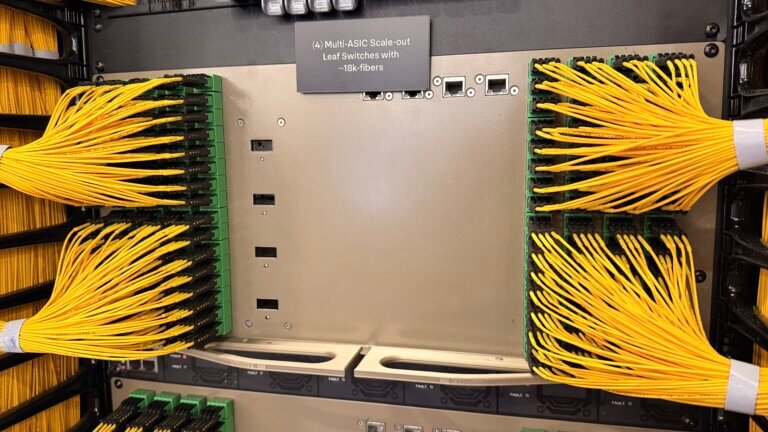
Optical Communications remained the largest growth engine, posting 35% full-year revenue growth to $6.27 billion and a 71% increase in segment net income. Corning highlighted continued momentum from data-center interconnect, fiber, and cable demand, alongside progress tied to its recently announced multiyear, up to $6 billion supply agreement with Meta to support U.S. data-center expansion.
- Q4 2025 core sales: $4.41 billion (+14% YoY); core EPS: $0.72 (+26% YoY)
- FY 2025 core sales: $16.41 billion (+13% YoY); core EPS: $2.52 (+29% YoY)
- Core operating margin expanded to 20.2%; core ROIC reached 14.2%
- Adjusted free cash flow: $1.72 billion in FY 2025
- Springboard plan upgraded to add $11 billion in incremental annualized sales by 2028
- Optical Communications FY 2025 sales: $6.27 billion (+35% YoY)
Wendell P. Weeks said, “Since the launch of Springboard two years ago, we have transformed Corning’s financial profile… We now have a highly profitable launch point for future growth.”
Key points from the quarterly investor call
- Meta supply deal economics: Management framed the Meta agreement as part of a broader shift to long-term, capacity-dedication contracts for GenAI-era “high-density” fiber, cable, and connectivity products. Corning said it is “concluding” several other agreements of similar size and scale, but it has not fully baked their potential into the upgraded Springboard outlook because the contracts are not finalized and the capacity comes online later (with meaningful financial impact beginning in 2027 and building through 2028).
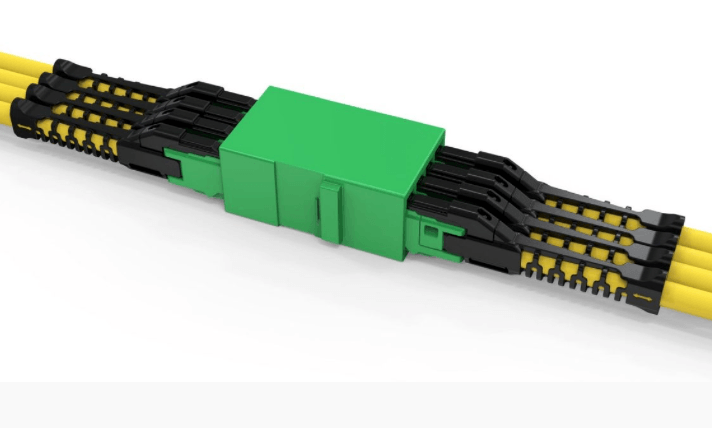
- Supply/demand and pricing: Weeks said Corning believes “there is enough fiber in the world to meet demand,” but described tightness in Corning’s newest, higher-value, high-density product lines. He linked pricing/margin upside more to product mix and value capture than to a generalized fiber shortage, arguing these innovations deliver better optical performance in about half the space with lower installation costs—value Corning expects to share in over time as manufacturing scales.
- Enterprise vs. carrier accounting: Schlesinger clarified that direct hyperscaler sales (e.g., Meta) are recorded in enterprise, while carrier purchases (e.g., Lumen, AT&T) remain in carrier—even if the carrier build supports data center interconnect. In other words, “inside the data center” goes through enterprise; much of long-haul DCI that runs “outside the data center” still flows through carriers.
- Optical growth composition: Management quantified enterprise optical at “a little over” $3 billion for 2025, with roughly two-thirds tied to hyperscalers. They also said the hyperscale portion grew nearly twice the pace of the overall enterprise business in 2025, and positioned new GenAI products as the primary driver of Optical Communications growth.
- Share vs. “pie gets bigger”: When pressed on whether the Meta deal implies incremental share gains, Weeks said demand for Corning’s new products is increasing “relative to the demand of others’ products” due to performance/space/cost advantages, but he framed the bigger picture as overall hyperscaler demand expanding—making the “pie” larger—with multiple large customers securing dedicated capacity.
- CapEx step-up and where it goes: Corning guided 2026 CapEx of about $1.7 billion (vs. just under $1.3 billion in 2025), with optical called out as a major destination for investment. Schlesinger confirmed that some 2026 capital spending relates to the Meta project, while reiterating that customer prepayments and contract structures can offset risk and cash timing (without providing specific deal terms).
- Customer prepayments and risk-sharing mechanics: Management emphasized repeatable structures to “share the cost and risk” of expansions, including customer prepayments and long-term take-or-pay style commitments. They explicitly compared the approach to Corning’s Gen 10.5 display agreements and referenced Apple’s $2.5 billion commitment tied to Kentucky cover-glass production as an example of the model.
- Geographic mix and manufacturing siting: Weeks said Corning’s revenue mix runs about 60% outside the U.S. and 40% inside, and he expects it to remain “in that zone.” Factory location decisions, he said, follow customer buildouts—more AI infrastructure in the West would pull more manufacturing toward the U.S., while other demand centers (e.g., Asia for various end markets) would drive investment there.
- Margin posture: Management reiterated it is not updating the corporate operating margin target, but said they expect to operate at “20% or above,” with potential to be “nicely above 20%” at times. They stressed the strategic priority is capturing growth while protecting returns and ROIC, rather than setting a higher near-term margin target.
- Solar ramp drag and margin upside: Schlesinger quantified a temporary EPS drag from the solar ramp at roughly $0.03 in Q4 and $0.03–$0.05 in Q1, tied to ramping a large factory. He said margins and profit dollars should improve as volume rises through 2026, with the goal of solar profitability “at or above the Corning average” by 2028.
- Carrier cyclicality question: Schlesinger said carrier grew about 15% in 2025, with the majority driven by data center interconnect, and he expects DCI spend to remain a primary driver over the next several years (with fiber-to-the-home also contributing). He did not explicitly declare cyclicality “solved,” but he framed the growth drivers as more structurally tied to data center networking.
- Display guardrails and FX: Management reiterated its framework of $900–$950 million in annual Display net income and ~25% net income margin, noting 2025 beat those targets. They said if the yen weakens beyond assumptions (they cited 120 yen), Corning would adjust pricing or take other actions to protect the dollar profit target, supported by hedges extending beyond 2026.
- Capital allocation: Schlesinger emphasized prioritizing organic growth investments with “strong returns,” maintaining an “efficient balance sheet” (including an average debt maturity of ~21 years with no heavy near-term maturities), and returning excess cash primarily via share repurchases. He noted Corning resumed buybacks in Q2 2024 and has continued each quarter, highlighting a decade-long history of repurchasing ~800 million shares (~50% reduction).
- Corporate note: Weeks announced Investor Relations VP Ann Nicholson will retire after 40 years at Corning.
🌐 Analysis
Corning’s upgraded Springboard targets underscore how optical fiber, cable, and connectivity are increasingly tied to hyperscale data-center buildouts and AI infrastructure spending. The Meta agreement follows other large, multiyear supply commitments in the sector, reinforcing demand visibility as U.S. manufacturing capacity expands and domestic sourcing gains policy and customer support.