AI infrastructure is entering a new phase of scale—and networking is now at the center of the architecture.
On NextGenInfra.io, we’re kicking off our Data Center Networking for AI showcase series to examine how infrastructure is evolving across scale-up, scale-out, and scale-across domains. The site features dozens of video insights on network architecture and system design from leading companies, including Broadcom, Marvell, Cisco, Nokia, Arista, and emerging innovators across the AI networking stack, along with an in-depth research report produced by AvidThink.
At the center of this effort is AvidThink’s latest report, Data Center Networking in 2026, which provides a detailed framework for understanding how AI workloads are reshaping connectivity across the data center.
The report examines how the rapid expansion of large-scale AI clusters is redefining data center networking across three domains: scale-up within the rack, scale-out across racks, and scale-across for clusters of adjacent data centers. These domains are no longer independent. Instead, they form an integrated system where performance, cost, and power efficiency are tightly coupled.
The report highlights several structural shifts now shaping AI infrastructure:
- Ethernet has emerged as the dominant architecture for scale-out AI fabrics, driven by cost advantages and a broad multi-vendor ecosystem, with Ultra Ethernet (UEC/UET) advancing toward AI-optimized transport.
- Scale-up interconnects are expanding rapidly, with NVIDIA’s NVLink leading tightly integrated deployments while open alternatives such as UALink introduce new competitive dynamics.
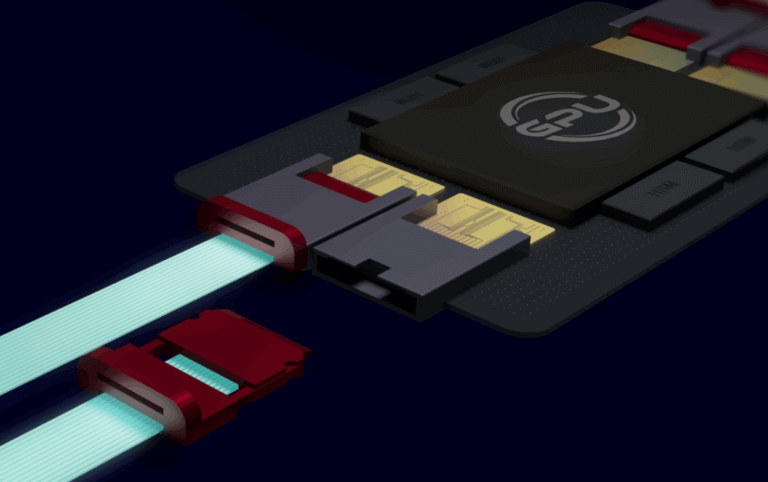
- Optical innovation is accelerating, including LPO, NPO, CPO, and emerging formats such as XPO, all aimed at reducing power consumption and increasing bandwidth density by moving optics closer to compute.
- Software is becoming a first-order determinant of performance, with advances in collective communication libraries and distributed training frameworks delivering measurable efficiency gains at scale.
- Power—not bandwidth—is emerging as the primary constraint, driving new approaches to cooling, cluster design, and multi-campus architectures.
At the same time, the report underscores a broader industry shift toward full-stack co-design, where compute, networking, memory, and software are engineered together to optimize AI workloads—raising both performance ceilings and questions around ecosystem openness.
Why It Matters
The underlying network now plays a decisive role in determining the efficiency and scalability of AI “factories.” As clusters grow from thousands to hundreds of thousands of GPUs, architectural decisions at every layer—from intra-rack interconnects to inter-campus optics—directly impact cost, performance, and time-to-train.
Explore the Full Report + Video Series
The full AvidThink “Data Center Networking in 2026” report is available as a free download and serves as the foundation for our ongoing video showcase on NextGenInfra.io, where industry leaders share their perspectives on the future of AI networking.
👉 Download the report
👉 Watch the video series at NextGenInfra.io
Join the Conversation
We are inviting companies building real-world solutions in:
- Scale-up interconnects
- Scale-out Ethernet fabrics
- Scale-across optical and DCI networking
- AI networking silicon, systems, and software
to participate in the NextGenInfra.io Data Center Networking for AI series.
If your organization is shaping the future of AI infrastructure, we welcome you to share your strategy, insights, and innovations as part of this showcase.