GlobalFoundries (GF) has joined the U.S. Department of Energy’s Genesis Mission as an industry partner, providing researchers with direct access to semiconductor manufacturing resources intended to accelerate the transition from AI-enabled chip concepts to working silicon prototypes. The partnership links the DOE’s National Laboratories, universities, startups, and industry collaborators with GF’s U.S.-based manufacturing platform, process design kits (PDKs), and design enablement tools.
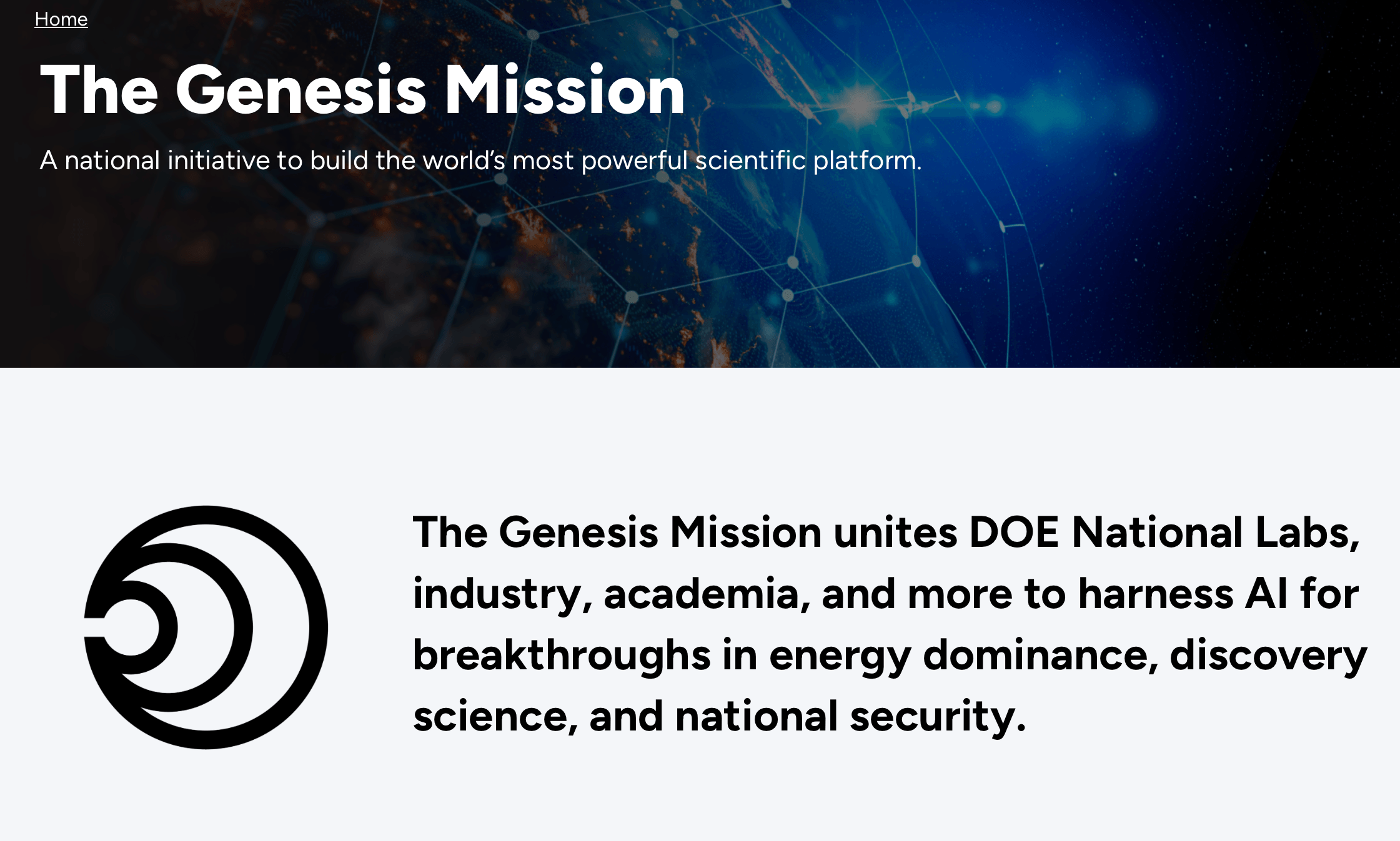
The Genesis Mission, led by the DOE’s Under Secretary for Science, aims to accelerate scientific discovery through artificial intelligence and advanced computing. Under the collaboration, GF Labs—the company’s advanced research and development organization—will work with Genesis Mission participants on AI-assisted semiconductor design, prototype fabrication through GF’s multi-project wafer (MPW) program, and the development of pre-commercial chip designs. The initiative is intended to address a longstanding challenge in advanced semiconductor research: bridging the gap between laboratory innovation and manufacturable hardware.
The agreement also highlights future collaboration in strategic technology areas including silicon photonics for AI data centers and quantum computing systems. By making its U.S. fabrication infrastructure available to Genesis Mission researchers, GF positions itself as a manufacturing bridge between federally funded research and commercial semiconductor deployment, supporting broader U.S. efforts to strengthen domestic semiconductor innovation and production capabilities.
- GF will provide access to process design kits, device models, and semiconductor design tools.
- Researchers will be able to fabricate prototype chips through GF’s multi-project wafer program.
- GF Labs will coordinate collaboration between National Laboratories, universities, startups, and industry partners.
- Areas of focus include AI-enabled chip design, silicon photonics, advanced computing, and quantum technologies.
- The initiative seeks to accelerate the path from research concepts to manufacturable semiconductor devices.
“American science is generating extraordinary ideas in AI and advanced computing. What’s been missing is the bridge from lab to fab,” said Tom Caulfield, Executive Chairman of GlobalFoundries. “By bringing our U.S. manufacturing platform, our PDKs and our multi-project wafer program to the Genesis Mission, we can give researchers a real path from concept to working silicon — and help the National Labs, universities and industry pull in the same direction.”
🌐 Analysis: The announcement aligns with growing U.S. efforts to connect federally funded AI and advanced computing research with domestic semiconductor manufacturing capabilities. Recent investments through the CHIPS Act, DOE research initiatives, and public-private partnerships increasingly emphasize reducing the time required to translate laboratory breakthroughs into deployable hardware.
🌐 Analysis: For GlobalFoundries, the Genesis Mission expands its role beyond contract manufacturing into research enablement. The inclusion of silicon photonics and quantum computing is notable given increasing demand for advanced interconnect technologies in AI infrastructure and growing federal investment in quantum information science. The initiative could also create a pipeline of future designs that eventually scale into commercial production on GF’s manufacturing platforms.
| U.S. Department of Energy (DOE) Genesis Mission | |
|---|---|
| Launch | Announced in 2025 by the U.S. Department of Energy Office of Science as a national initiative to accelerate scientific discovery through artificial intelligence, advanced computing, and public-private collaboration. |
| Mission | Create an integrated ecosystem linking DOE National Laboratories, universities, startups, technology companies, and manufacturing partners to speed the transition from scientific research to real-world technology deployment. |
| Leadership | Led by the DOE Under Secretary for Science in coordination with the DOE Office of Science and participating National Laboratories. |
| Primary Focus Areas | Artificial Intelligence, advanced computing, semiconductor innovation, quantum information science, photonics, scientific simulation, materials discovery, and energy technologies. |
| Key Milestones | |
| 2025 | DOE formally launches the Genesis Mission to establish a national framework for AI-enabled scientific discovery and technology commercialization. |
| 2025 | National Laboratories begin aligning AI, HPC, quantum computing, and scientific research programs under a common mission structure. |
| 2025–2026 | Genesis Mission expands industry participation to provide infrastructure, technical expertise, software, computing platforms, and commercialization pathways. |
| June 2026 | GlobalFoundries becomes an industry partner, contributing U.S. semiconductor manufacturing resources, process design kits (PDKs), design enablement tools, and multi-project wafer access for prototype fabrication. |
| 2026 | Genesis Mission begins supporting pathways from AI-generated semiconductor designs to manufacturable silicon prototypes, helping bridge the gap between laboratory research and production hardware. |
| 2026+ | Expansion into strategic technology domains including silicon photonics, AI infrastructure, quantum computing systems, advanced packaging, and next-generation computing architectures. |
| Strategic Importance | |
| National Competitiveness | Supports U.S. leadership in AI, semiconductors, quantum technologies, and advanced computing. |
| Research-to-Manufacturing Pipeline | Addresses a longstanding challenge in translating federally funded research into deployable hardware and commercial technologies. |
| Industry Role | Partners provide manufacturing, cloud infrastructure, AI platforms, design tools, and commercialization expertise that complement DOE laboratory research. |
| Long-Term Goal | Create a repeatable national innovation engine that shortens the cycle from scientific discovery to deployable technology in critical strategic sectors. |