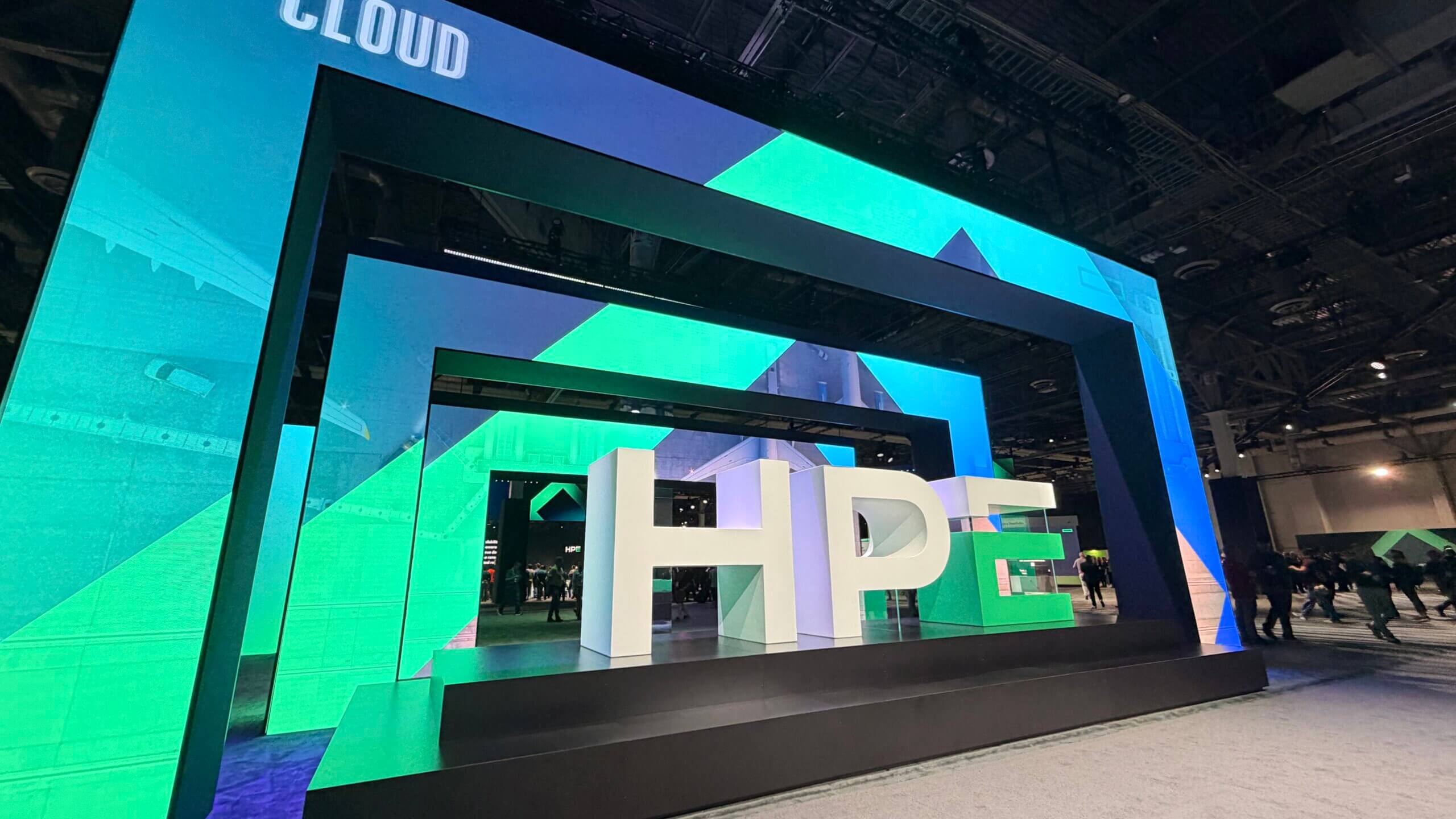
LAS VEGAS — At HPE Discover 2026, HPE is unveiling a broad set of networking, security, and AI operations enhancements aimed at extending its self-driving network vision across AI factories, data centers, campus environments, and enterprise edge deployments. The announcements continue HPE’s integration of the former Juniper Networks portfolio, bringing Juniper switching, routing, AI operations, and security technologies into a unified architecture spanning networking, compute, storage, cloud, and AI infrastructure.
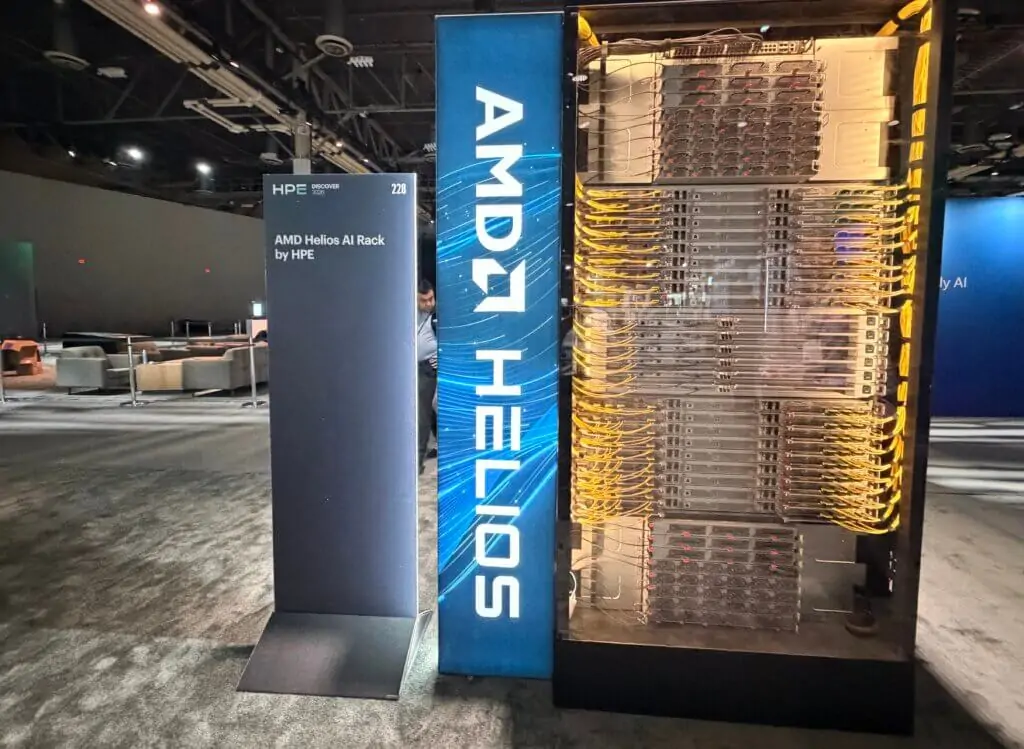
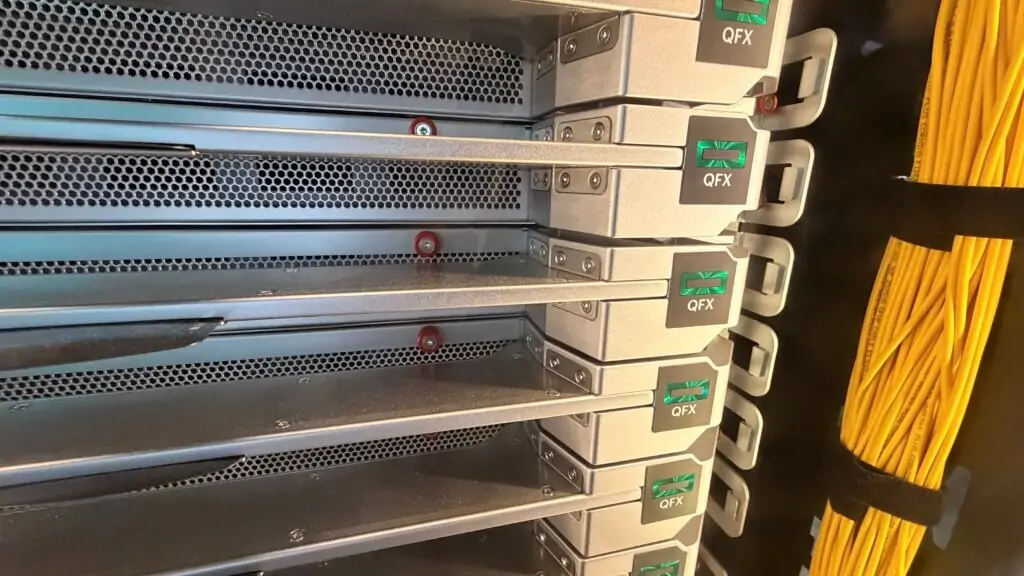
A centerpiece of the announcement is the deeper integration of HPE Juniper Networking into the HPE AI Data Center Solution. HPE is adding Juniper QFX switching platforms and HPE Networking Data Center Director management software to create a more tightly integrated AI infrastructure stack. New hardware introductions include the HPE Juniper Networking QFX5140 switch for inference clusters and edge AI deployments, as well as the QFX5252 switch tray designed for the AMD Helios rack-scale AI platform. HPE said the additions are intended to reduce networking bottlenecks in large-scale AI environments by improving GPU utilization and enabling low-latency, high-bandwidth communications.
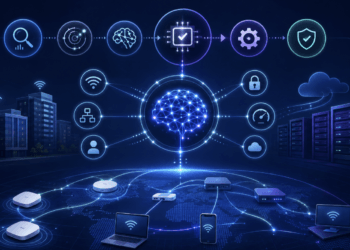
HPE also expanded its Agentic NetOps capabilities through closer alignment of the HPE Aruba Central and HPE Mist platforms. The company will bring HPE Networking CX switches under Mist management while introducing Marvis AI-powered self-driving capabilities into Aruba Central. New data center operations features include predictive analytics designed to anticipate optics and system failures before outages occur, along with an advanced reasoning agent that analyzes operational data, TAC cases, and network telemetry to automate root cause analysis and recommend remediation actions. HPE further announced tighter integrations between networking operations, HPE Compute Ops Management, GreenLake, OpsRamp, and Morpheus, alongside a new unified SASE platform that combines SD-WAN and Security Service Edge functionality with AI-assisted operations and zero-trust security controls.
“ The success of agentic AI in the enterprise depends on a modern networking foundation built for autonomous workflows, where network performance, reliability, and intelligence determine the effectiveness of the entire AI architecture,” said Rami Rahim, Executive Vice President, President and General Manager, Networking, HPE.
• HPE AI Data Center Solution now incorporates HPE Juniper Networking QFX switching and Data Center Director software.
• New QFX5140 switch targets AI inference clusters and edge AI deployments.
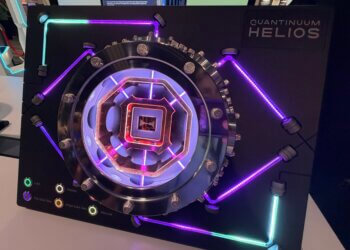
• New QFX5252 switch tray supports the AMD Helios rack-scale AI platform.
• HPE Networking CX switches gain support within the HPE Mist AI-native management platform.
• HPE Marvis AI-powered automation expands into HPE Aruba Central.
• New predictive analytics capabilities target proactive identification of optics and infrastructure failures.
• Advanced AI reasoning agents automate root cause analysis and remediation recommendations.
• HPE Mist Data Center Assurance now integrates with HPE Compute Ops Management and GreenLake.
• New unified SASE platform combines SD-WAN, SSE, and zero-trust security into a single management framework.
🌐 Analysis
This announcement provides one of the clearest views yet into HPE’s post-Juniper networking strategy. Rather than operating Aruba and Juniper as separate product families, HPE is increasingly pursuing a “cross-pollination” approach that combines Juniper’s AI-native operations capabilities—particularly Mist and Marvis—with Aruba’s extensive enterprise installed base. The integration of CX switches into Mist and the introduction of Marvis capabilities into Aruba Central suggest HPE intends to converge management and AI operations layers while preserving hardware choice across the portfolio.
The AI infrastructure portion of the announcement is equally significant. HPE is positioning networking as a core component of its AI factory strategy, alongside compute, storage, and software. The addition of Juniper QFX platforms to HPE AI Data Center Solutions and the dedicated QFX5252 scale-up switch tray for AMD Helios highlight HPE’s ambition to compete more directly with vertically integrated AI infrastructure offerings from competitors such as NVIDIA, while also strengthening partnerships with AMD and other ecosystem participants. The focus on inference networking is notable, reflecting a broader industry shift as enterprises move beyond model training toward large-scale deployment of AI services.
More broadly, HPE is extending the concept of autonomous operations beyond campus networking into data center fabrics, hybrid cloud environments, and AI infrastructure. By linking networking telemetry with Compute Ops Management, GreenLake, OpsRamp, and Morpheus, HPE is building toward a unified operational framework where infrastructure domains can share telemetry, policy, and automation workflows. That vision aligns closely with HPE’s larger “agentic enterprise” strategy unveiled at Discover 2026, where AI agents increasingly participate in infrastructure operations, troubleshooting, and lifecycle management.
| Company | Hewlett Packard Enterprise (HPE) |
| Headquarters | Spring, Texas, USA |
| Executive Leadership | Antonio Neri — President & CEO, HPE Rami Rahim — EVP, President & GM, HPE Networking (Former Juniper Networks CEO) |
| Strategic Objective | Accelerate the unified “Edge-to-Cloud” and “AI Factory” pipeline. Positioning AI-native networking as the primary operational control plane across compute, storage, security, and multi-tenant silicon. |
| Core Networking & AIOps Platforms | HPE Aruba Networking Juniper Mist AI Marvis Virtual Network Assistant Juniper Apstra (Fabric Automation) Aruba CX Switching Juniper QFX Series |
| AI Infrastructure Architecture | HPE AI Data Center Solution An end-to-end, integrated turnkey blueprint unifying high-density liquid-cooled compute, standard-based Ultra Ethernet transport, scratchpad storage, and cross-domain agentic AIOps orchestration. |
| Next-Gen AI Hardware Additions | QFX5250 Switch: 102.4 Tbps Ultra Ethernet Transport-ready switch powered by Broadcom Tomahawk 6 silicon for massive scale-out GPU front-end/back-end clusters. QFX5140 Switch: Low-latency 1RU platform powered by Trident 5 (112G PAM4 SerDes) optimized for predictable RoCEv2 AI inference and high-speed storage. QFX5252 Switch Tray: Purpose-built co-packaged scale-up interconnect integrated into the AMD Helios rack-scale AI systems. |
| Cloud Operational Control | HPE GreenLake OpsRamp Morpheus Data Compute Ops Management (COM) |
| Unified Security Architecture | EdgeConnect Unified SASE Portfolio Converges cloud-delivered Security Service Edge (SSE), Zero Trust Network Access (ZTNA), and SD-WAN with edge firewalls to secure distributed AI training data sets. |
| Ecosystem Alignment | NVIDIA (Spectrum-X integration) AMD (Helios Scale-Up Platform) Broadcom (Tomahawk/Trident Silicon Co-development) |
| Market Target | AI Infrastructure AI-Native Networking Hybrid Cloud Zero Trust Security Next-Gen Data Centers |
| Editorial Takeaway | By successfully finalizing the Juniper acquisition, HPE has structurally altered the enterprise networking landscape. Rather than running separate silos, they are aggressively leveraging Mist’s data lake to build an agentic, self-driving macro-mesh. This positions Ethernet as a direct challenger to proprietary fabrics (like InfiniBand) inside the multi-billion-dollar AI backend market. |