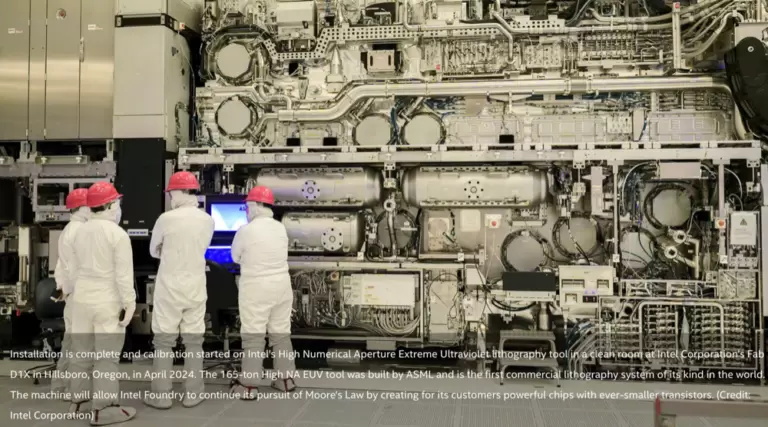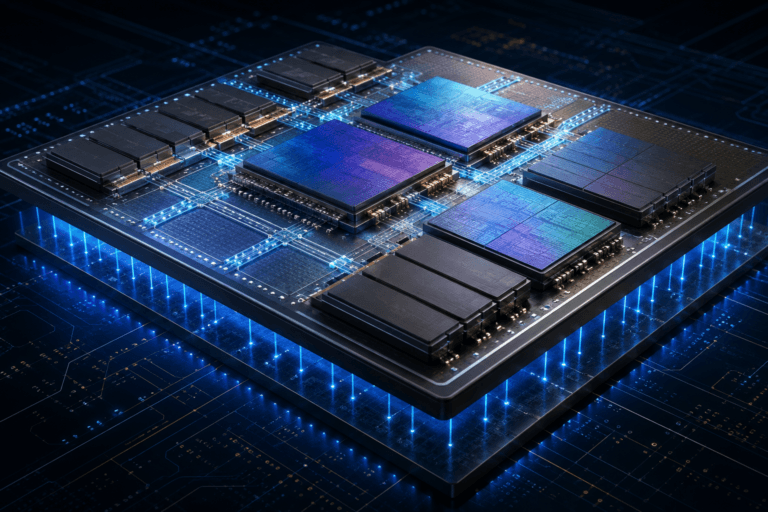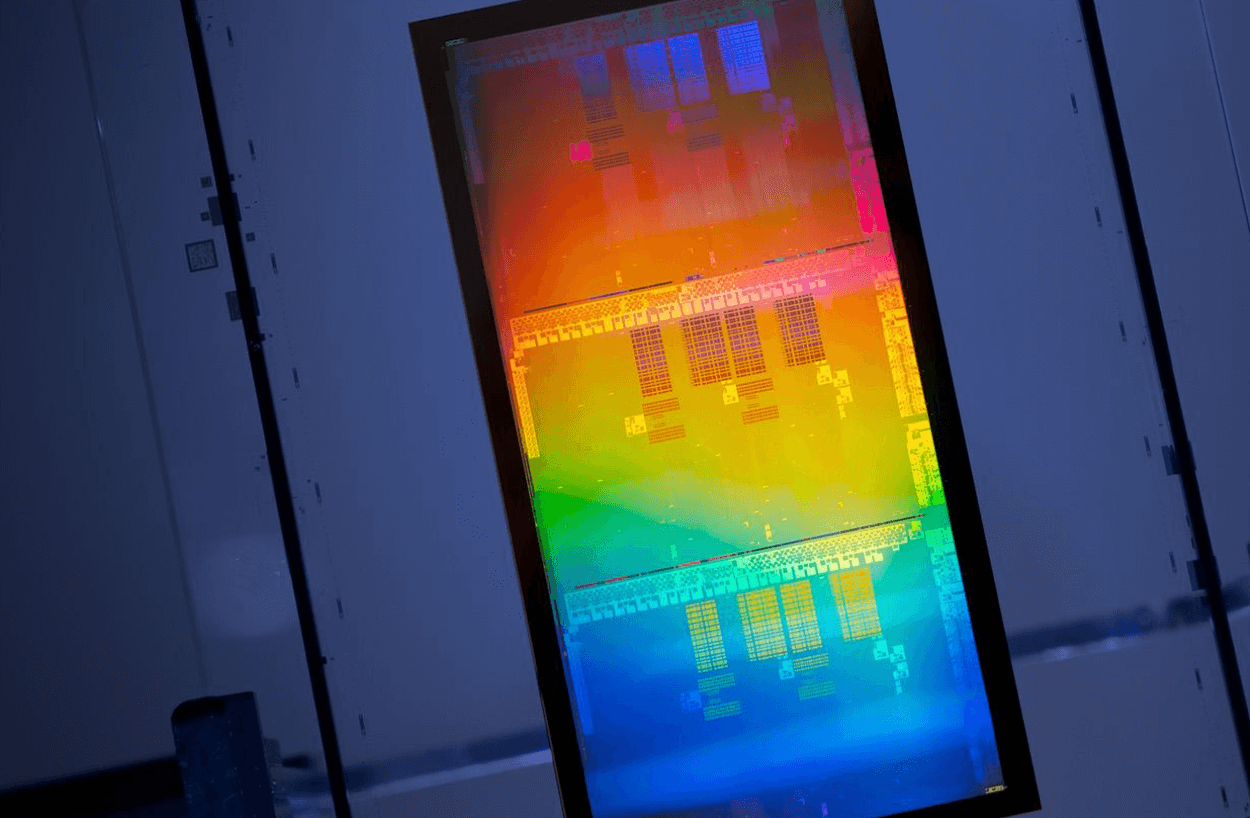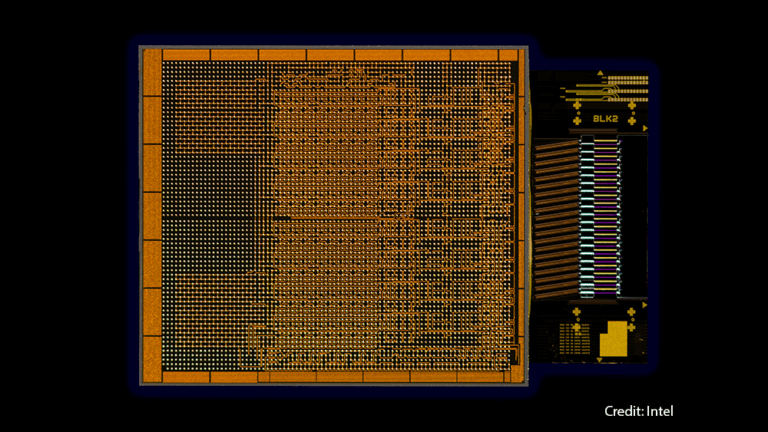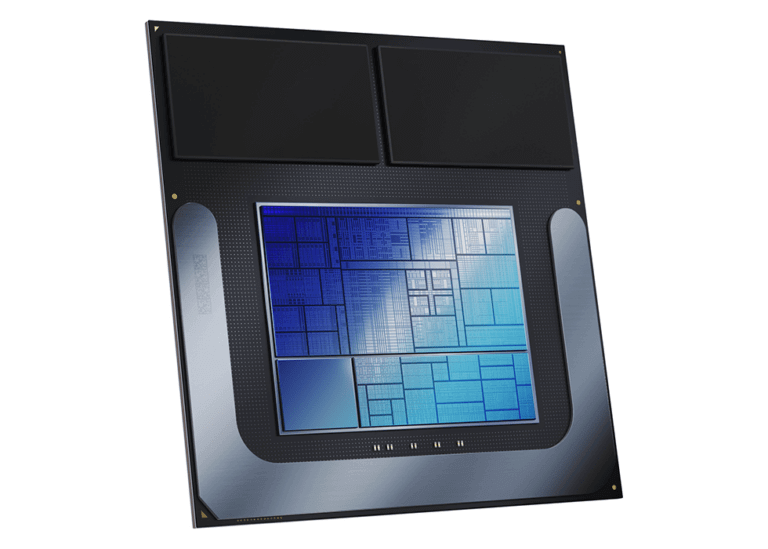
Intel Foundry moved to accelerate industry momentum around modular semiconductor design this week by advancing its strategy for an open chiplet marketplace. The company highlighted new proof-of-concept programs and deeper ecosystem coordination aimed at simplifying heterogeneous integration across vendors. Intel positioned its Angstrom-era process nodes and advanced packaging portfolio as the foundation for a U.S.-based, secure supply chain at a time when chiplet adoption is rapidly expanding across commercial and government markets.
The company emphasized that its Intel Foundry Chiplet Alliance now provides access to validated EDA tools, IP, and design services to help customers assemble multi-vendor chiplets more easily. Intel underscored that 18A and 14A remain the only U.S.-based leading-edge fabrication nodes, supported by RibbonFET GAA transistors and complemented by EMIB and Foveros packaging for 2.5D and 3D integration. The company also pointed to UCIe, HBM, and PCIe interface IP optimized for its newest nodes, reinforcing its role in shaping emerging standards for interoperable chiplets.
Intel announced two new proof-of-concept collaborations: one with QuickLogic focused on AI-enabled FPGA chiplets and open-source design flows, and another with Trusted Semiconductor Solutions on secure system-in-package platforms using EMIB-T and a roadmap to 3D Foveros. These initiatives tie into broader efforts, including the USMAG Alliance, which targets mission-assured applications requiring trusted U.S. manufacturing, tamper resistance, and secure supply-chain processes.
• Intel advances its open chiplet marketplace strategy through its Intel Foundry Chiplet Alliance.
• Company highlights access to validated EDA tools, IP, and design services for multi-vendor chiplets.
• 18A and 14A positioned as the only U.S.-based leading-edge GAA nodes, built with RibbonFET.
• EMIB and Foveros support 2.5D and 3D heterogeneous integration for HPC and power-optimized designs.
• Support for UCIe, HBM, and PCIe IP provides interoperability across vendor chiplets.
• USMAG Alliance targets secure, mission-assured government and aerospace applications.
• QuickLogic POC explores AI-enabled FPGA chiplets and open-source flows.
• Trusted Semiconductor Solutions POC develops secure SiP designs using EMIB-T with a path to Foveros 3D.
“One of our goals is to shape an open chiplet marketplace that is secure, flexible, and customizable — enabling customers to accelerate design cycles while maintaining the highest levels of IP protection and design integrity,” Intel stated.
🌐 Analysis: Intel’s latest moves reinforce its effort to differentiate in the foundry market by building a standards-based chiplet ecosystem anchored in U.S. manufacturing. The QuickLogic and TSS programs reflect early traction behind UCIe-aligned modular architectures, while competing foundries such as TSMC and Samsung continue to scale proprietary multi-die integration flows. Intel’s emphasis on secure supply chain and mission-assured manufacturing also aligns with growing U.S. government demand for trusted, domestically produced microelectronics.
🌐 We’re tracking the latest developments in networking silicon. Follow our ongoing coverage at: https://convergedigest.com/category/semiconductors/
🌐 We’re launching the “Data Center Networking for AI” series on NextGenInfra.io and inviting companies building real solutions—silicon, optics, fabrics, switches, software, orchestration—to share their views on video and in our expert report. To get involved, send a note to [email protected] or [email protected] headlines: