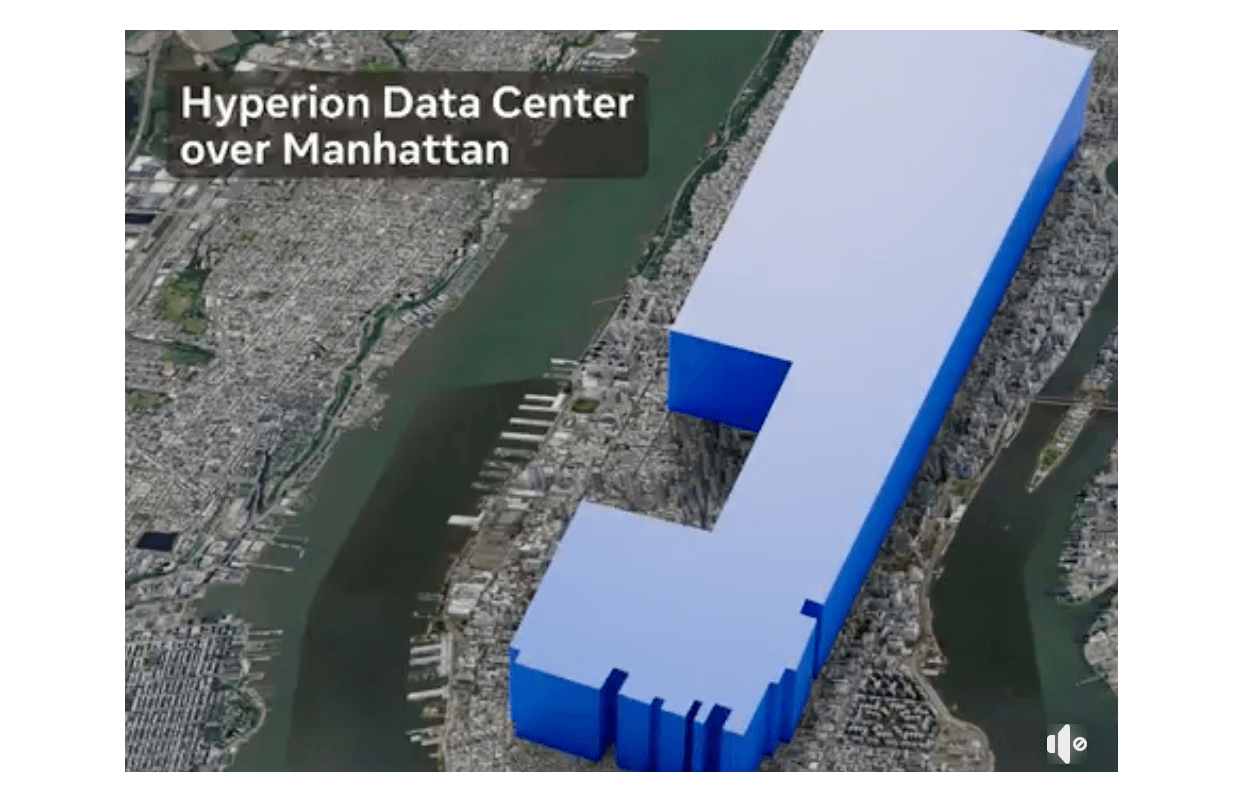
Meta announced the formation of Meta Compute, a new top-level initiative focused on scaling the company’s AI and data center infrastructure to unprecedented levels. Meta said it plans to deploy tens of gigawatts of compute capacity this decade, with ambitions reaching hundreds of gigawatts or more over time, positioning infrastructure design, investment, and partnerships as a core strategic advantage.
The Meta Compute initiative will be led by Santosh Janardhan and Daniel Gross, with complementary mandates spanning technology execution and long-term capacity planning.
- Santosh Janardhan will continue to lead Meta’s technical architecture, software stack, custom silicon programs, developer productivity, and the design, construction, and operation of Meta’s global data center fleet and network.
- Daniel Gross will head a newly created group responsible for long-term capacity strategy, supplier partnerships, industry analysis, planning, and business modeling, aligning infrastructure expansion with multi-decade demand forecasts.
Both leaders will work closely with Dina Powell McCormick, who recently joined Meta as President and Vice Chairman. In this role, Powell McCormick will focus on engagements with governments and sovereign partners to support the deployment, investment, and financing of Meta’s global infrastructure footprint.
Meta said that as AI models grow in scale and capability, the ability to engineer, finance, and operate massive compute platforms will increasingly define competitive advantage. Meta Compute is intended to unify technology leadership with capital planning and geopolitical engagement, enabling faster and more predictable expansion of AI infrastructure worldwide.
The company framed the initiative as foundational to its long-term objective of scaling compute to support personal superintelligence for billions of users, reinforcing the central role of infrastructure in Meta’s AI roadmap.
Analysis
Meta Compute formalizes a shift already underway across hyperscalers: compute is no longer just an operational concern but a board-level strategic asset. By pairing deep technical leadership with a dedicated long-term capacity and partnership organization, Meta is signaling that access to power, silicon, cooling, land, and financing will be as critical as model architecture in the next phase of AI competition. The explicit elevation of sovereign and government engagement reflects the reality that gigawatt-scale AI infrastructure is increasingly intertwined with national energy policy, industrial strategy, and capital markets.