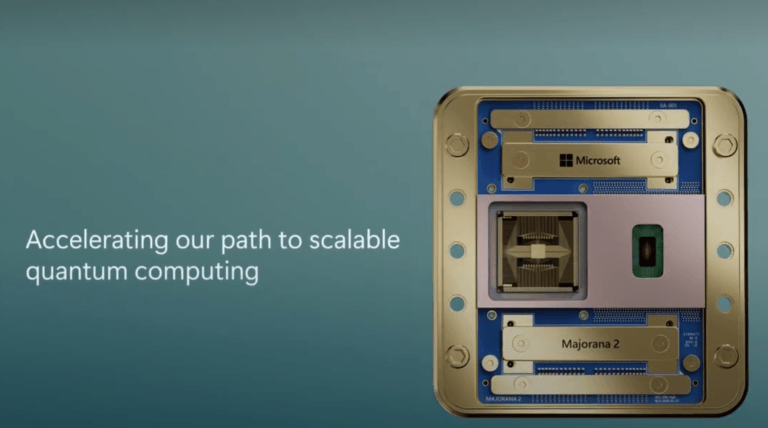
Microsoft is accelerating its transition to post-quantum cryptography (PQC), moving up the timeline for its Microsoft Quantum Safe Program (QSP) with a goal of transitioning products and services to quantum-safe cryptography by 2029. In a blog post authored by Mark Russinovich, Chief Technology Officer for Microsoft Azure, the company said advances in quantum computing research and evolving government guidance have shortened the planning horizon, making early preparation essential. The full blog post is available here: Accelerating the quantum-safe timeline.
Microsoft said it is embedding quantum-safe readiness into its Secure Future Initiative (SFI), treating the migration as a long-term engineering program rather than simply replacing cryptographic algorithms. The company identified three primary engineering priorities: upgrading network cryptography by broadly adopting TLS 1.3 to prepare for hybrid and post-quantum key exchange; building crypto-agility so cryptographic algorithms can be replaced without redesigning applications; and modernizing cryptographic trust chains, including code signing, certificate management, hardware-backed key protection, and software update pipelines. Microsoft also emphasized that organizations should first create comprehensive inventories of existing cryptographic dependencies before attempting migration.
Microsoft noted that recent guidance from U.S. and French government agencies recommending quantum-safe cryptography for certain high-risk systems by 2030 reinforces the need for earlier action. The company said organizations should begin now by establishing governance for multi-year migration efforts, designing new systems with crypto-agility, maintaining living cryptographic inventories, and adopting modern protocols such as TLS 1.3. Microsoft plans to continue publishing technical guidance and operational best practices as industry standards mature.
• Microsoft advances its Quantum Safe Program with a target of transitioning products and services to PQC by 2029.
• PQC requirements become part of Microsoft’s Secure Future Initiative.
• Engineering priorities include TLS 1.3 deployment, crypto-agility, and modernization of trust chains.
• Microsoft recommends inventory-first planning before large-scale migration.
• Company cites accelerating quantum research and new government guidance as reasons for moving sooner.
• Focus includes protecting against “harvest now, decrypt later” attacks targeting long-lived sensitive data.
“Advances in quantum research and development have shifted the risk horizon. We believe cryptographically relevant quantum computers could arrive sooner than previously expected—and the work required to prepare is significant so organizations need to start now.” — Mark Russinovich
🌐 Analysis: Microsoft’s revised 2029 target represents one of the clearest signals yet that major cloud providers now view post-quantum migration as an active engineering program rather than a distant research initiative. The emphasis on crypto-agility, certificate infrastructure, and TLS modernization aligns with broader industry efforts underway at hyperscalers and security vendors to reduce long-term migration risk. Companies including Cloudflare and Google have also published accelerated post-quantum roadmaps targeting similar timeframes.
Last week, Converge Digest reported on Mark Russinovich’s keynote at the Confidential Computing Summit, where he discussed Microsoft’s broader security architecture for the quantum era and the need to begin cryptographic modernization well before cryptographically relevant quantum computers become available. That coverage provides additional context on Microsoft’s long-term quantum security strategy: https://convergedigest.com/inside-the-confidential-computing-summit-trusted-ai/
Post-Quantum Cryptography Timeline Key standards, government milestones, and Microsoft’s accelerated migration roadmap | |
| August 2024 | NIST Final PQC Standards — NIST publishes its first finalized post-quantum cryptography standards: FIPS 203 (ML-KEM), FIPS 204 (ML-DSA), and FIPS 205 (SLH-DSA), establishing the technical foundation for commercial and government deployments. |
| 2025–2026 | United States (NSM-10 / CNSA 2.0) — Federal agencies and national security systems begin implementing mandated milestones for quantum-resistant cryptography, including support for PQC in software signing, TLS, browsers, certificates, and cryptographic infrastructure as part of a multi-year migration. |
| June 2026 | France announces plans to phase out certification of products that do not support quantum-safe encryption, accelerating deployment for government and high-security systems. |
| 2026 | Microsoft Quantum Safe Program (QSP) — Microsoft accelerates its roadmap with a goal of transitioning Microsoft products and cloud services to post-quantum cryptography by 2029, while encouraging customers to begin cryptographic inventory and crypto-agility projects immediately. |
| 2029 | Microsoft Target — Planned completion of Microsoft’s transition of products and services to post-quantum cryptography under its Quantum Safe Program. |
| 2030 | Major Government Milestone — U.S. national security guidance under NSM-10 and CNSA 2.0, together with French government policy, targets approximately 2030 for deployment of quantum-safe cryptography across many high-value government and critical infrastructure systems. |
| 2033 | Long-Term Migration Goal — U.S. national security guidance extends migration through approximately 2033 for more complex platforms, legacy infrastructure, and long-lifecycle systems requiring phased replacement. |
Recommended Enterprise Actions • Deploy TLS 1.3 as the baseline for future hybrid PQC key exchange. • Design applications with crypto-agility so algorithms can be replaced without major redesign. • Modernize certificate authorities, code signing, identity systems, and hardware-backed key protection. • Build and continuously maintain a complete inventory of cryptographic assets and dependencies before large-scale migration. | |