NVIDIA used GTC 2026 to introduce its Vera Rubin platform, positioning networking—not just compute—as the core enabler of next-generation AI factories. The system integrates seven new chips into a tightly coupled architecture spanning GPU, CPU, NIC, DPU, switching, and storage, with the NVIDIA Spectrum-6 Ethernet and ConnectX-9 SuperNIC forming the backbone of a unified, high-performance data plane. The design reflects a shift toward fully disaggregated yet tightly synchronized infrastructure, where east-west traffic, memory access, and inference pipelines depend on deterministic, low-latency networking at scale.
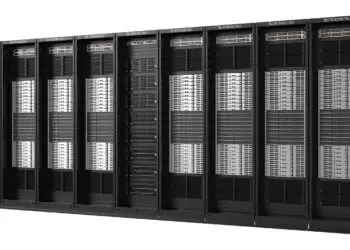
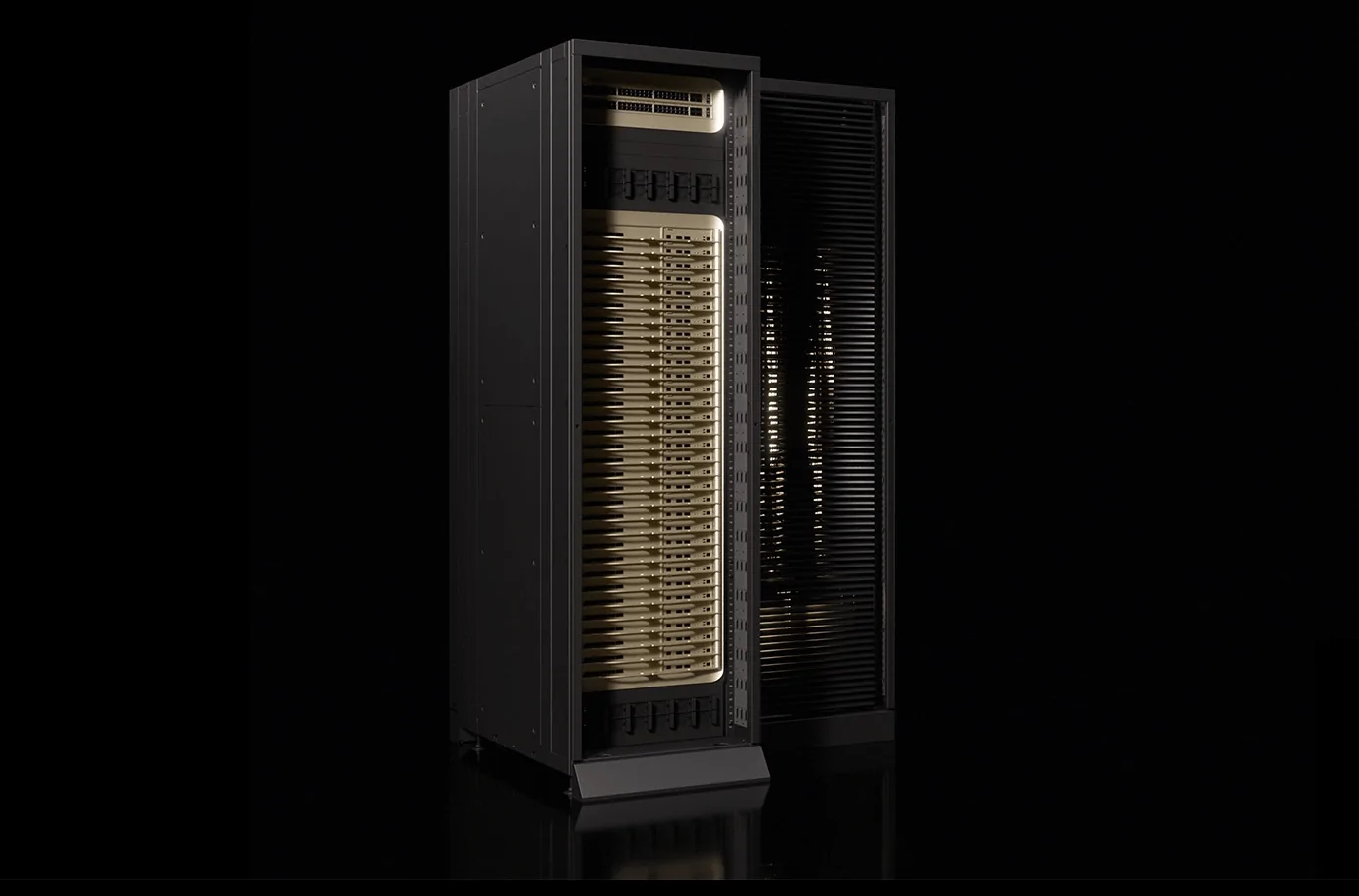
At the system level, NVIDIA organizes Vera Rubin into five rack-scale building blocks, all interconnected through Spectrum-X Ethernet or Quantum-X800 InfiniBand fabrics. The Spectrum-6 SPX Ethernet rack anchors this architecture, delivering high-throughput, low-latency connectivity optimized for AI traffic patterns such as all-to-all communication, gradient exchange, and KV cache distribution. NVIDIA also introduces co-packaged optics within the Spectrum-X photonics platform, targeting up to 5x improved optical power efficiency and 10x greater resiliency compared to traditional pluggable optics. These advances directly address one of the central bottlenecks in large-scale AI clusters: sustaining high GPU utilization across thousands of nodes without network-induced stalls.
The broader Vera Rubin stack extends networking principles into every layer of the AI factory. ConnectX-9 SuperNICs provide high-speed, programmable interfaces for GPU and CPU nodes, while BlueField-4 DPUs offload infrastructure services such as storage virtualization and security. The new BlueField-4 STX storage rack introduces a distributed, network-attached memory tier optimized for key-value cache handling, using NVIDIA DOCA Memos to accelerate inference workflows by up to 5x. Together, these elements create a fabric-centric architecture where compute, storage, and memory behave as a single, network-coherent system, enabling large-scale agentic AI workloads to operate with higher efficiency and lower cost per token.
• Spectrum-6 SPX Ethernet delivers low-latency, high-throughput connectivity for east-west AI traffic across racks and PODs
• Spectrum-X photonics with co-packaged optics targets up to 5x optical power efficiency and 10x resiliency improvement
• ConnectX-9 SuperNIC enables high-speed, programmable data movement between GPUs, CPUs, and storage tiers
• BlueField-4 DPUs offload infrastructure processing and enable composable, secure AI factory operations
• BlueField-4 STX storage rack creates a distributed KV cache layer for large-scale inference and agentic workflows
• NVLink 6 switch fabric provides intra-rack, high-bandwidth GPU-to-GPU interconnect
• Support for both Spectrum-X Ethernet and Quantum-X800 InfiniBand enables flexible fabric architectures at hyperscale
• DSX Max-Q introduces dynamic power-aware orchestration across compute and networking infrastructure
“Vera Rubin is a generational leap — seven breakthrough chips, five racks, one giant supercomputer — built to power every phase of AI,” said Jensen Huang, founder and CEO of NVIDIA.
🌐 Analysis: NVIDIA’s emphasis on Spectrum-6 Ethernet and a full-stack networking architecture underscores a broader industry transition toward fabric-centric AI infrastructure, where network performance directly determines system efficiency and economics. This approach aligns with recent moves by hyperscalers and competitors such as Broadcom (Tomahawk and Jericho fabrics) and AMD (Pensando DPUs), signaling that differentiation in AI infrastructure is shifting from raw compute to tightly integrated networking, memory, and data movement architectures.