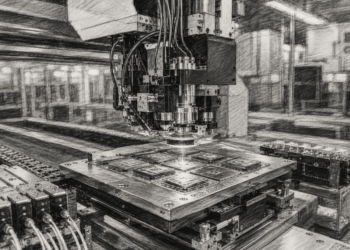

Tower Semiconductor outlined a major restructuring of its Japan operations, taking full ownership of its 300mm fabrication facility (Fab 7) in Uozu while transferring the 200mm fab (Fab 5) to its joint venture partner. The move dissolves the current TPSCo structure, where Tower held a 51% stake and Nuvoton Technology Corporation Japan (NTCJ) held 49%, and replaces it with separate ownership alongside long-term supply agreements to ensure continuity for customers.
Under the agreement, Tower will place Fab 7 under a wholly owned Japanese subsidiary, including all production tools, workforce, and operations. NTCJ will assume full control of Fab 5. The companies will maintain reciprocal supply arrangements so that customers currently served by either fab will not experience disruption. The transaction is expected to close by April 1, 2027, pending regulatory approvals and customary conditions.
Tower also plans a significant expansion of its 300mm capacity in Japan, contingent on subsidy approval from Japan’s Ministry of Economy, Trade and Industry (METI). The company aims to expand the Uozu site to deliver up to four times its current 300mm capacity by adding adjacent land and scaling production. Tower emphasized that the fab is already generating positive cash flow, allowing it to expand capacity more rapidly than greenfield projects, particularly for silicon photonics and optical platforms already qualified and in production.
- Tower will assume full ownership of Fab 7 (300mm) in Japan; Nuvoton will take Fab 5 (200mm)
- TPSCo joint venture structure will be dissolved and replaced with long-term supply agreements
- Transaction expected to close April 1, 2027, subject to approvals
- Planned expansion could increase 300mm capacity in Uozu by up to 4×
- Expansion contingent on METI subsidy approval and adjacent land acquisition
- Photonics technologies are already qualified in Fab 7, enabling faster ramp of new capacity
- Facility is currently cash-flow positive, reducing financial risk of expansion
“TPSCo has been built upon decades of strong operational expertise and collaboration,” said Russell Ellwanger, CEO of Tower Semiconductor. “This step enables Tower to further strengthen our differentiated optical and photonics technology platforms through a large and profitable expansion of our 300mm operational capabilities.”
🌐 Analysis
Tower’s move reflects a broader industry shift toward specialized 300mm capacity for analog, RF, and silicon photonics workloads tied to AI infrastructure and high-speed interconnects. Unlike leading-edge logic fabs dominated by companies such as TSMC, Samsung, and Intel, Tower focuses on differentiated process technologies—particularly SiPho, SiGe, and RF CMOS—that are increasingly critical for optical I/O, co-packaged optics, and sensor-rich systems.
The decision to expand an already operational and qualified fab is notable. Many competitors pursuing silicon photonics capacity—such as GlobalFoundries (with its Fotonix platform) and STMicroelectronics (including its Agrate 300mm fab partnership with Tower)—have emphasized similar strategies of leveraging existing process nodes to accelerate time-to-market. In parallel, emerging optical I/O startups such as Ayar Labs and Lightmatter are driving demand for foundry-ready photonics platforms capable of high-volume manufacturing.
Tower’s positioning also intersects with growing interest in optical interconnect supply chains. Companies like Coherent, Broadcom, and Marvell are investing heavily in DSPs, lasers, and optical engines, while foundries must provide scalable integration platforms. By quadrupling its 300mm capacity in Japan, Tower aims to capture a larger share of this ecosystem—particularly as hyperscalers and AI infrastructure vendors seek diversified, non-leading-edge manufacturing partners for photonics and analog-intensive designs.