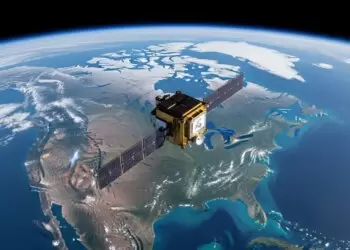

Amazon has agreed to acquire Globalstar, positioning its Amazon Leo initiative to deliver direct-to-device (D2D) connectivity and extend mobile coverage beyond terrestrial networks. The deal also includes a parallel agreement with Apple to support satellite-enabled services on iPhone and Apple Watch devices.
The acquisition brings Globalstar’s satellite constellation, globally licensed mobile satellite services (MSS) spectrum, and operational infrastructure under Amazon’s control. By integrating these assets with Amazon Leo’s planned constellation of more than 3,000 low Earth orbit satellites, Amazon aims to build a unified satellite network supporting broadband, mobile, and emergency communications. The combined system will target consumer, enterprise, and government applications, including connectivity in remote or disaster-affected regions.
Amazon plans to launch its next-generation D2D satellite system beginning in 2028, enabling standard mobile devices to access voice, messaging, and data services via satellite without specialized hardware. The system will interoperate with Amazon Leo’s broadband architecture and leverage Globalstar’s existing and planned satellites, including those currently supporting Apple’s Emergency SOS and messaging features. The transaction is expected to close in 2027, subject to regulatory approvals and satellite deployment milestones.
- Amazon will acquire Globalstar for up to $90 per share (cash or stock mix), with total consideration subject to milestone adjustments
- Globalstar’s MSS spectrum (including Band 53/n53) becomes a key asset for Amazon’s D2D strategy
- Amazon Leo D2D services are targeted for deployment starting in 2028
- Apple will transition its satellite services from Globalstar to the expanded Amazon Leo infrastructure
- The combined network aims to support hundreds of millions of endpoints globally
- Use cases include emergency communications, rural connectivity, enterprise IoT, and government continuity operations
“By combining Globalstar’s proven expertise and strong foundation with Amazon’s customer-obsession and innovation, customers can expect faster, more reliable service in more places—keeping them connected to the people and things that matter most,” said Panos Panay, Senior Vice President of Devices & Services at Amazon.
🌐 Analysis
Globalstar traces its origins to the 1990s as one of the first LEO mobile satellite ventures, initially backed by Qualcommand Loral Corporation. Its first-generation constellation launched between 1998 and 2000, targeting voice and low-speed data services for remote communications. After restructuring in the early 2000s due to financial challenges and satellite degradation issues, Globalstar rebuilt its network with second-generation satellites launched between 2010 and 2013. Over time, it pivoted toward data services, asset tracking, and IoT, while maintaining a niche in emergency communications through its SPOT devices. A major inflection point came with its partnership with Apple, which leveraged Globalstar’s spectrum and satellite capacity to enable Emergency SOS via satellite starting with the iPhone 14.
Globalstar’s most strategic asset is its globally harmonized MSS spectrum, particularly Band 53 (n53), which supports both satellite and terrestrial use cases. This spectrum has enabled hybrid architectures, including private LTE/5G deployments and satellite-to-device services. The company has also invested in next-generation satellites (HIBLEO-4 replacement program) with manufacturing led by MDA Space, aimed at improving capacity, latency, and service flexibility. However, Globalstar has historically lacked the scale and capital intensity required to compete with newer LEO megaconstellations, making it a natural acquisition target for a hyperscaler seeking spectrum and operational foothold.
For Amazon, the acquisition accelerates its competitive positioning against SpaceX (Starlink), AST SpaceMobile, and Iridium Communications in the emerging D2D and hybrid satellite-cellular market. While Amazon Leo initially focused on broadband connectivity, integrating Globalstar enables a pivot toward mobile-centric services and tighter integration with smartphones. The Apple partnership further validates this direction and ensures immediate scale through an installed base of hundreds of millions of devices. This move reflects a broader industry shift toward converged satellite-terrestrial networks, where spectrum ownership and ecosystem partnerships increasingly define competitive advantage.