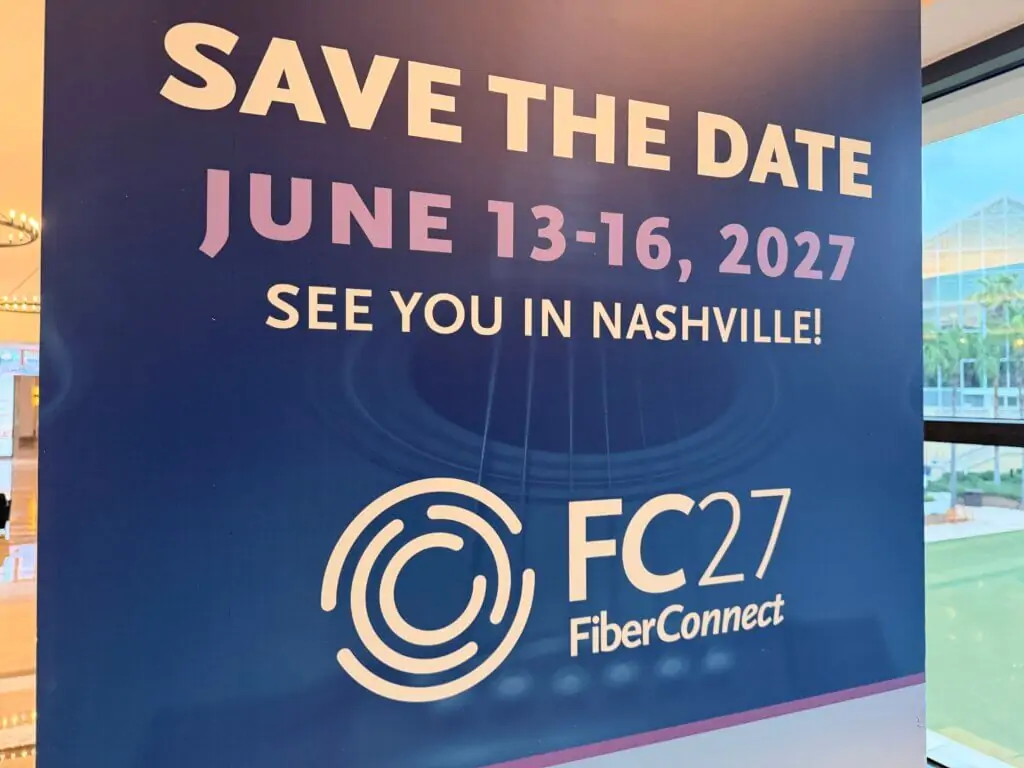
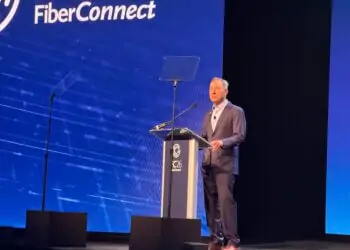
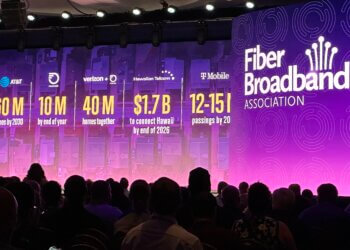
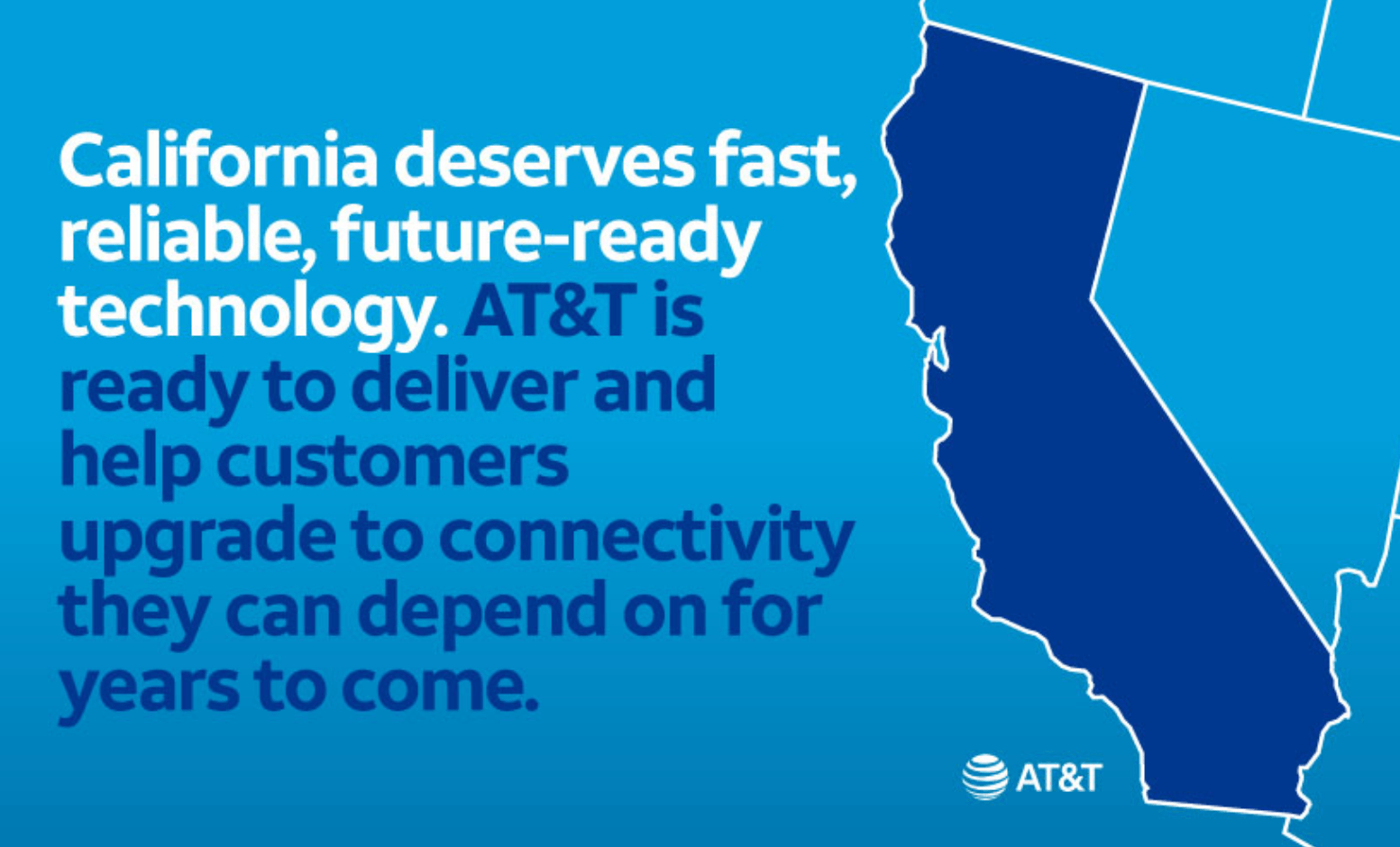
Fiber Connect 2026 convened from May 17–20 at the Gaylord Palms in Orlando, Florida, drawing a record crowd of broadband operators, vendors, and policy advocates to witness a defining pivot in the telecom landscape: a shift in focus away from federal BEAD implementation and toward a massive U.S. fiber buildout funded by private equity and incumbent carriers. Even as BEAD deployments finally begin, its clear that massive fiber deployment cycle is already fully underway. Highlighting this aggressive market trajectory, AT&T made a massive, real-time commitment during the conference window, dedicating $19 billion through 2030 to aggressively scale its fiber footprint across California and accelerate the retirement of legacy copper.
This nationwide infrastructure surge is happening concurrently with the explosive growth of AI data centers, which has effectively become the industry’s ultimate “killer app” and long-promised demand engine. The overarching theme of “Light Years Ahead” highlighted fiber’s transition from standard residential pipes to the foundational nervous system of an emerging “Thinking Economy,” where decentralized, cloud-hosted AI agents require local-hard-drive speeds and extreme low latency to remain viable. As carriers racing to feed these data-intensive workloads pivot their architectures toward automation and intelligence, the narrative could transform from how to build the network to how to leverage its unprecedented capacity.
On-the-ground video dispatches from Orlando exploring the “Light Years Ahead” theme mapping the future of broadband, quantum infrastructure, and automation. Click any video to watch instantly.
Highlights the evolution from basic “homes passed” to building intelligent, open, and fully interoperable fiber infrastructure. Features a look at plug-and-play installation packages simple enough to ship straight to subscribers via traditional mail.
A deep dive into a completely unique tier of back-office and field operations jobs created as construction engineering moves toward an AI-first workflow. Discusses reshaping long-held telecom design-build job descriptions from the bottom up.
Analyzes private equity’s massive interest in fixed access networks and the inevitable wave of mergers and acquisitions determining operator survival. Addresses navigating recent geopolitical supply chain challenges and escalating raw materials costs.
Spotlights the immense optimism coming from policymakers and municipalities utilizing fiber networks to support new anchor institutions. Explores how remote work capability allows younger demographics to thrive locally rather than moving to larger cities.
Outlines the industry’s critical shift toward providing pervasive gigabit connectivity for all to prevent a new AI digital divide. Examines how cloud-hosted AI agents demand local-hard-drive response speeds and introduces agentic AI solutions for telecom providers.
Chronicles the journey of launching the nation’s first functional commercial quantum network in Chattanooga. Highlights how standard fiber routing acts as the foundation to test advanced quantum computing, secure the electric grid, and transform logistics encryption.
Tracks a prominent paradigm shift dividing stagnant legacy operators from forward-thinking providers using voice AI. Focuses on leveraging technology in technical support, billing optimization, and marketing to directly uplift the subscriber experience.
Reflects on a quarter-century of Fiber Connect while pivoting toward next-generation use cases. Explores how the industry is shifting conversations away from basic build logistics and toward advanced programming like telehealth networks and precision agriculture.
Details the vital steps required to unify isolated billing, workforce deployment, and network monitoring applications into a single repository. Showcases how platforms leverage customer experience channels like SMS, web chat, and social media with AI analytics.
Captures the distinct uptick in energy as lingering fears surrounding inventory hangovers and BEAD uncertainties settle. Details strategies for addressing ongoing labor shortages by engineering workforce training models built for long-term builds.
Examines the intersection of state policy frameworks and federal broadband allocations with capital in hand. Explores how common-sense legislation protects modern broadband consumers while actively paving the way for high-tech localized manufacturing ecosystems.
Provides a market report overview showing a powerful up-year for fiber infrastructure investment. Details the convergence of private funding, HFC plant upgrades by cable operators, and early-stage BEAD allocations working in states like Louisiana, Nevada, and New Mexico.
Identifies operational deployment layers as the new primary telecom bottleneck over physical layout construction. Explores how AI-native OSS/BSS architectures allow non-technical engineering or development teams to quickly deploy APIs and automate subscription workflows.