• Home
  • About
  • Events Calendar
  • Blueprint Guidelines
  • Privacy Policy
  • Manage Email Delivery
  • NextGenInfra.io
No Result
View All Result
Converge Digest
Friday, June 5, 2026
  • Home
  • About
  • Events Calendar
  • Blueprint Guidelines
  • Privacy Policy
  • Manage Email Delivery
  • NextGenInfra.io
No Result
View All Result
Converge Digest
No Result
View All Result

Home » Intel intros 4 and 8 TB SSDs based on 64-layer 3D NAND

Intel intros 4 and 8 TB SSDs based on 64-layer 3D NAND

February 16, 2018
in All
A A

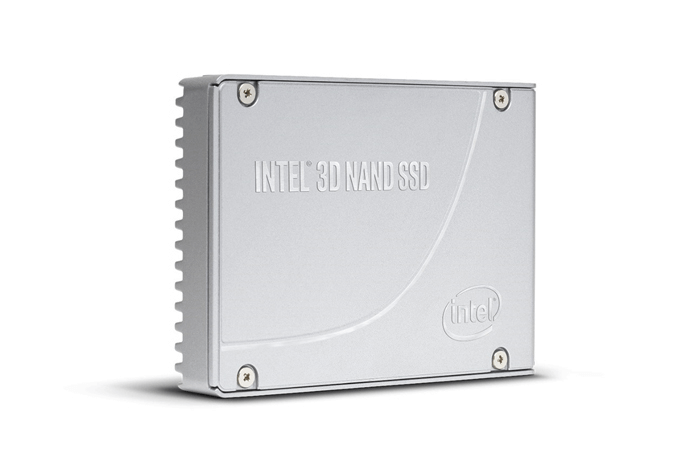
Intel introduced its first SSD designed for data center applications.

The Intel P4510 Series drives uses 64-layer TLC Intel 3D NAND. The density enables up to four times more terabytes per server and delivers up to 10 times better random read latency at 99.99 percent quality of service than previous generations. Intel says its drive can also deliver up to double the input-output operations per second (IOPS) per terabyte.

The 1 and 2TB capacities have been shipping to cloud service providers (CSPs) in high volume since August 2017, and the 4 and 8TB capacities are now available to CSPs and channel customers.

All capacities are in the 2.5-inch 15 mm U.2 form factor and utilize a PCIe* NVMe 3.0 x4 connection.

To help replace legacy storage hardware, Intel is also introducing two new technologies:

  • Intel Volume Management Device (VMD), which is included with Intel Xeon Scale processors, enable robust management such as surprise insertion/removal and LED management of PCIe SSDs directly connected to the CPU. 
  • Intel Virtual RAID on CPU (VROC) uses Intel VMD to provide RAID to PCIe SSDs. Replacing RAID cards with Intel VROC yields up to twice the IOPs performance and up to a 70 percent cost savings with PCIe SSDs directly attached to the CPU.

Intel also noted that the Enterprise and Datacenter SSD Form Factor specification was recently ratified by the EDSFF Working Group, which includes Intel, Samsung, Microsoft, Facebook and others.

Intel has been shipping a pre-spec version of the Intel SSD DC P4500.

  •  In August 2017, Intel introduced its  “ruler” form factor for SSD. Instead of the traditional, 2.5″ or 3.5″ rectangular box for disk drives, Intel’s ruler is a long, thin box designed to slide in to a 1″ server chassis, plugging in via a PCIe interface at the end of the ruler. It is a slick design. Apart from looking better, the long, thin shape dissipates heat easier. Intel showed a 1” RU server chassis accommodating 32 of these SSD rulers, creating up to 1 petabyte of storage. Intel could offer Optane SSDs and/or 3D NAND SSDs in this form factor.
Tags: Blueprint columnsIntelStorage
ShareTweetShareSummarizeSummarize
Previous Post

Arista posts Q4 revenue of $468 million, up 43% yoy

Next Post

Juniper revs new Ethernet switches for the multicloud world

Staff

Staff

Related Posts

Financials

Intel Appoints Client Computing Chief and CTO

May 4, 2026
All

Intel Q1 2026: AI Drives 22% Data Center Growth, Foundry Revenue Up

April 23, 2026
Semiconductors

Intel, Google Expand AI Infrastructure Pact Around Xeon and Custom IPUs

April 9, 2026
AI Infrastructure

SambaNova and Intel Advance Heterogeneous Architecture for Agentic AI Inference

April 8, 2026
Semiconductors

Intel Foundry Demos 19 μm GaN Chiplet with Integrated Logic 

April 8, 2026
All

Intel Confirms Role in Terafab Initiative

April 7, 2026
Next Post

Juniper revs new Ethernet switches for the multicloud world

Please login to join discussion

Categories

  • 5G / 6G / Wi-Fi
  • AI Infrastructure
  • All
  • Automotive Networking
  • Blueprints
  • Clouds and Carriers
  • Data Centers
  • Enterprise
  • Explainer
  • Feature
  • Financials
  • Last Mile / Middle Mile
  • Legal / Regulatory
  • Optical
  • Quantum
  • Research
  • Security
  • Semiconductors
  • Space
  • Start-ups
  • Subsea
  • Sustainability
  • Video
  • Webinars

Archives

Tags

5G All AT&T Australia AWS Blueprint columns BroadbandWireless Broadcom China Ciena Cisco Data Centers Dell'Oro Ericsson FCC Financial Financials Huawei Infinera Intel Japan Juniper Last Mile Last Mille LTE Mergers and Acquisitions Mobile NFV Nokia Optical Packet Systems PacketVoice People Regulatory Satellite SDN Service Providers Silicon Silicon Valley StandardsWatch Storage TTP UK Verizon Wi-Fi
Converge Digest

A private dossier for networking and telecoms

Follow Us

  • Home
  • About
  • Events Calendar
  • Blueprint Guidelines
  • Privacy Policy
  • Manage Email Delivery
  • NextGenInfra.io

© 2026 Converge Digest - A private dossier for networking and telecoms.

No Result
View All Result
  • Home
  • About
  • Events Calendar
  • Blueprint Guidelines
  • Privacy Policy
  • Manage Email Delivery
  • NextGenInfra.io

© 2026 Converge Digest - A private dossier for networking and telecoms.

This website uses cookies. By continuing to use this website you are giving consent to cookies being used. Visit our Privacy and Cookie Policy.
Go to mobile version