• Home
  • About
  • Events Calendar
  • Blueprint Guidelines
  • Privacy Policy
  • Manage Email Delivery
  • NextGenInfra.io
No Result
View All Result
Converge Digest
Sunday, May 31, 2026
  • Home
  • About
  • Events Calendar
  • Blueprint Guidelines
  • Privacy Policy
  • Manage Email Delivery
  • NextGenInfra.io
No Result
View All Result
Converge Digest
No Result
View All Result

Home » Intel’s Latest Xeon E7 Packs up to 18 Cores for Big Performance Gains

Intel’s Latest Xeon E7 Packs up to 18 Cores for Big Performance Gains

May 6, 2015
in All
A A

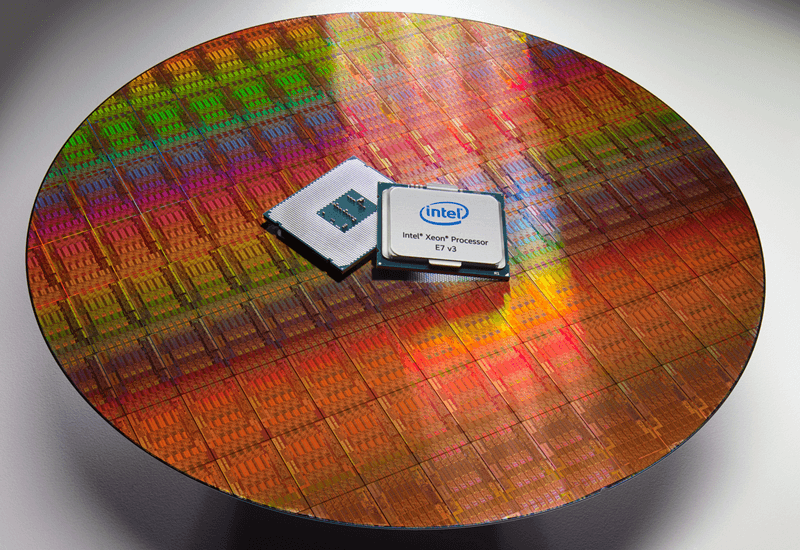
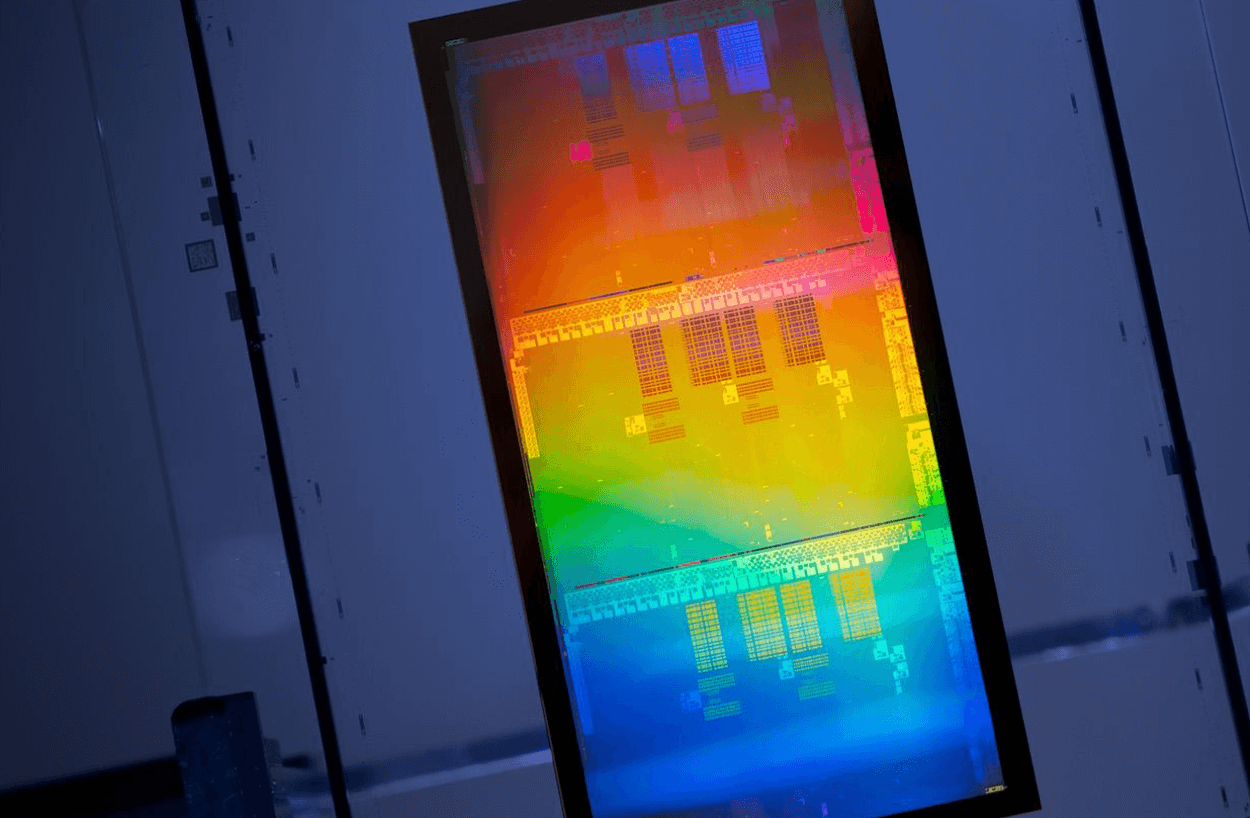
Intel introduced its latest Xeon processor E7-8800/4800 v3 product families, targeted at real-time analytics and enhanced performance and reliability for mission-critical computing. The design is optimized for processing and analyzing massive data sets in system memory.

Some highlights for the Xeon processor E7-8800/4800 v3:

  • 40 percent average performance improvement compared to the prior generation.
  • Up to 6x improvement in business processing application performance for in-memory transactional workloads optimized with the new Intel Transactional Synchronization Extensions (Intel TSX).
  • Up to 18 cores, a 20 percent increase in cores compared to the prior generation, and up to 45 megabytes of last-level cache, the processor family can deliver up to 70 percent more decision support analytic sessions per hour4.
  • The processors support configurations up to 32 sockets with support for the industry’s largest memory capacity per socket (8-socket systems are capable of supporting up to 12 terabytes of DDR3 or DDR4 memory technology).
  • Product family comprises 12 processor models, including multiple segment optimized processors such as two high-frequency models that are designed for a subset of database applications requiring the fastest cores available. 

Intel said the new product family delivers up to 10x greater performance per dollar while driving up to an 85 percent lower total cost of ownership compared to alternative RISC architectures by reducing the cost of hardware acquisition and power and cooling.

The new Xeons also gain new security and reliability capabilities, including increased cryptographic performance via the latest Intel Advanced Encryption Standard New Instructions (Intel AES-NI), as well as additional micro-architectural improvements. In addition, Intel Run Sure Technology, a unique set of reliability, availability and serviceability (RAS) features for the Intel Xeon processor E7 family, is enhanced with new features designed to further ensure “five nines” availability for mission-critical applications.

“In the digital services economy, success or failure can depend on how quickly businesses act on insight from vast stores of data,” said Diane Bryant, senior vice president and general manager of the Data Center Group at Intel. “The Intel Xeon processor E7 v3 family is the engine for accelerating business intelligence through real-time analytics, enabling businesses to improve customer satisfaction through more personalized products and services, generate new revenue streams and enhance operational efficiency.”

http://www.intel.com

Tags: AnalyticsBig DataBlueprint columnsData CentersIntelSilicon
ShareTweetShareSummarizeSummarize
Previous Post

HP Debuts NFV System with Helion OpenStack Carrier-Grade

Next Post

Cubic Telecom Secures EUR 18 Million for M2M Connectivity

Staff

Staff

Related Posts

Financials

Intel Appoints Client Computing Chief and CTO

May 4, 2026
All

Intel Q1 2026: AI Drives 22% Data Center Growth, Foundry Revenue Up

April 23, 2026
Semiconductors

Intel, Google Expand AI Infrastructure Pact Around Xeon and Custom IPUs

April 9, 2026
AI Infrastructure

SambaNova and Intel Advance Heterogeneous Architecture for Agentic AI Inference

April 8, 2026
Semiconductors

Intel Foundry Demos 19 μm GaN Chiplet with Integrated Logic 

April 8, 2026
All

Intel Confirms Role in Terafab Initiative

April 7, 2026
Next Post

Cubic Telecom Secures EUR 18 Million for M2M Connectivity

Please login to join discussion

Categories

  • 5G / 6G / Wi-Fi
  • AI Infrastructure
  • All
  • Automotive Networking
  • Blueprints
  • Clouds and Carriers
  • Data Centers
  • Enterprise
  • Explainer
  • Feature
  • Financials
  • Last Mile / Middle Mile
  • Legal / Regulatory
  • Optical
  • Quantum
  • Research
  • Security
  • Semiconductors
  • Space
  • Start-ups
  • Subsea
  • Sustainability
  • Video
  • Webinars

Archives

Tags

5G All AT&T Australia AWS Blueprint columns BroadbandWireless Broadcom China Ciena Cisco Data Centers Dell'Oro Ericsson FCC Financial Financials Huawei Infinera Intel Japan Juniper Last Mile Last Mille LTE Mergers and Acquisitions Mobile NFV Nokia Optical Packet Systems PacketVoice People Regulatory Satellite SDN Service Providers Silicon Silicon Valley StandardsWatch Storage TTP UK Verizon Wi-Fi
Converge Digest

A private dossier for networking and telecoms

Follow Us

  • Home
  • About
  • Events Calendar
  • Blueprint Guidelines
  • Privacy Policy
  • Manage Email Delivery
  • NextGenInfra.io

© 2026 Converge Digest - A private dossier for networking and telecoms.

No Result
View All Result
  • Home
  • About
  • Events Calendar
  • Blueprint Guidelines
  • Privacy Policy
  • Manage Email Delivery
  • NextGenInfra.io

© 2026 Converge Digest - A private dossier for networking and telecoms.

This website uses cookies. By continuing to use this website you are giving consent to cookies being used. Visit our Privacy and Cookie Policy.
Go to mobile version