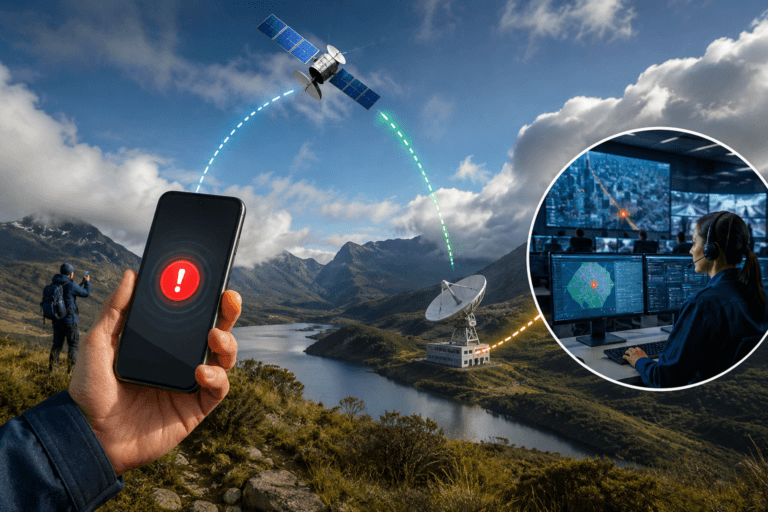
AT&T, T-Mobile, and Verizon plan to form a joint venture aimed at extending satellite-based direct-to-device (D2D) connectivity across the United States, marking an unusual collaboration among the nation’s three largest wireless carriers to reduce mobile dead zones and improve emergency communications coverage. The proposed JV would pool spectrum resources and establish a common technical platform for satellite connectivity, enabling customers to access more seamless coverage in rural, remote, and disaster-affected areas where terrestrial cellular networks remain limited or unavailable.
The initiative positions satellite communications as a supplemental extension to traditional mobile networks rather than a replacement for terrestrial infrastructure. The carriers said the JV would support broader interoperability among satellite operators, mobile network operators (MNOs), device makers, application developers, and operating system providers through common industry specifications and standards-based integration. Existing carrier-satellite partnerships will remain intact, while the JV would create an additional shared platform designed to accelerate D2D service deployment and improve spectrum efficiency.
The three carriers framed the effort as both a connectivity and national competitiveness initiative. The companies said the collaboration would help maintain U.S. leadership in wireless and satellite communications by encouraging competition among satellite providers while simplifying technical integration for carriers and device ecosystems. The JV would also work with rural operators to expand service availability and support broader deployment of future D2D applications beyond emergency messaging and basic connectivity.
- Proposed JV would combine spectrum resources from AT&T, T-Mobile, and Verizon for satellite-based D2D services
- Focus areas include rural coverage gaps, emergency resiliency, and improved interoperability
- Platform aims to support multiple satellite operators through common technical specifications
- Customers would gain more seamless roaming-like access to satellite connectivity in underserved areas
- JV would maintain compatibility with existing carrier-satellite partnerships
- Carriers said the initiative would support standards-based device and application integration
- Rural MNOs could gain access to new satellite-enabled service capabilities
- Collaboration remains subject to definitive agreements and customary closing conditions
“Our goal is to make staying connected simple, no matter where you are — on a rural highway, in a national park, on a boat, or during an emergency. By joining with other carriers, we’re bringing our combined expertise to accelerate our customers’ access to reliable, and always-on coverage everywhere. This collaboration not only makes connectivity easier; it strengthens America’s communications leadership,” said John Stankey, Chairman and CEO of AT&T.
🌐 Analysis: The proposed JV signals a significant shift in the competitive dynamics of U.S. wireless carriers, which historically pursued separate satellite strategies tied to exclusive partnerships. T-Mobile partnered with SpaceX for Starlink D2D services, while AT&T and Verizon aligned with other satellite providers including AST SpaceMobile and Skylo. A shared standards-based platform could reduce fragmentation in the emerging D2D ecosystem while increasing pressure on satellite operators to support interoperable, carrier-neutral architectures.
🌐 The announcement also reflects growing industry recognition that satellite connectivity is becoming an integrated extension of terrestrial mobile infrastructure rather than a niche emergency feature. As 3GPP Release 17 and subsequent NTN standards mature, carriers increasingly view D2D capability as a strategic coverage layer for resilience, public safety, and rural connectivity. The JV could accelerate adoption of multi-operator NTN standards and influence future device roadmaps across smartphone, IoT, and automotive ecosystems.