• Home
  • About
  • Events Calendar
  • Blueprint Guidelines
  • Privacy Policy
  • Manage Email Delivery
  • NextGenInfra.io
No Result
View All Result
Converge Digest
Wednesday, July 1, 2026
  • Home
  • About
  • Events Calendar
  • Blueprint Guidelines
  • Privacy Policy
  • Manage Email Delivery
  • NextGenInfra.io
No Result
View All Result
Converge Digest
No Result
View All Result

Home » Open Cosmos Unveils LEO Constellation for Sovereign Space Connectivity

Open Cosmos Unveils LEO Constellation for Sovereign Space Connectivity

May 15, 2026
in Space Networking & Orbital Data Centers
A A

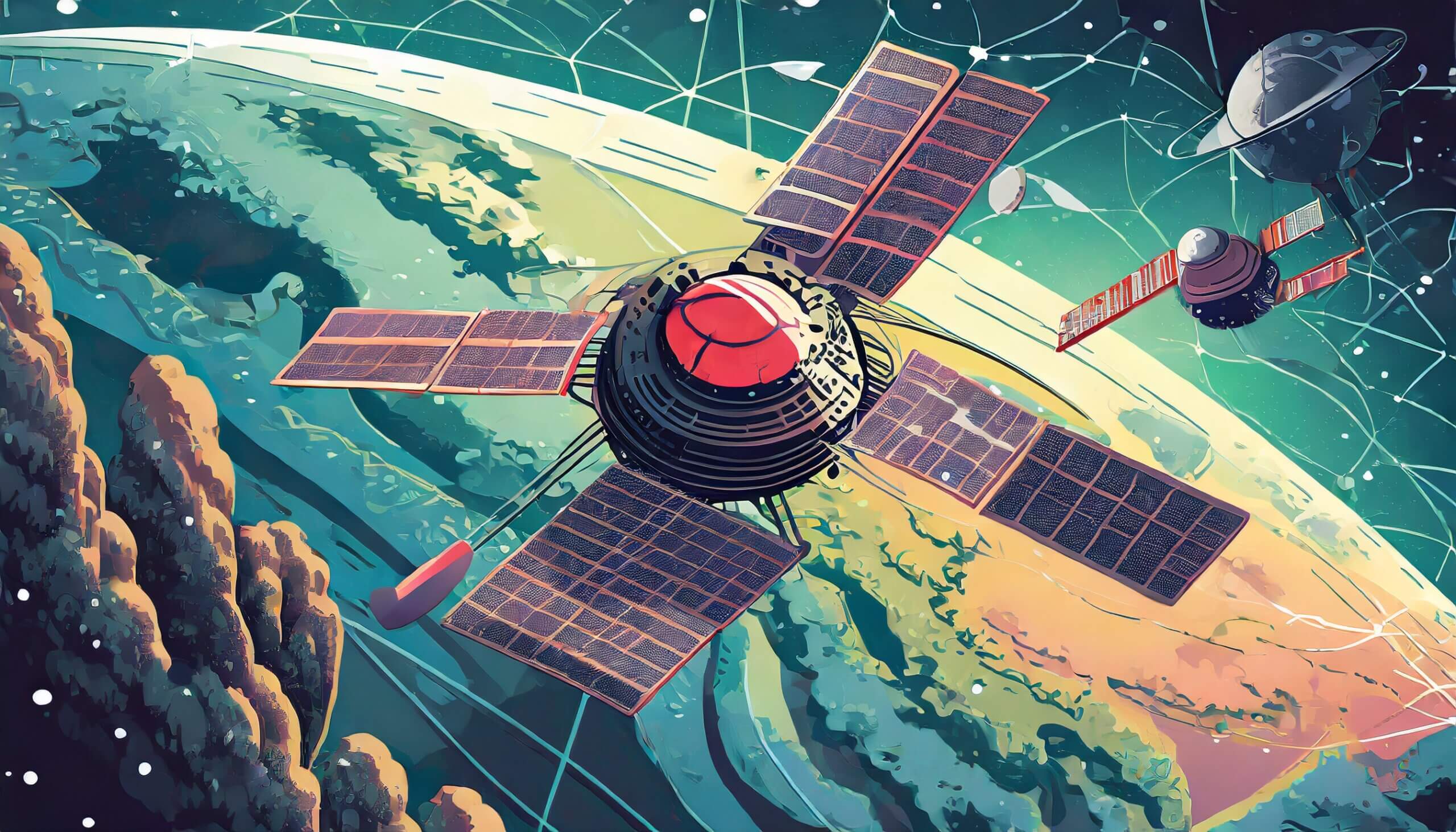
Open Cosmos introduced ConnectedCosmos, a new low Earth orbit (LEO) satellite constellation designed to provide sovereign, secure communications and operational resilience for governments and enterprises. The system aims to offer a European-led alternative to large global satellite constellations while enabling real-time connectivity and intelligence services.

The constellation integrates broadband point-to-point communications with direct-to-device IoT capabilities. Open Cosmos plans to combine these services with its existing Earth Observation (EO) assets from the company’s Open Constellation program, allowing users to access real-time operational data and analytics. The company says the approach enables organizations to detect threats and act on intelligence quickly, supporting applications such as infrastructure monitoring, security operations, and disaster response.

ConnectedCosmos relies on optical inter-satellite links (ISLs) to create a gateway-less mesh network in orbit. Satellites will route data directly between themselves, bypassing terrestrial infrastructure and subsea cable systems that may be vulnerable to disruption or interference. The constellation will operate using Ka-band spectrum filings in Liechtenstein that Open Cosmos reactivated earlier in 2026 with the launch of the first satellites in the system.

• New ConnectedCosmos LEO constellation designed for secure, sovereign communications and operational resilience

• Integrates broadband point-to-point links and direct-to-device IoT connectivity

• Combines communications services with Earth Observation intelligence from the Open Constellation

• Uses optical inter-satellite links (ISLs) to create a gateway-less space mesh network

• Designed to bypass compromised terrestrial infrastructure or subsea cables

• Operates using Ka-band spectrum filings in Liechtenstein, reactivated in 2026

• Targets governments, institutions, and enterprises seeking sovereign space connectivity

Rafel Jordà Siquier, founder and CEO of Open Cosmos, said: “ConnectedCosmos represents a leap forward for Europe in building a resilient, secure and autonomous connectivity capability — giving nations and partners a reliable alternative for true sovereignty in orbit.”

🌐 Analysis

The announcement positions Open Cosmos within the emerging European push for sovereign space infrastructure, alongside initiatives such as the EU’s IRIS² secure connectivity constellation. While global systems such as those from large commercial operators dominate LEO broadband today, European governments increasingly seek alternatives that combine secure communications, Earth observation data, and regional industrial participation.

Open Cosmos has historically focused on small satellite manufacturing and mission services, supporting Earth observation missions and national satellite programs across Europe. ConnectedCosmos extends that model toward a hybrid intelligence and connectivity architecture, where EO sensing and communications networks operate as a unified platform for real-time operational awareness.

Tags: OpenCosmosSovereign-AI
ShareTweetShareSummarizeSummarize
Previous Post

Alibaba Accelerates AI Infrastructure Buildout as Cloud Revenue Surges 38%

Next Post

Canada’s FABrIC Invests in Optical Interconnects, Edge AI, and Low-Power Chips

Jim Carroll

Jim Carroll

Editor and Publisher, Converge! Network Digest, Optical Networks Daily - Covering the full stack of network convergence from Silicon Valley

Related Posts

Data Centers

Arrcus, TELUS Test Sovereign AI Networking Fabric 

June 18, 2026
Data Centers

AMD Backs UK Sovereign AI with £2 Billion Investment Plan

June 8, 2026
Clouds and Carriers

Telefónica and Google Cloud Launch Sovereign Cloud for Spain

May 31, 2026
Clouds and Carriers

Deutsche Telekom and SAP to Build Sovereign AI for Germany

May 28, 2026
Clouds and Carriers

Equinix Expands Fabric Geo Zones for Sovereign AI and Multicloud Compliance

May 14, 2026
All

Rafay Gains NVIDIA AI Cloud-Ready Validation for Neocloud and Sovereign AI

May 14, 2026
Next Post

Canada's FABrIC Invests in Optical Interconnects, Edge AI, and Low-Power Chips

Categories

  • 5G / 6G / Wi-Fi
  • AI Infrastructure
  • All
  • Automotive Networking
  • Blueprints
  • Clouds and Carriers
  • Corporate Strategies
  • Data Centers
  • Enterprise
  • Explainer
  • Feature
  • Hot Start-ups
  • Last Mile / Middle Mile
  • Legal / Regulatory
  • Optical
  • Quantum
  • Research
  • Security
  • Semiconductors
  • Space Networking & Orbital Data Centers
  • Subsea
  • Sustainability
  • Video
  • Webinars

Archives

Tags

5G All AT&T Australia AWS Blueprint columns BroadbandWireless Broadcom China Ciena Cisco Data Centers Dell'Oro Ericsson FCC Financial Financials Huawei Infinera Intel Japan Juniper Last Mile Last Mille LTE Mergers and Acquisitions Mobile NFV Nokia Optical Packet Systems PacketVoice People Regulatory Satellite SDN Service Providers Silicon Silicon Valley StandardsWatch Storage TTP UK Verizon Wi-Fi
Converge Digest

A private dossier for networking and telecoms

Follow Us

  • Home
  • About
  • Events Calendar
  • Blueprint Guidelines
  • Privacy Policy
  • Manage Email Delivery
  • NextGenInfra.io

© 2026 Converge Digest - A private dossier for networking and telecoms.

No Result
View All Result
  • Home
  • About
  • Events Calendar
  • Blueprint Guidelines
  • Privacy Policy
  • Manage Email Delivery
  • NextGenInfra.io

© 2026 Converge Digest - A private dossier for networking and telecoms.

This website uses cookies. By continuing to use this website you are giving consent to cookies being used. Visit our Privacy and Cookie Policy.
Go to mobile version