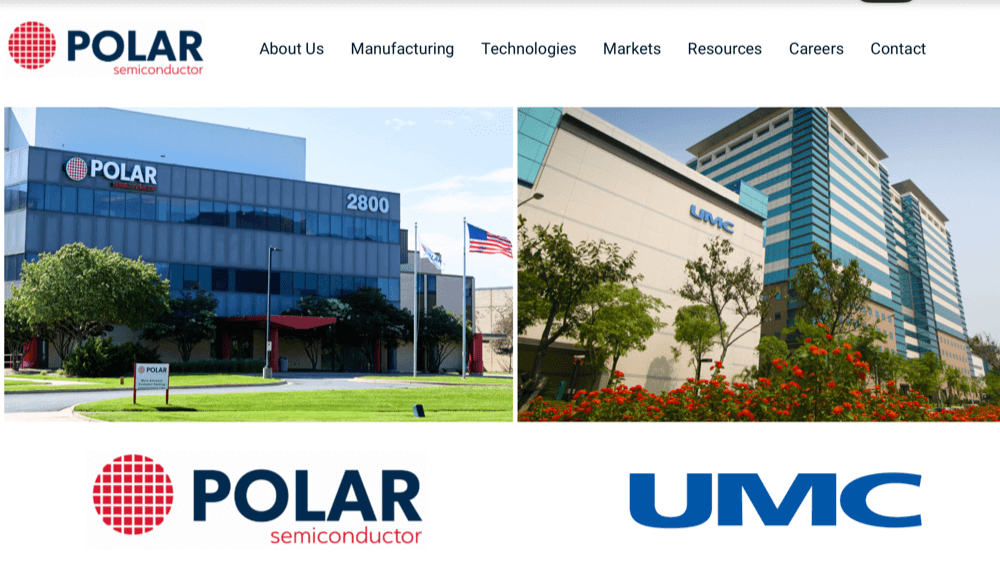
United Microelectronics Corporation (UMC) and Polar Semiconductor signed a Memorandum of Understanding to explore U.S.-based production of 8-inch wafers for power, high-voltage, and sensor applications. The collaboration aims to leverage Polar’s Minnesota fab expansion and UMC’s specialty technology portfolio to support demand from automotive, data center, consumer electronics, and aerospace & defense markets.
The companies plan to identify targeted devices for Polar to manufacture in Bloomington, aligning with customer multi-sourcing strategies and rising demand for domestically produced semiconductors. By pairing Polar’s manufacturing expertise with UMC’s global customer base and established process platforms, the partnership seeks to boost U.S. supply chain resilience amid shifting geopolitical tensions.
The initiative also strengthens domestic availability of power semiconductors used in electric vehicles, energy grids, robotics, and AI data center infrastructure—segments still constrained by legacy-node capacity limitations. The agreement follows Polar’s ongoing expansion program to increase 8-inch output and broaden its specialty technology offerings.
• UMC and Polar signed an MOU to explore U.S.-based 8-inch wafer manufacturing.
• Target applications include automotive, industrial, data center, consumer, and aerospace & defense.
• Polar’s expanded Minnesota fab will evaluate production of UMC-originated devices.
• Collaboration supports customer multi-sourcing and domestic chip supply objectives.
• Focus technologies include BCD, high-voltage, power devices, sensors, and related specialty platforms.
“Our partnership is aligned with Polar’s strategy to meet the growing demand for domestic manufacturing,” said Ken Obuszewski, VP of Marketing at Polar.
🌐 Analysis
This collaboration highlights continued investment in U.S. legacy-node and specialty semiconductor capacity, an area still viewed as strategically important for automotive, industrial, and power electronics. UMC has increasingly pursued geographically distributed manufacturing options to meet customer onshoring requirements, while Polar’s expansion positions it to compete with other specialty U.S. fabs, including those backed by CHIPS Act programs.