• Home
  • About
  • Events Calendar
  • Blueprint Guidelines
  • Privacy Policy
  • Manage Email Delivery
  • NextGenInfra.io
No Result
View All Result
Converge Digest
Thursday, June 4, 2026
  • Home
  • About
  • Events Calendar
  • Blueprint Guidelines
  • Privacy Policy
  • Manage Email Delivery
  • NextGenInfra.io
No Result
View All Result
Converge Digest
No Result
View All Result

Home » Wind River Develops M2M SDK based on Linux

Wind River Develops M2M SDK based on Linux

September 11, 2012
in All
A A

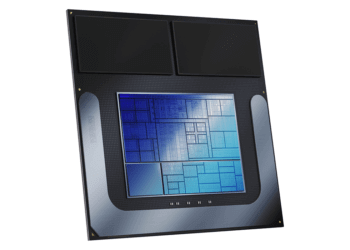
Wind River, which is a wholly owned subsidiary of Intel, introduced a software development environment for M2M applications, based on its embedded Linux operating system and middleware.

The software includes validated and supported middleware stack, including virtual machine, OMA DM, OSGi, TR-069, and home automation. Connectivity options include 3G, Bluetooth, Ethernet, Wi-Fi, ZigBee, and Z-Wave across PAN, LAN and WAN networks.

“With the skyrocketing growth of smart connected devices, an interconnected world is becoming a reality. Applications based on systems behavior have become pervasive, and this is the crux of M2M technology,” said Santhosh Nair, general manager of intelligent systems group at Wind River. “Connectivity, security, optimization, and adherence to industry standards are required in order to successfully develop smart connected devices and services, and this is precisely the value that Wind River brings to the table. This platform maximizes the value of M2M technology by building on an integrated foundation of software, middleware, and board support packages with cutting edge tools and development environments.”

http://www.windriver.com

Tags: Blueprint columnsIntelM2MSiliconSoftware
ShareTweetShareSummarizeSummarize
Previous Post

GTS Central Europe Activate Ethernet-over-Copper with Overture

Next Post

Intel Demos SeaCliff Trail – an SDN-enabled Ethernet Switch

Staff

Staff

Related Posts

Financials

Intel Appoints Client Computing Chief and CTO

May 4, 2026
All

Intel Q1 2026: AI Drives 22% Data Center Growth, Foundry Revenue Up

April 23, 2026
Semiconductors

Intel, Google Expand AI Infrastructure Pact Around Xeon and Custom IPUs

April 9, 2026
AI Infrastructure

SambaNova and Intel Advance Heterogeneous Architecture for Agentic AI Inference

April 8, 2026
Semiconductors

Intel Foundry Demos 19 μm GaN Chiplet with Integrated Logic 

April 8, 2026
All

Intel Confirms Role in Terafab Initiative

April 7, 2026
Next Post

Intel Demos SeaCliff Trail - an SDN-enabled Ethernet Switch

Please login to join discussion

Categories

  • 5G / 6G / Wi-Fi
  • AI Infrastructure
  • All
  • Automotive Networking
  • Blueprints
  • Clouds and Carriers
  • Data Centers
  • Enterprise
  • Explainer
  • Feature
  • Financials
  • Last Mile / Middle Mile
  • Legal / Regulatory
  • Optical
  • Quantum
  • Research
  • Security
  • Semiconductors
  • Space
  • Start-ups
  • Subsea
  • Sustainability
  • Video
  • Webinars

Archives

Tags

5G All AT&T Australia AWS Blueprint columns BroadbandWireless Broadcom China Ciena Cisco Data Centers Dell'Oro Ericsson FCC Financial Financials Huawei Infinera Intel Japan Juniper Last Mile Last Mille LTE Mergers and Acquisitions Mobile NFV Nokia Optical Packet Systems PacketVoice People Regulatory Satellite SDN Service Providers Silicon Silicon Valley StandardsWatch Storage TTP UK Verizon Wi-Fi
Converge Digest

A private dossier for networking and telecoms

Follow Us

  • Home
  • About
  • Events Calendar
  • Blueprint Guidelines
  • Privacy Policy
  • Manage Email Delivery
  • NextGenInfra.io

© 2026 Converge Digest - A private dossier for networking and telecoms.

No Result
View All Result
  • Home
  • About
  • Events Calendar
  • Blueprint Guidelines
  • Privacy Policy
  • Manage Email Delivery
  • NextGenInfra.io

© 2026 Converge Digest - A private dossier for networking and telecoms.

This website uses cookies. By continuing to use this website you are giving consent to cookies being used. Visit our Privacy and Cookie Policy.
Go to mobile version