• Home
  • About
  • Events Calendar
  • Blueprint Guidelines
  • Privacy Policy
  • Manage Email Delivery
  • NextGenInfra.io
No Result
View All Result
Converge Digest
Saturday, May 30, 2026
  • Home
  • About
  • Events Calendar
  • Blueprint Guidelines
  • Privacy Policy
  • Manage Email Delivery
  • NextGenInfra.io
No Result
View All Result
Converge Digest
No Result
View All Result

Home » Cisco AI Summit: Intel’s Lip-Bu Tan on Foundry Reset, GPU Roadmap

Cisco AI Summit: Intel’s Lip-Bu Tan on Foundry Reset, GPU Roadmap

February 3, 2026
in AI Infrastructure
A A

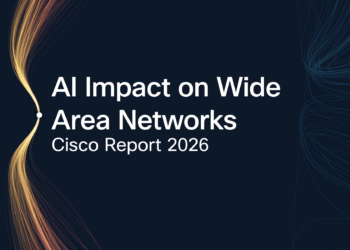
At Cisco’s AI event, Lip-Bu Tan, CEO of Intel, sat down with Jeetu Patel to discuss Intel’s recovery, its evolving foundry strategy, and the system-level constraints shaping AI infrastructure. Tan described Intel as an iconic and strategically important U.S. company and said he accepted the CEO role after two years on Intel’s board, despite warnings from peers about the scale and difficulty of the task.

Tan said Intel now operates as two closely linked businesses: a product organization and a manufacturing foundry, each requiring distinct execution models and culture. He confirmed Intel’s intent to run its foundry as a general-purpose platform serving external customers as well as Intel products. On Intel 18A, Tan said yields were weak when he took over, prompting him to bring in outside expertise and work closely with equipment partners. He described 7–8% month-to-month yield improvement as an industry best-practice target and said Intel is now seeing improvements consistent with that cadence, which has led to renewed customer interest. Tan added that Intel remains focused on its next-generation 14A process, with risk production targeted for 2028 and volume production expected in 2029.

On AI infrastructure, Tan identified memory as the most acute bottleneck, saying customers see little relief for several years as AI workloads absorb rapidly growing memory capacity. He said compute demand has accelerated sharply, with deployment cycles shrinking from years to months, placing strain on manufacturing capacity and supply chains. Tan also highlighted thermal limits, power management, optical interconnects, and cluster-level software as critical constraints. He said Intel will continue to develop both CPUs and GPUs, manufacture them internally, and partner with external GPU providers, noting that different AI workloads require different architectures. Tan said he has hired a chief GPU architect and emphasized that software enablement—what he called “software 2.0”—is essential to making heterogeneous AI systems work at scale.

  • Intel positions its foundry as a general-purpose platform for internal and external customers
  • Intel 18A shows yield improvements approaching industry best-practice monthly targets, according to Tan
  • Intel targets 14A risk production in 2028 and volume production in 2029
  • Memory availability represents the most immediate bottleneck for AI scale-out
  • Intel plans to build CPUs and GPUs, manufacture them internally, and partner with other GPU providers
  • Cooling, optical interconnects, packaging, and cluster software now constrain AI systems alongside silicon
  • Intel is evaluating new substrates and materials to address power, thermal, and signal integrity limits
  • Tan cited glass substrates, diamond-based materials, and compound semiconductors such as gallium nitride as areas of active exploration

“Intel is an iconic company that matters to this industry and to the United States,” Tan said. “We have to execute with discipline, earn customer trust, and invest across manufacturing, packaging, software, and open ecosystems to enable the next wave of AI.”

Tags: Cisco
ShareTweetShareSummarizeSummarize
Previous Post

AMD Reports Record Q4 and Full-Year 2025 Results as Data Center and AI Drive Growth

Next Post

Cisco AI Summit: AWS’ Matt Garman on Infrastructure, Network, and Silicon

Jim Carroll

Jim Carroll

Editor and Publisher, Converge! Network Digest, Optical Networks Daily - Covering the full stack of network convergence from Silicon Valley

Related Posts

All

Cisco Study Finds Agentic AI Generates 450% More Traffic than Human Workflows

May 22, 2026
Financials

Cisco Raises AI Infrastructure Guidance 80% to $9B on $1.9B Q3 Hyperscaler Orders

May 13, 2026
Quantum

Cisco Introduces Universal Quantum Switch

April 23, 2026
Financials

Cisco Moves to Acquire Galileo to Strengthen AI Observability and Trust 

April 11, 2026
Video

Cisco’s Bill Gartner on Optics Qualification, Testing, and Supply Chain Strategy 

March 25, 2026
Enterprise

Cisco Extends Zero Trust and AI Defense to Agentic AI at RSA 2026

March 23, 2026
Next Post

Cisco AI Summit: AWS' Matt Garman on Infrastructure, Network, and Silicon

Categories

  • 5G / 6G / Wi-Fi
  • AI Infrastructure
  • All
  • Automotive Networking
  • Blueprints
  • Clouds and Carriers
  • Data Centers
  • Enterprise
  • Explainer
  • Feature
  • Financials
  • Last Mile / Middle Mile
  • Legal / Regulatory
  • Optical
  • Quantum
  • Research
  • Security
  • Semiconductors
  • Space
  • Start-ups
  • Subsea
  • Sustainability
  • Video
  • Webinars

Archives

Tags

5G All AT&T Australia AWS Blueprint columns BroadbandWireless Broadcom China Ciena Cisco Data Centers Dell'Oro Ericsson FCC Financial Financials Huawei Infinera Intel Japan Juniper Last Mile Last Mille LTE Mergers and Acquisitions Mobile NFV Nokia Optical Packet Systems PacketVoice People Regulatory Satellite SDN Service Providers Silicon Silicon Valley StandardsWatch Storage TTP UK Verizon Wi-Fi
Converge Digest

A private dossier for networking and telecoms

Follow Us

  • Home
  • About
  • Events Calendar
  • Blueprint Guidelines
  • Privacy Policy
  • Manage Email Delivery
  • NextGenInfra.io

© 2026 Converge Digest - A private dossier for networking and telecoms.

No Result
View All Result
  • Home
  • About
  • Events Calendar
  • Blueprint Guidelines
  • Privacy Policy
  • Manage Email Delivery
  • NextGenInfra.io

© 2026 Converge Digest - A private dossier for networking and telecoms.

This website uses cookies. By continuing to use this website you are giving consent to cookies being used. Visit our Privacy and Cookie Policy.
Go to mobile version