
• Home
  • About
  • Events Calendar
  • Blueprint Guidelines
  • Privacy Policy
  • Manage Email Delivery
  • NextGenInfra.io
No Result
View All Result
Converge Digest
Thursday, June 4, 2026
  • Home
  • About
  • Events Calendar
  • Blueprint Guidelines
  • Privacy Policy
  • Manage Email Delivery
  • NextGenInfra.io
No Result
View All Result
Converge Digest
No Result
View All Result

Home » Intel Achieves 32 Gbps SerDes on 14nm Process

Intel Achieves 32 Gbps SerDes on 14nm Process

November 18, 2014
in All
A A

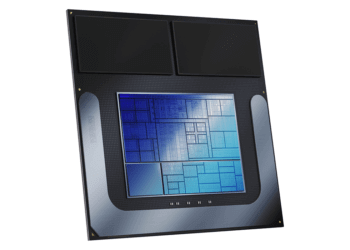
Intel published silicon characterization results for its 1 to 32 Gbps high-speed SerDes on the 14nm process. This marks the first time that a 32 Gbps, multiprotocol SerDes has been validated on any sub-20nm foundry process.

Intel’s 14nm SerDes family is the second generation of SerDes offering and is built on the company’s 12 and 28 Gbps SerDes, which is currently in production on its 22nm Tri-gate process technology. The new 14nm SerDes extends the operating range while reducing power by 20 percent and area by more than 40 percent as compared to Intel’s 22nm SerDes offering.

“Our SerDes architecture continues to improve with each successive development in the Tri-gate process” said Ali Farhang, vice president, Design and Enablement Services, Intel Custom Foundry. “We are able to meet the 28G CEI LR spec while supporting operation down to 1 Gbps, thus enabling flexibility in our customers’ products.”

http://newsroom.intel.com/

Tags: Blueprint columnsIntelSilicon
ShareTweetShareSummarizeSummarize
Previous Post

BT Launches Cloud for Asia-Pacific, Middle East and Africa

Next Post

Intel’s Next Xeon Phi Brings Omni-Path Fabric and 10nm process

Staff

Staff

Related Posts

Financials

Intel Appoints Client Computing Chief and CTO

May 4, 2026
All

Intel Q1 2026: AI Drives 22% Data Center Growth, Foundry Revenue Up

April 23, 2026
Semiconductors

Intel, Google Expand AI Infrastructure Pact Around Xeon and Custom IPUs

April 9, 2026
AI Infrastructure

SambaNova and Intel Advance Heterogeneous Architecture for Agentic AI Inference

April 8, 2026
Semiconductors

Intel Foundry Demos 19 μm GaN Chiplet with Integrated Logic 

April 8, 2026
All

Intel Confirms Role in Terafab Initiative

April 7, 2026
Next Post

Intel's Next Xeon Phi Brings Omni-Path Fabric and 10nm process

Please login to join discussion

Categories

  • 5G / 6G / Wi-Fi
  • AI Infrastructure
  • All
  • Automotive Networking
  • Blueprints
  • Clouds and Carriers
  • Data Centers
  • Enterprise
  • Explainer
  • Feature
  • Financials
  • Last Mile / Middle Mile
  • Legal / Regulatory
  • Optical
  • Quantum
  • Research
  • Security
  • Semiconductors
  • Space
  • Start-ups
  • Subsea
  • Sustainability
  • Video
  • Webinars

Archives

Tags

5G All AT&T Australia AWS Blueprint columns BroadbandWireless Broadcom China Ciena Cisco Data Centers Dell'Oro Ericsson FCC Financial Financials Huawei Infinera Intel Japan Juniper Last Mile Last Mille LTE Mergers and Acquisitions Mobile NFV Nokia Optical Packet Systems PacketVoice People Regulatory Satellite SDN Service Providers Silicon Silicon Valley StandardsWatch Storage TTP UK Verizon Wi-Fi
Converge Digest

A private dossier for networking and telecoms

Follow Us

  • Home
  • About
  • Events Calendar
  • Blueprint Guidelines
  • Privacy Policy
  • Manage Email Delivery
  • NextGenInfra.io

© 2026 Converge Digest - A private dossier for networking and telecoms.

No Result
View All Result
  • Home
  • About
  • Events Calendar
  • Blueprint Guidelines
  • Privacy Policy
  • Manage Email Delivery
  • NextGenInfra.io

© 2026 Converge Digest - A private dossier for networking and telecoms.

This website uses cookies. By continuing to use this website you are giving consent to cookies being used. Visit our Privacy and Cookie Policy.
Go to mobile version