• Home
  • About
  • Events Calendar
  • Blueprint Guidelines
  • Privacy Policy
  • Manage Email Delivery
  • NextGenInfra.io
No Result
View All Result
Converge Digest
Wednesday, June 3, 2026
  • Home
  • About
  • Events Calendar
  • Blueprint Guidelines
  • Privacy Policy
  • Manage Email Delivery
  • NextGenInfra.io
No Result
View All Result
Converge Digest
No Result
View All Result

Home » Baidu integrates Intel’s Mobileye into its autonomous vehicle project

Baidu integrates Intel’s Mobileye into its autonomous vehicle project

July 4, 2018
in All, Automotive Networking
A A

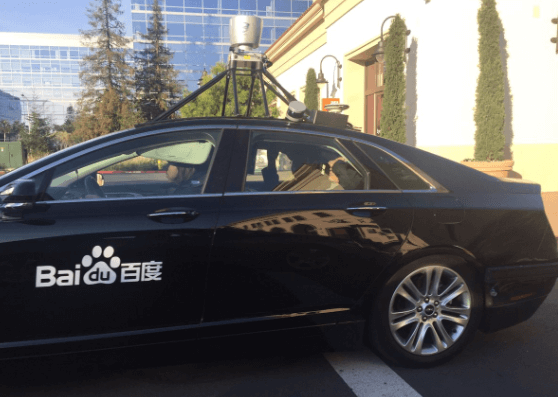
Baidu will integrate Mobileye’s Responsibility Sensitive Safety (RSS) model in its open source Project Apollo and in its commercial Apollo Pilot programs. Baidu will also adopt Mobileye’s Surround Computer Vision Kit.

RSS is an open and transparent formal model that provides safety assurance of AV decision-making. RSS does this by formalizing common sense human-centered concepts of what it means to drive safely. Examples: always maintain a safe following distance and right-of-way is given but not taken.

The Mobileye Surround View Camera kit includes 12 cameras positioned around the vehicle plus Mobileye’s computer vision (CV) hardware and software, which leverages the cameras combined view into a unified and comprehensive CV solution for autonomous cars.

“Our team recognizes the value and critical role that Mobileye’s RSS model plays in safely deploying autonomous driving. Project Apollo will integrate RSS to successfully enable safe driving today, and drive further autonomous research on China’s roadways,” stated Weihao Gu, general manager of Baidu’s Intelligent Driving Unit.

https://www.mobileye.com

Tags: BaiduBlueprint columnsIntel
ShareTweetShareSummarizeSummarize
Previous Post

Baidu develops its own AI chip, rolls out first autonomous bus

Next Post

New Zealand signs ABB for North/South Island power link upgrade

Staff

Staff

Related Posts

Financials

Intel Appoints Client Computing Chief and CTO

May 4, 2026
All

Intel Q1 2026: AI Drives 22% Data Center Growth, Foundry Revenue Up

April 23, 2026
Semiconductors

Intel, Google Expand AI Infrastructure Pact Around Xeon and Custom IPUs

April 9, 2026
AI Infrastructure

SambaNova and Intel Advance Heterogeneous Architecture for Agentic AI Inference

April 8, 2026
Semiconductors

Intel Foundry Demos 19 μm GaN Chiplet with Integrated Logic 

April 8, 2026
All

Intel Confirms Role in Terafab Initiative

April 7, 2026
Next Post

New Zealand signs ABB for North/South Island power link upgrade

Please login to join discussion

Categories

  • 5G / 6G / Wi-Fi
  • AI Infrastructure
  • All
  • Automotive Networking
  • Blueprints
  • Clouds and Carriers
  • Data Centers
  • Enterprise
  • Explainer
  • Feature
  • Financials
  • Last Mile / Middle Mile
  • Legal / Regulatory
  • Optical
  • Quantum
  • Research
  • Security
  • Semiconductors
  • Space
  • Start-ups
  • Subsea
  • Sustainability
  • Video
  • Webinars

Archives

Tags

5G All AT&T Australia AWS Blueprint columns BroadbandWireless Broadcom China Ciena Cisco Data Centers Dell'Oro Ericsson FCC Financial Financials Huawei Infinera Intel Japan Juniper Last Mile Last Mille LTE Mergers and Acquisitions Mobile NFV Nokia Optical Packet Systems PacketVoice People Regulatory Satellite SDN Service Providers Silicon Silicon Valley StandardsWatch Storage TTP UK Verizon Wi-Fi
Converge Digest

A private dossier for networking and telecoms

Follow Us

  • Home
  • About
  • Events Calendar
  • Blueprint Guidelines
  • Privacy Policy
  • Manage Email Delivery
  • NextGenInfra.io

© 2026 Converge Digest - A private dossier for networking and telecoms.

No Result
View All Result
  • Home
  • About
  • Events Calendar
  • Blueprint Guidelines
  • Privacy Policy
  • Manage Email Delivery
  • NextGenInfra.io

© 2026 Converge Digest - A private dossier for networking and telecoms.

This website uses cookies. By continuing to use this website you are giving consent to cookies being used. Visit our Privacy and Cookie Policy.
Go to mobile version