• Home
  • About
  • Events Calendar
  • Blueprint Guidelines
  • Privacy Policy
  • Manage Email Delivery
  • NextGenInfra.io
No Result
View All Result
Converge Digest
Friday, June 12, 2026
  • Home
  • About
  • Events Calendar
  • Blueprint Guidelines
  • Privacy Policy
  • Manage Email Delivery
  • NextGenInfra.io
No Result
View All Result
Converge Digest
No Result
View All Result

Home » Intel and SoftBank Launch Z-Angle Memory

Intel and SoftBank Launch Z-Angle Memory

February 2, 2026
in Semiconductors
A A

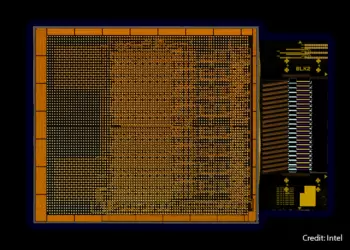
Intel Corp. announced a collaboration with SAIMEMORY, a subsidiary of SoftBank Corp., to develop a new stacked memory technology known as Z-Angle Memory (ZAM). The initiative targets next-generation memory architectures to support the rapidly rising demands of AI and high-performance computing workloads.

SAIMEMORY, based in Tokyo, is developing a stacked DRAM architecture designed to exceed current high-bandwidth memory capabilities by increasing memory capacity, reducing power consumption, and advancing packaging techniques. The approach aims to address memory bottlenecks that constrain scaling in large AI systems. Under the agreement, Intel will act as a technology, innovation, and standards collaborator, while SAIMEMORY will lead technology development and commercialization. Operations are scheduled to begin in Q1 2026, with prototypes expected in 2027 and commercialization targeted for 2030.

The ZAM effort builds on prior research funded by the U.S. Advanced Memory Technology (AMT) R&D Program, managed by the Department of Energy and the National Nuclear Security Administration through Sandia National Laboratories, Lawrence Livermore National Laboratory, and Los Alamos National Laboratory. Intel contributed early proof points through AMT-funded work and its Next Generation DRAM Bonding (NGDB) initiative, which demonstrated higher DRAM density and bandwidth with lower latency and energy consumption. Intel will now apply these learnings to support the ZAM program alongside SAIMEMORY.

  • ZAM focuses on stacked DRAM architectures beyond current HBM designs
  • Intel provides standards, validation, and technology collaboration; SAIMEMORY leads commercialization
  • Program timeline: operations in Q1 2026, prototypes in 2027, commercialization by 2030
  • Builds on AMT and NGDB research validating higher density, bandwidth, and energy efficiency
  • Strengthens U.S.–Japan collaboration in advanced memory technologies

“Intel’s Next Generation DRAM Bonding initiative has demonstrated a novel memory architecture and revolutionary assembly methodology that significantly increases DRAM performance, reduces power consumption, and optimizes memory costs,” said Dr. Joshua Fryman, Intel Fellow and CTO of Intel Government Technologies. “Standard memory architectures aren’t meeting AI needs, so NGDB defined a whole new approach to accelerate us through the next decade.”

🌐 Analysis

The ZAM collaboration reflects growing industry focus on memory-centric innovation as AI accelerators face bandwidth, capacity, and power limits with existing HBM roadmaps. Intel’s role positions it alongside other ecosystem players exploring advanced stacking and bonding approaches, while SoftBank-backed SAIMEMORY adds a commercialization path that bridges national-lab research and large-scale manufacturing. The program also aligns with broader efforts in the U.S. and Japan to secure advanced semiconductor supply chains for AI and HPC systems.

Tags: IntelSoftbank
ShareTweetShareSummarizeSummarize
Previous Post

Mobile to Deploy 1Finity Open RAN Massive MIMO Radios at Scale

Next Post

Marvell Closes Celestial AI Deal to Expand Optical Scale-Up

Jim Carroll

Jim Carroll

Editor and Publisher, Converge! Network Digest, Optical Networks Daily - Covering the full stack of network convergence from Silicon Valley

Related Posts

Semiconductors

Cadence, Intel Foundry Deepen Partnership on Intel 14A

June 8, 2026
AI Infrastructure

SoftBank Targets 5 GW of AI Infrastructure in France 

May 31, 2026
AI Infrastructure

U.S. Government Backs 10 GW AI Campus in Ohio

May 21, 2026
Financials

Intel Appoints Client Computing Chief and CTO

May 4, 2026
All

Intel Q1 2026: AI Drives 22% Data Center Growth, Foundry Revenue Up

April 23, 2026
Semiconductors

Intel, Google Expand AI Infrastructure Pact Around Xeon and Custom IPUs

April 9, 2026
Next Post

Marvell Closes Celestial AI Deal to Expand Optical Scale-Up

Categories

  • 5G / 6G / Wi-Fi
  • AI Infrastructure
  • All
  • Automotive Networking
  • Blueprints
  • Clouds and Carriers
  • Data Centers
  • Enterprise
  • Explainer
  • Feature
  • Financials
  • Last Mile / Middle Mile
  • Legal / Regulatory
  • Optical
  • Quantum
  • Research
  • Security
  • Semiconductors
  • Space
  • Start-ups
  • Subsea
  • Sustainability
  • Video
  • Webinars

Archives

Tags

5G All AT&T Australia AWS Blueprint columns BroadbandWireless Broadcom China Ciena Cisco Data Centers Dell'Oro Ericsson FCC Financial Financials Huawei Infinera Intel Japan Juniper Last Mile Last Mille LTE Mergers and Acquisitions Mobile NFV Nokia Optical Packet Systems PacketVoice People Regulatory Satellite SDN Service Providers Silicon Silicon Valley StandardsWatch Storage TTP UK Verizon Wi-Fi
Converge Digest

A private dossier for networking and telecoms

Follow Us

  • Home
  • About
  • Events Calendar
  • Blueprint Guidelines
  • Privacy Policy
  • Manage Email Delivery
  • NextGenInfra.io

© 2026 Converge Digest - A private dossier for networking and telecoms.

No Result
View All Result
  • Home
  • About
  • Events Calendar
  • Blueprint Guidelines
  • Privacy Policy
  • Manage Email Delivery
  • NextGenInfra.io

© 2026 Converge Digest - A private dossier for networking and telecoms.

This website uses cookies. By continuing to use this website you are giving consent to cookies being used. Visit our Privacy and Cookie Policy.
Go to mobile version