Cisco sees autonomous AI agents as the catalyst for a new networking supercycle, driving demand for higher-capacity data center fabrics, upgraded campus networks, and new security architectures designed for machine-speed operations.
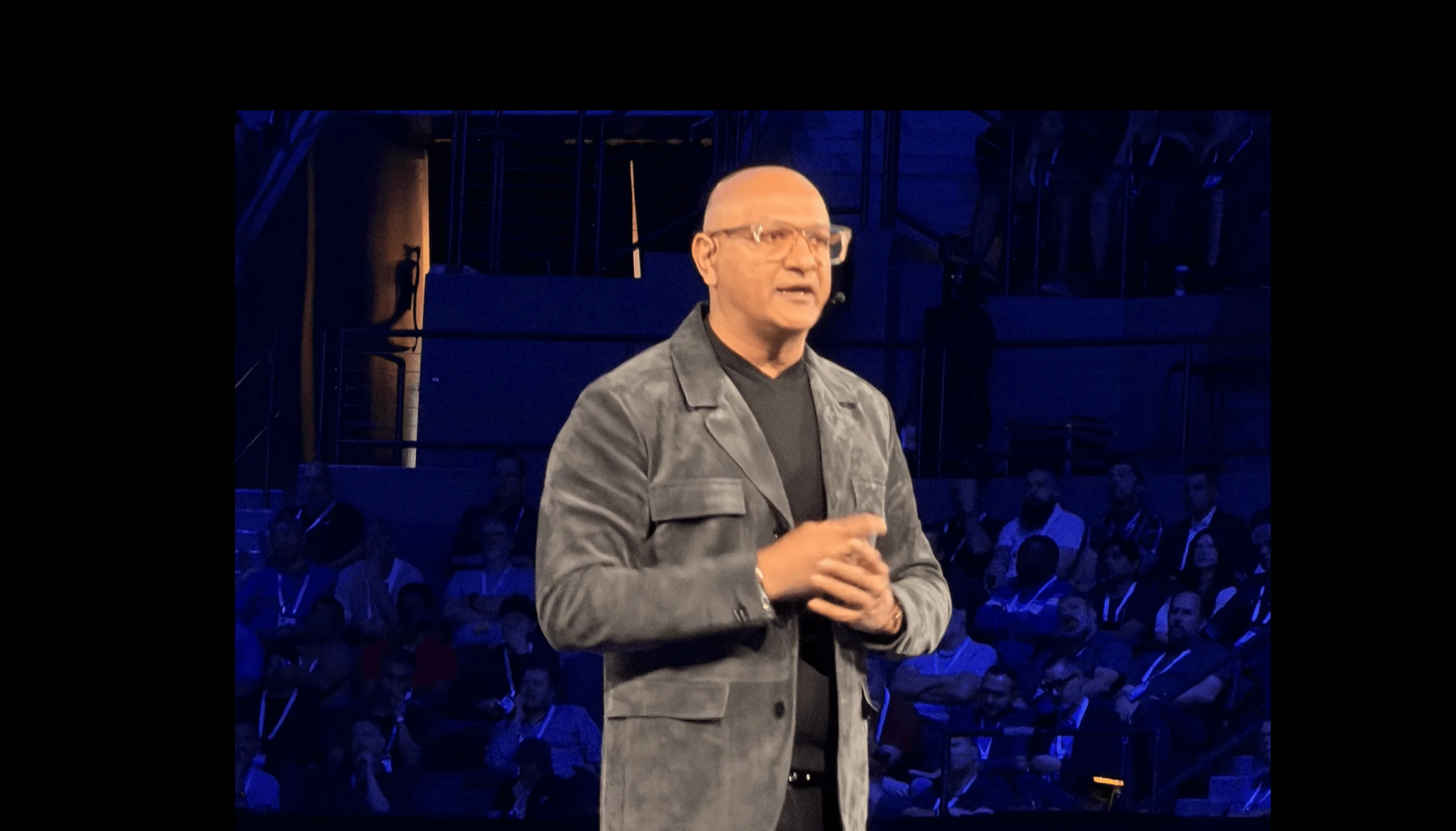
Speaking at Cisco Live, Cisco President and Chief Product Officer Jeetu Patel argued that the industry is moving rapidly from chatbot-based AI to agentic AI, where digital coworkers perform tasks autonomously, interact with other agents, access enterprise tools, and operate continuously. Unlike chatbots that create bursty, human-driven workloads, Patel said agents generate sustained demand across networks, data centers and security systems, fundamentally changing infrastructure requirements.
Cisco is positioning itself at the center of this transition with a strategy spanning AI-ready data centers, future-proofed workplaces, agent security, observability and AI-driven operations. Patel described every agentic action as “a routing challenge, a trust decision and a telemetry event,” placing networking, security and visibility at the core of enterprise AI deployments.
- Patel said AI agents generate approximately 450% more network traffic than humans performing the same task.
- Cisco characterized the AI transition as a networking supercycle affecting data centers, enterprise campuses, branch networks and service providers.
- The company is investing across networking silicon, optics, security, observability and operations platforms to support AI deployments.
- Cisco Cloud Control was introduced as a unified management platform spanning networking, security, observability and AI operations.
- Cisco highlighted AI-ready infrastructure for scale-up, scale-out and scale-across AI architectures.
- Security initiatives focus on protecting agents from external threats, protecting organizations from rogue agent behavior, and enabling machine-speed detection and response.
- Cisco is extending observability beyond infrastructure to include AI models, applications, agents and token consumption.
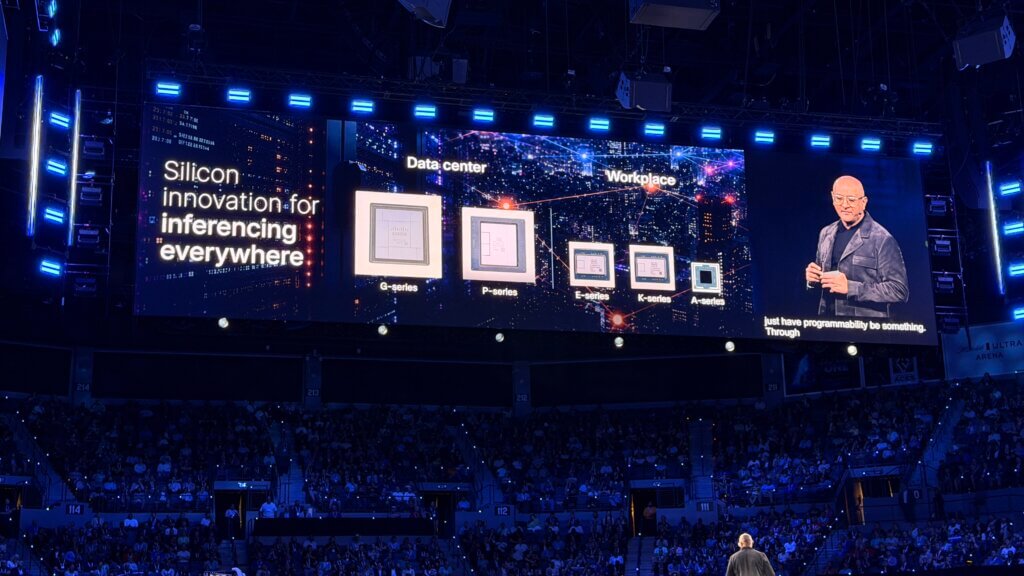
Patel also highlighted the Cisco Silicon One portfolio and AI networking roadmap:
- New Silicon One G300 Ethernet switching chip delivers 102.4 Tbps of throughput.
- Built on a 3 nm process with 246 billion transistors.
- Powers new Nexus 9300 systems for enterprises and Cisco 8100 systems for hyperscale deployments.
- New Silicon One P200 routing chip delivers 51.2 Tbps and supports deep buffering for long-distance AI networking.
- Designed for “scale-across” architectures that connect multiple AI data centers into a single logical computing environment.
- Cisco introduced new 1.6 Tbps pluggable optics and 800G pluggable optics for AI cluster connectivity.
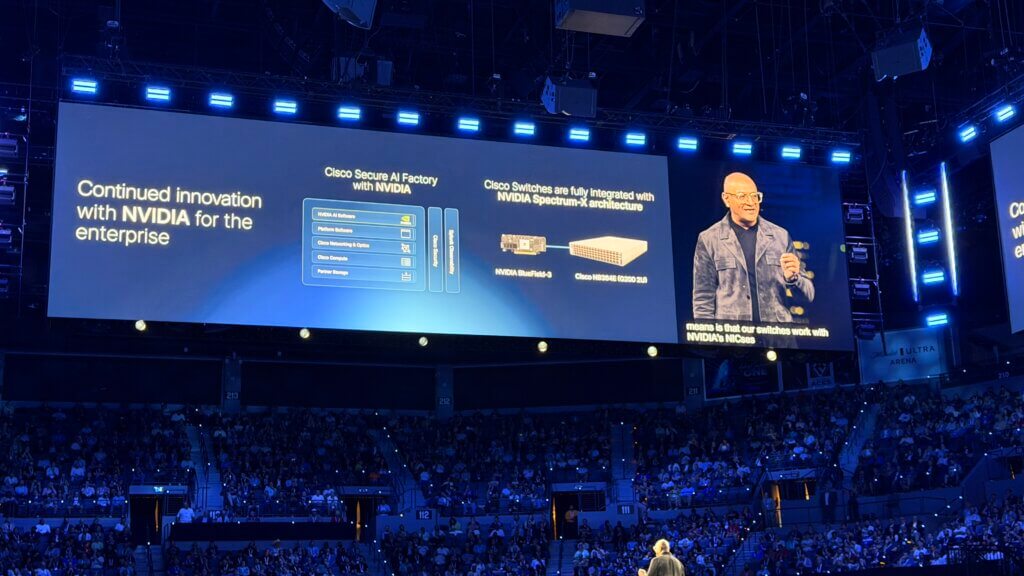
- Cisco highlighted its work with NVIDIA across Secure AI Factory, Spectrum-X integration and silicon-level collaboration.
The company also highlighted a broad refresh of enterprise networking infrastructure:
- Cisco recently refreshed its campus, branch, firewall, Wi-Fi and industrial networking portfolios.
- New platforms include the Cisco 9550, which Patel described as the company’s most powerful campus core switch.
- Cisco is incorporating quantum-safe capabilities across future infrastructure designs.
- The company sees AI-driven traffic growth extending beyond data centers into campuses and branch environments.
A major announcement was Cisco Cloud Control, a new platform designed to unify management across Cisco’s portfolio.
- Cloud Control brings together networking, security, observability, collaboration and AI operations.
- The platform supports natural-language interactions and AI-assisted troubleshooting.
- Cisco has built purpose-specific AI models for networking, security and time-series telemetry.
- Cloud Control launches in controlled availability in the United States and will expand globally.
- Cisco said 52 ecosystem partners are participating at launch.
- The platform includes a marketplace for third-party applications and integrations.
During a live demonstration, Cloud Control traced a wireless connectivity issue across access points, controllers and firewalls, identified a VPN configuration problem, and generated remediation workflows automatically. The demo highlighted Cisco’s vision for AI-assisted operations that correlate telemetry across networking and security domains.
“Every agentic action is going to be a routing challenge. It’s going to be a trust decision. And it’s going to be a telemetry event,” said Jeetu Patel, President and Chief Product Officer of Cisco.