Cisco is betting that the next wave of AI adoption will be defined not by models alone, but by the networks, security systems and operational infrastructure required to support them at scale.
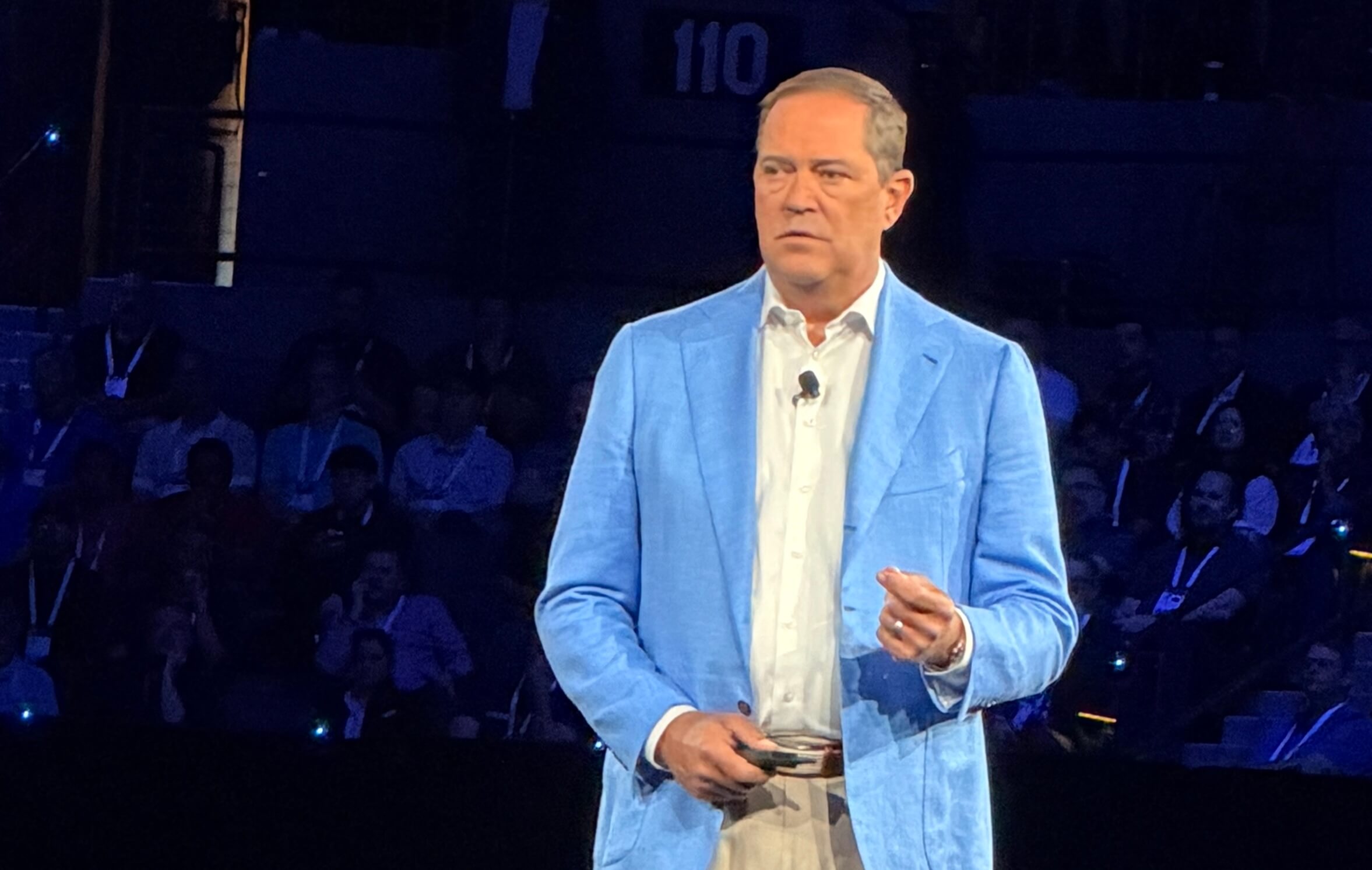
Cisco CEO Chuck Robbins used the Cisco Live opening keynote in Las Vegas to outline Cisco’s vision for the AI era, highlighting how enterprise infrastructure must evolve to support growing demands from AI applications, automation, robotics and digital operations.
Robbins said Cisco expects AI-related network traffic to triple over the next three years, based on what the company knows today. He placed that growth in the context of robotics, manufacturing, physical AI, agentic applications and enterprise automation, all of which will push more traffic across data centers, campuses, branches, clouds and edge locations.
The keynote positioned Cisco’s strategy around three priorities: building AI-ready data centers, preparing future workplaces, and securing digital operations with stronger resilience. Robbins pointed to Cisco Cloud Control, AgenticOps, Cisco IQ, resilient infrastructure services, sovereign infrastructure and quantum networking research as part of Cisco’s broader effort to help enterprises modernize networks while managing security, governance and operational risk.
- Robbins said the network remains “more powerful than the node,” extending Cisco’s original router-era message into the AI infrastructure cycle.
- Cisco expects AI network traffic to triple in three years, before accounting for additional growth from robotics, manufacturing and physical AI.
- More than 90% of Cisco customers surveyed said they need to modernize infrastructure and improve network resilience.
- Cisco Cloud Control anchors the company’s AgenticOps strategy, giving human operators and AI agents a common platform for managing critical IT systems.
- Cisco IQ has already drawn more than 1,700 customers within weeks, with 90% self-onboarding, according to Robbins.
- Robbins warned that AI changes the speed of cyber defense while also increasing the capabilities of adversaries.
- Cisco scanned 1.8 billion lines of code across 25 programming languages in eight weeks using advanced AI models, work Robbins said could have taken years before.
- Cisco released Shields Up guidance to help customers reduce technical debt and prepare infrastructure for AI-driven security threats.
- Cisco launched a sovereign critical infrastructure portfolio aimed first at Europe, with support for on-premises, air-gapped, AI-ready infrastructure and trust-based licensing.
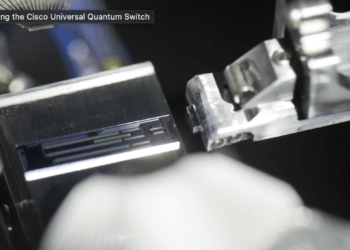
- Robbins said quantum computing will become another major disruption and highlighted Cisco’s universal quantum switch research prototype.
- Starbucks CEO Brian Niccol joined Robbins to discuss how AI, connectivity and data are reshaping customer experience, supply chain operations, store scheduling and personalization.
Robbins emphasized that the AI transition will force enterprises to rethink cyber defense. He said frontier models are “as bad today as they are ever going to be,” meaning defensive architectures must assume rapid improvement by both legitimate users and adversaries. Cisco’s work with GPT-5.5 cyber and its open-source Foundry Security Expert were presented as examples of how the industry can evaluate agentic security systems before they move deeper into enterprise workflows.
The sovereignty theme also received significant attention. Robbins said governments now ask Cisco about sovereignty of data, AI and cloud services, with requirements that vary by country and region. Cisco’s sovereign critical infrastructure portfolio targets organizations that require greater control, visibility and security, including on-premises and air-gapped deployments.
The Starbucks discussion gave the keynote a practical enterprise example. Niccol said Starbucks uses AI to improve forecasting, inventory management, store scheduling, customer personalization and supply chain execution. He said better prediction could eventually reduce backroom inventory by allowing stores to replenish specific items within 12 to 24 hours instead of shipping full cases.
“We believe we are truly going to deliver the critical infrastructure for the AI era,” said Chuck Robbins, Chair and CEO of Cisco.
: